
Root mealybug
Rhizoecus dianthi
Description
How to identify
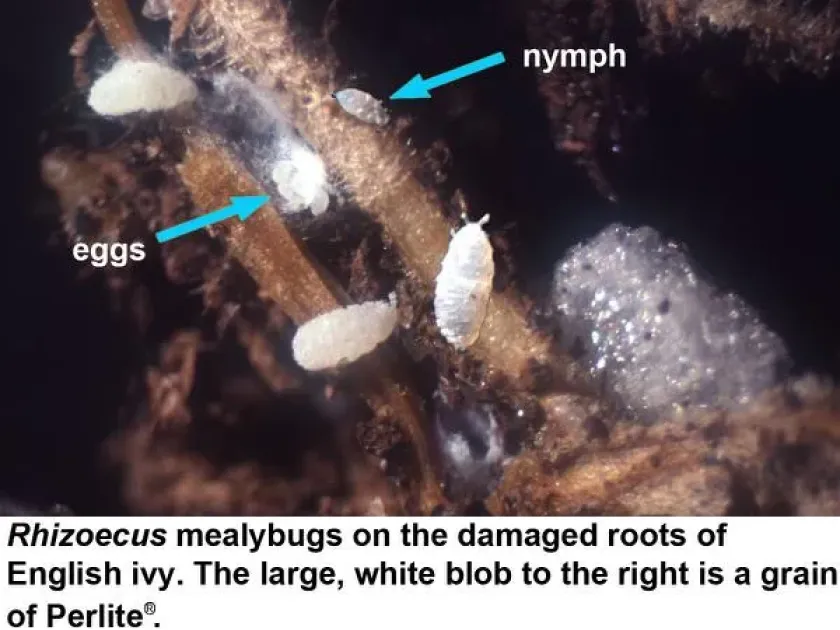
The root mealybug (Rhizoecus dianthi) is a destructive pest belonging to the Pseudococcidae family. These insects are small, measuring 2–3 mm in length, and are covered in a white, waxy secretion that makes them appear as if they are dusted with flour.
Unlike their aerial counterparts, root mealybugs spend their entire lives underground, hidden within the soil and around the root system. They are wingless and move slowly through the potting mix, preferring dry and porous soil environments.
Adult females lay eggs in white, cotton-like masses, which are often mistaken for fungal growth or mineral deposits. These ovisacs protect the eggs, allowing the population to survive even in sub-optimal conditions until the environment becomes favorable.
The life cycle is closely linked to temperature and humidity, with development accelerating in warm conditions (20–25°C). In favorable environments, they reproduce continuously throughout the year, causing significant damage to the host plant.
Detection is difficult because the insects are subterranean. They are most commonly spotted during repotting or when the plant shows severe signs of decline due to root destruction.
What it damages
This pest affects a wide variety of plants, including succulents, cacti, ferns, palms, and many ornamental greenhouse crops. Its ability to feed on roots makes it a serious threat to container-grown plants.
The bugs feed on the plant's sap, extracting vital nutrients and weakening the overall health of the specimen. Their feeding activity causes microscopic wounds on the roots, which serve as entry points for various soil-borne pathogens, including root rot fungi and bacteria.
Affected plants exhibit stunted growth and loss of vigor. Leaves may wilt or turn yellow even if the plant is regularly watered, as the compromised root system can no longer effectively absorb moisture or nutrients.
If left untreated, the entire root system may decay, leading to the collapse and death of the plant. The damage to the vascular tissues often makes the plant less resilient, making it difficult for it to recover even after the pests are eradicated.
Infestations spread rapidly in greenhouses through shared irrigation water, common saucer use, and contaminated tools. Soil is the primary vector for transmission, making sanitation essential for prevention.
Signs of infestation
The most common sign of a root mealybug infestation is a sudden, unexplained cessation of growth. The plant appears to be in a dormant state even during the peak of its growing season.
When removing a plant from its pot, you will notice white, waxy patches on the inner wall of the container or on the outer layer of the root ball. These white clusters are a definitive indicator of the pest's presence.
Chronic wilting, despite adequate soil moisture, indicates that the roots are no longer functioning. This usually happens because the bugs have severely damaged the feeder roots responsible for water uptake.
The soil surface might appear powdery or have white granules scattered throughout the potting mix. In severe infestations, the root zone may emit a stale, musty odor due to secondary bacterial decomposition.
Sudden loss of anchoring is another clear sign; if the plant easily lifts out of the pot with little to no root resistance, the underground system has likely been destroyed by the pest.
Control measures
Managing root mealybugs requires a systematic approach. The most effective method involves using systemic insecticides that are absorbed by the plant, making the sap toxic to the feeding bugs.
- Remove all old soil and wash the roots thoroughly with an insecticidal solution.
- Apply systemic insecticides (e.g., Imidacloprid) to the soil as a drench.
- Disinfect pots and tools before reuse to prevent cross-contamination.
- Repeat treatments at 10–14 day intervals to ensure any newly hatched nymphs are eradicated.
Prevention is key, so always quarantine new plants for at least 30 days. Inspect the root systems of any new arrivals before placing them near your existing collection to ensure they are pest-free.
Avoid using garden soil for container plants, as it is a common source of many subterranean pests. If you must use it, ensure it is properly sterilized through heat treatment or freezing before use.
In cases of severe infestation, it may be better to cut away the most damaged parts of the roots and attempt to re-root the healthy portions of the plant in fresh, sterile media.
Taxonomy
- Latin name
- Rhizoecus dianthi
- Order
- Hemiptera (bugs, aphids, leafhoppers)
- Family
- Rhizoecidae
- EPPO code
- RHIOPR
Discussion
No discussions yet — be the first.