
Blasius's horseshoe bat
Rhinolophus blasii
Description
How to identify
Blasius's horseshoe bat (Rhinolophus blasii) is a unique mammal belonging to the order Chiroptera and the family Rhinolophidae.
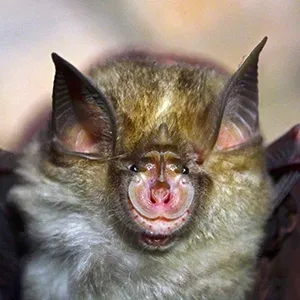
The species is identified by its distinctive horseshoe-shaped nose leaf, which is a specialized structure used for highly accurate echolocation.
These bats are relatively small, possessing brownish-grey fur and large ears that are perfectly adapted for nocturnal life in various environments.
They typically roost in underground caves, mines, or abandoned structures where they can maintain stable conditions throughout their life cycle.
It is important to clarify that this animal is a beneficial insectivore, not a pest that interacts with or damages agricultural crops.
What it damages
Blasius's horseshoe bat does not feed on vegetation, nor does it possess the biological ability to damage agricultural crops in any way.
The diet of this species consists entirely of insects, making it a natural ally for farmers in controlling local insect populations.
There are no documented cases of this species harming grains, fruits, or vegetables, as they have no interest in plant tissues or agricultural produce.
Their presence on farmland should be considered beneficial, as they reduce the need for certain chemical insecticides by preying on agricultural pests.
The species lacks the morphology required to interact with plant life, categorizing it as an environmentally friendly visitor to rural landscapes.
When it appears
The active season for Blasius's horseshoe bat corresponds with the warmer months when insect activity is at its highest level.
During the winter, these bats hibernate, seeking refuge in deep, temperature-stable underground environments to survive the cold months.
Spring marks the period of waking from hibernation and the formation of maternity colonies, where females raise their young in secure roosts.
As autumn approaches, the bats focus on foraging to build up necessary body fat reserves to sustain them during the upcoming winter period.
Migratory behavior is common in some populations, with individuals moving between hunting grounds and safe sites for winter survival.
Signs of infestation
The presence of a colony is usually identified by the accumulation of guano beneath their favored roosting sites in caves or buildings.
Scattered insect remains, such as wing cases and exoskeleton fragments, can often be found where the bats have consumed their nocturnal prey.
Their echolocation signals can be detected using specialized ultrasonic equipment, revealing their location without needing to see the animals.
Visually, they can be spotted during dusk as they emerge from their roosts to begin hunting around forest edges or field boundaries.
The sound of subtle vocalizations and a characteristic musty odor in roosting areas are key indicators of a resident bat colony.
Control measures
As Blasius's horseshoe bat is a protected species under various international and national laws, intentional harm is strictly prohibited.
Farmers should implement non-lethal exclusion methods if bats roost in inappropriate areas, ensuring the animals can safely relocate.
Maintaining natural habitats such as hedgerows and nearby woodland helps support bat populations, which in turn benefits farm productivity.
Integrated pest management strategies should be designed to be safe for local wildlife, including protected bat species like this one.
Education is essential to foster appreciation for the ecological services these bats provide to sustainable agricultural operations globally.
Taxonomy
- Latin name
- Rhinolophus blasii
- Family
- Rhinolophidae
- EPPO code
- RHLPBL
Discussion
No discussions yet — be the first.