
Forest bug
Rhaphigaster
Description
How to identify
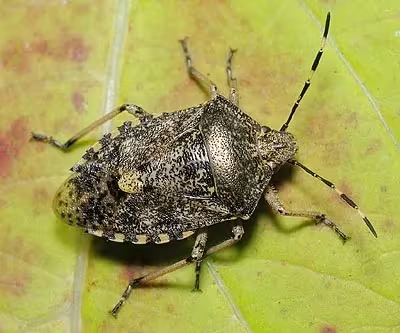
The forest bug (Rhaphigaster nebulosa) belongs to the order Hemiptera and the family Pentatomidae. These insects are easily recognized by their shield-shaped bodies and distinct, robust structure.
Adult forest bugs measure between 12 and 16 mm in length. Their coloration ranges from greyish-brown to reddish-brown, speckled with dark, irregular dots that provide effective camouflage.
A key diagnostic feature is a long, prominent spine on the underside of their body, which points forward towards the head, helping distinguish it from similar species.
The edges of the pronotum and wings feature tiny serrations. The membrane of the hind wings is characterized by a dark, net-like pattern, which is visible when the wings are slightly spread.
Nymphs go through five developmental stages (instars). They lack fully developed wings and undergo gradual physiological changes, increasingly resembling adults with each subsequent molt.
What it damages
The forest bug is a polyphagous pest, meaning it feeds on a wide range of botanical hosts. It is particularly notorious for damaging fruit trees and various vegetable crops.
Orchards are primary targets, with apples, pears, plums, and cherries being frequently attacked. The bugs feed by piercing the surface of the fruit and sucking out the juices.
Vegetable gardens are also vulnerable; bugs often infest tomatoes, beans, and eggplants, causing significant yield losses and reducing the quality of the harvested produce.
During feeding, they inject saliva into the plant tissues, which causes cellular damage, resulting in the development of woody corky spots and misshapen fruit surfaces.
In addition to cosmetic damage, the piercing of fruits makes them highly susceptible to secondary fungal and bacterial infections, leading to early rot and spoilage.
When it appears
Adult forest bugs overwinter in protected areas such as loose bark, leaf litter, hollow logs, or within the cracks of agricultural buildings and residential structures.
They emerge from diapause in early spring as temperatures rise. Activity increases significantly once daily temperatures consistently reach +12°C to +15°C.
Females lay their eggs in clusters, typically on the underside of leaves. In temperate climates, they usually produce one to two generations per year depending on the warmth of the season.
The highest population levels occur during mid-to-late summer, coinciding with the maturation of various fruits, which provide essential nourishment for the developing nymphal stages.
As autumn approaches and temperatures drop, the bugs prepare for hibernation, moving toward potential shelters where they will remain dormant until the following spring.
Signs of infestation
A primary indicator of a forest bug infestation is a pungent, unpleasant odor, released from their scent glands when they are disturbed or congregate in large numbers.
Damage symptoms on fruits include sunken, discolored spots where the skin has been pierced. These spots often develop into hardened, necrotic areas that ruin the fruit's texture.
Cutting into damaged fruit often reveals localized brown, woody patches internally, which render the fruit unappetizing and unfit for commercial processing or fresh consumption.
Wilting, stunted growth, or physical deformation of young, tender shoots can occur if a large colony settles on a specific branch or plant, depleting its vital sap resources.
The presence of hexagonal-shaped egg batches on the undersides of foliage is a definitive sign of reproductive activity and necessitates immediate monitoring or intervention.
Control measures
Effective pest management starts with sanitation: removing leaf litter, garden debris, and weeds reduces the availability of winter hibernation sites near cultivated areas.
Mechanical removal is a practical strategy for small gardens. Shaking infested branches over a collecting cloth during the cool morning hours allows for easy manual collection.
Cultural practices such as maintaining healthy plant vigor through balanced fertilization and irrigation help plants withstand and recover from minor feeding damage.
When infestation levels exceed economic thresholds, the application of registered contact insecticides (such as pyrethroids) may be necessary to protect high-value fruit crops.
Encouraging natural predators, such as parasitoid wasps that target stink bug eggs, can provide long-term sustainable control and reduce the need for chemical intervention.
Taxonomy
- Latin name
- Rhaphigaster
- Order
- Hemiptera (bugs, aphids, leafhoppers)
- Family
- Pentatomidae
- EPPO code
- RHAPSP
Discussion
No discussions yet — be the first.