
Harlequin rasbora
Rasbora heteromorpha
Description
How to identify
The Harlequin rasbora (Rasbora heteromorpha) is a small species of freshwater fish belonging to the family Cyprinidae.
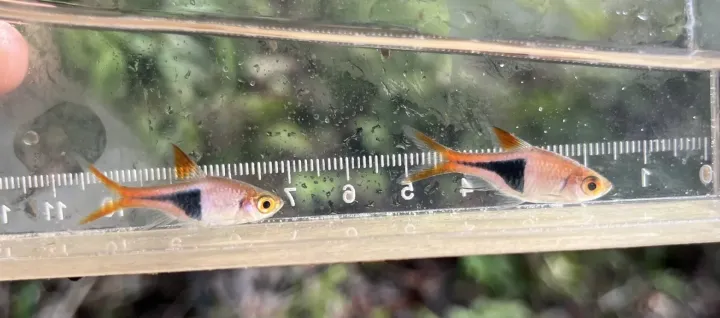
Originating from Southeast Asia, this fish is easily identified by a distinct triangular or wedge-shaped black patch on its body.
The fish typically grows to a length of about 4 to 5 centimeters and has a characteristic high, laterally compressed body shape.
It is a peaceful, schooling fish that is highly valued in the aquarium hobby for its vibrant reddish-orange coloration.
There are no biological traits in this species that classify it as a plant pest; it is strictly a planktivore and insectivore by nature.
What it damages
In the context of agricultural science, the Harlequin rasbora is not classified as a pest and causes no damage to crops.
Any perceived impact on aquarium plants is usually accidental and occurs only under specific conditions of nutritional deficiency.
While reports of them nibbling on soft-leaved aquatic plants exist, this is generally due to a lack of varied diet rather than predatory behavior.
Their primary food sources include small crustaceans and larvae, making them perfectly safe for the vast majority of aquatic environments.
Therefore, there is no economic or agronomic damage associated with the presence of Rasbora heteromorpha in an aquarium ecosystem.
When it appears
As a tropical species, the Harlequin rasbora does not exhibit seasonal behavior or life cycles related to traditional farming seasons.
The fish remains active throughout the year, provided the aquarium temperature is maintained between 23 and 26 degrees Celsius.
There is no specific phase in their biological cycle that involves interaction with vegetation as a food source during certain periods.
Life cycle events, such as spawning, are independent of the plant growth cycle and are managed through water chemistry adjustments.
The stability of the artificial environment ensures that the fish maintain a consistent behavior pattern without seasonal fluctuations.
Signs of infestation
Signs that are often mistaken for fish-induced damage, such as holes in leaves, are usually linked to underlying plant nutrient deficiencies.
Observing leaf degradation is a strong indicator to check for water parameters like CO2 levels, nitrate concentration, or light intensity.
If fish are indeed observed interacting with plant leaves, it is recommended to introduce supplemental herbivorous flakes to their diet.
Poor plant health is almost always a result of poor maintenance rather than the presence of schooling fish like the Harlequin rasbora.
Regular monitoring of plant leaves for yellowing or thinning is the best way to distinguish between natural decay and potential animal impact.
Control measures
No pest control measures are required for the Harlequin rasbora as it poses no threat to plant integrity.
To ensure the best plant growth, focus on proper aquatic fertilization and consistent lighting rather than worrying about the fish.
Providing a high-quality, balanced diet will eliminate any rare instances of fish investigating or nibbling on vegetation.
Avoid any use of chemicals, as they are toxic to fish and will disrupt the ecological balance required for healthy plant growth.
Maintaining a harmonious balance between flora and fauna is the fundamental approach to successful aquarium management.
Taxonomy
- Latin name
- Rasbora heteromorpha
- Family
- Cyprinidae
- EPPO code
- RASBHE
Discussion
No discussions yet — be the first.