
Ramburiella hispanica
Ramburiella hispanica
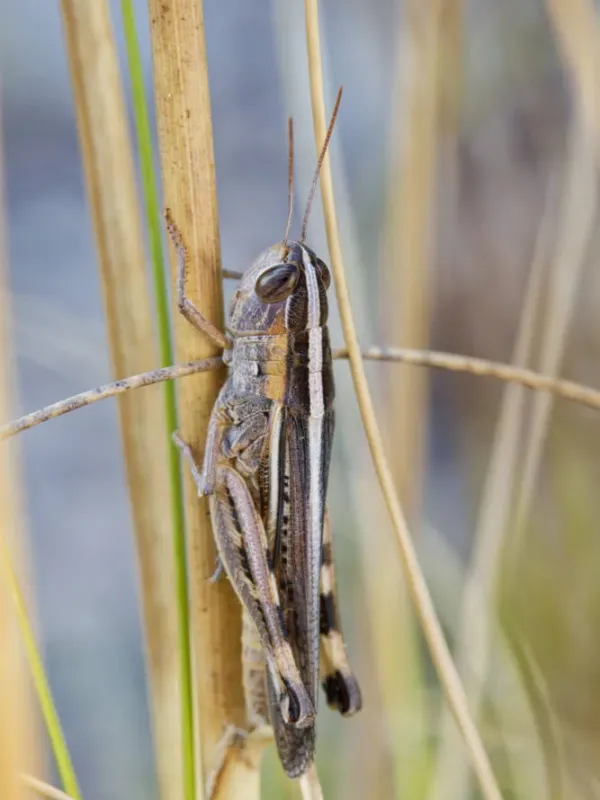
Description
How to identify
Ramburiella hispanica is a species of grasshopper belonging to the Acrididae family within the order Orthoptera, known as a potential agricultural pest.
Adults exhibit cryptic coloration ranging from pale yellow to gray-brown, which allows them to blend seamlessly into dry grass and soil environments.
The insect possesses a robust body structure with powerful hind legs, adapted for jumping long distances to escape predators or move between food sources.
The head features strong mandibles designed for chewing through the tough fibrous tissues of various cereal and grass species.
Both males and females are capable of flight, which facilitates migration and rapid colonization of new agricultural sites during outbreaks.
What it damages
As a polyphagous insect, Ramburiella hispanica primarily consumes a variety of wild grasses and cultivated cereal crops.
Significant economic damage is often observed in wheat, barley, oat, and millet fields, particularly during hot and dry growing seasons.
The insects feed extensively on young leaves and stems, significantly hindering the vegetative growth of the affected plants during the early stages.
In cases of heavy infestation, adults may also damage the ripening heads of grain, leading to direct yield loss and reduced grain quality.
Pastures and forage grasslands can also be significantly degraded by this species, which reduces the overall biomass available for livestock grazing.
When it appears
The lifecycle of this pest is highly dependent on seasonal temperature cycles and the thermal conditions of the soil during early spring.
Eggs overwinter in the soil, protected from cold temperatures by the depth at which they are deposited by the females in late summer.
Nymphal emergence occurs in spring once the soil temperature reaches an appropriate threshold for embryonic development.
The insect undergoes several nymphal stages, during which the larvae increase in size and intensity of feeding on nearby vegetation.
Adults typically emerge during the summer months, representing the most destructive phase of the lifecycle for agricultural operations.
Signs of infestation
The presence of Ramburiella hispanica is often indicated by jagged, uneven margins on the leaf blades of cereal crops.
Scouting reveals areas of skeletonized foliage where only the major veins remain, while the softer tissues are consumed by the nymphs or adults.
A sudden, widespread movement of jumping insects when walking through a crop field is a primary observation of heavy infestation.
Areas of the field experiencing high feeding pressure appear visibly thinned, with stripped stems and missing plant tissue patches.
Accumulation of insect frass (droppings) on the leaves or the soil surface underneath the plants serves as a clear indicator of active feeding activity.
Control measures
Deep autumn plowing is a recommended cultural control practice as it disrupts the egg pods located in the soil and increases their exposure to natural threats.
The removal of weed populations from field margins and adjacent uncultivated lands helps to destroy breeding sites and limits the pest population.
When populations exceed economic injury levels, targeted application of insecticides can be used to protect crop borders and prevent further spread.
Promoting natural biological control through the conservation of predators like birds and parasitic insects is essential for long-term population management.
Adopting strategic crop rotation and maintaining optimal soil moisture levels can make the environment less conducive to massive grasshopper outbreaks.
Taxonomy
- Latin name
- Ramburiella hispanica
- Order
- Orthoptera (locusts)
- Family
- Acrididae
- EPPO code
- RAMBHI
Discussion
No discussions yet — be the first.