
Australian spider beetle
Ptinus villiger
Description
How to identify
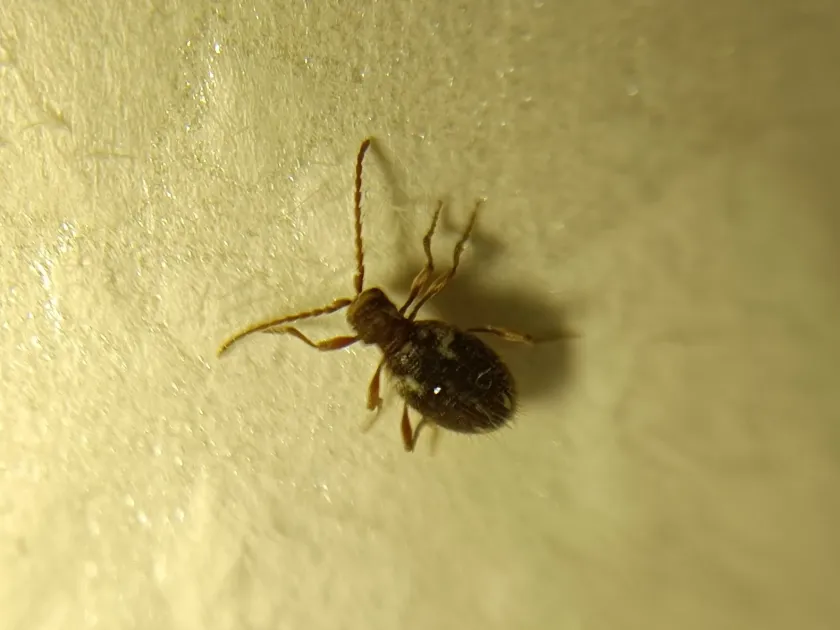
The Australian spider beetle (Ptinus villiger) is a member of the spider beetle family (Ptinidae) in the order Coleoptera. Adult beetles are small, typically ranging from 3 to 4.5 millimeters in length.
Their bodies are rounded and globular, which makes them resemble small spiders, especially when viewed from above. The color ranges from reddish-brown to dark brown, often with faint patches on their wing covers.
The larvae are white, C-shaped, and covered with dense hairs. They live and feed hidden within substrates, which makes detecting an infestation at the early stages quite challenging for warehouse staff.
These beetles are highly adaptable and can survive in various temperature conditions. When threatened, they exhibit a characteristic "feigning death" behavior by tucking their legs and antennae close to their bodies.
The life cycle consists of egg, larva, pupa, and adult stages. Depending on environmental conditions, the cycle can take several months, often accelerating in warm, humid storage environments.
What it damages
This beetle is a common pest of stored products, damaging a wide range of vegetable and animal-based goods. It is frequently reported in grain silos, flour mills, and animal feed storage facilities.
The pest targets stored cereals, legumes, flour, grains, and dried fruits or vegetables. It can cause significant economic losses in the livestock industry by contaminating large stocks of animal feed.
Apart from plant-based items, the Australian spider beetle can infest products of animal origin, including dried fish, meat-and-bone meal, and occasionally wool textiles.
Damage is caused by both adults and larvae, which tunnel into the products. Infested goods become contaminated with excrement, silk webbing, and debris, rendering them unfit for consumption or sale.
Infestation leads to a reduction in both the nutritional value and market quality of the stored items, necessitating the disposal of large batches of products if not controlled in time.
Signs of infestation
The primary indicators of an infestation include the presence of dust, droppings, and small, clean-cut holes in the packaging or product surface. Adult beetles may also be visible on storage walls.
A characteristic sign is the presence of fine, web-like silk threads created by larvae before pupation, which often causes flour or granular products to clump together.
Hidden infestations within grain kernels can be difficult to spot; therefore, regular screening and sampling using fine-mesh sieves are essential for early detection.
A persistent musty or sour odor in storage areas can also indicate that the products are undergoing decay accelerated by insect activity.
Using pheromone or light traps provides a reliable monitoring system for identifying the presence of beetles before they reach a level that causes significant structural or material damage.
Control measures
The foundation of effective management is strict sanitation. Regular cleaning of storage areas, removal of spilled grains, and proper maintenance of equipment are crucial to preventing beetle colonization.
Maintaining low moisture content in stored grains is a key preventive measure. Keeping grain moisture below 12% significantly hinders the larval development and survival of the species.
In cases of severe infestation, fumigation of the warehouse or the product itself with approved insecticides is necessary. This process must be conducted by qualified professionals following safety protocols.
Applying residual insecticides to surfaces like floors and walls helps to create a barrier and minimize the spread of the population across different parts of the storage facility.
Non-chemical approaches, such as cold-storage or freezing of infested goods, can be effective in small-scale storage situations to manage populations without the risk of chemical contamination.
Taxonomy
- Latin name
- Ptinus villiger
- Order
- Coleoptera (beetles)
- Family
- Ptinidae
- EPPO code
- PTINVI
Discussion
No discussions yet — be the first.