
Australian spider beetle
Ptinus tectus
Description
How to identify
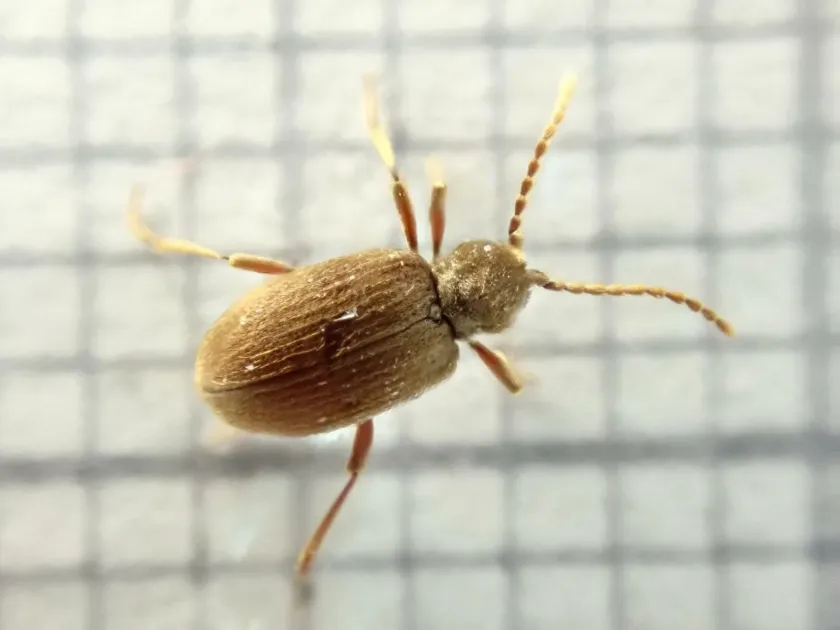
The Australian spider beetle (Ptinus tectus) belongs to the Ptinidae family of beetles. Adult beetles measure between 2.5 and 4 mm in length and possess a distinct rounded body covered in dense, golden-brown hairs.
Their appearance is quite unique, with a hunched profile where the head is largely concealed beneath the pronotum. They are known for feigning death by tucking their legs and antennae beneath their bodies when disturbed.
The larvae of the Australian spider beetle are C-shaped, white in color, and possess well-developed legs. They are highly active and capable of moving easily within the food source they inhabit.
This species is highly adaptable to various environmental conditions. While they favor cool and humid environments, they can thrive in buildings, warehouses, and domestic kitchens throughout the year.
The lifecycle includes several larval stages before pupation occurs. Pupation often takes place inside a silken cocoon, which the larvae create by spinning threads combined with food particles or debris.
What it damages
The Australian spider beetle is a notorious generalist feeder, causing significant damage to a wide range of stored products. It is considered a major pest in grain stores, flour mills, and pantries.
Commonly infested materials include cereals, flour, legumes, dried fruits, nuts, and various spices. They are known to feed on both plant-based materials and dried animal products like meat, wool, or feathers.
Beyond food products, they can damage non-food items containing plant fibers or proteins, including book bindings, herbarium collections, and natural history specimens in museums.
The larvae are responsible for the primary damage as they bore into seeds and food particles. This activity destroys the internal structure of the material, leading to significant weight loss and nutrient degradation.
In addition to physical consumption, the larvae contaminate stored products with frass and webbing. This contamination leads to spoilage and mold growth, rendering the infested goods unfit for sale or consumption.
Signs of infestation
The most visible sign of an infestation is the presence of silk webbing, which larvae spin across products or onto the walls of packaging. This webbing often traps debris and frass, creating a messy appearance.
Inspection of grain kernels often reveals small, irregular exit holes caused by emerging adults or late-stage larvae. In flour or powdery substances, one may find matted clumps held together by larval silk.
Adult beetles are often observed in the vicinity of food sources, particularly at night. Since they are light-sensitive, they are frequently found hiding in cracks, crevices, or underneath stored sacks.
A musty or rancid odor emanating from stored commodities is a reliable indicator of infestation. This smell is produced by the accumulation of larval waste and the associated growth of moisture-loving fungi.
The use of pheromone traps or sticky boards is highly recommended for early detection. These tools help monitor beetle activity and pinpoint the exact location of an infestation before it becomes widespread.
Control measures
Maintaining high standards of warehouse hygiene is the primary defense against this pest. Regular removal of spills, dust, and old product residues is essential to deny the beetles food and shelter.
Environmental management, such as keeping storage facilities dry and well-ventilated, significantly reduces the survival rate of the beetles. Keeping the product moisture content below 12% is crucial.
In the event of a severe infestation, fumigation is the most effective method for total eradication. Products are treated with phosphine in hermetically sealed environments to ensure all life stages are killed.
For smaller quantities of goods, heat treatment or deep freezing are viable non-chemical options. Exposing infested material to -18°C for several days is typically sufficient to kill all larvae and adults.
Applying residual insecticides to warehouse surfaces (floors, walls, and shelves) serves as a preventative measure. It is important to implement integrated pest management (IPM) to minimize reliance on chemicals.
Taxonomy
- Latin name
- Ptinus tectus
- Order
- Coleoptera (beetles)
- Family
- Ptinidae
- EPPO code
- PTINTE
Discussion
No discussions yet — be the first.