
Ptinus rufipes
Ptinus rufipes
Description
How to identify
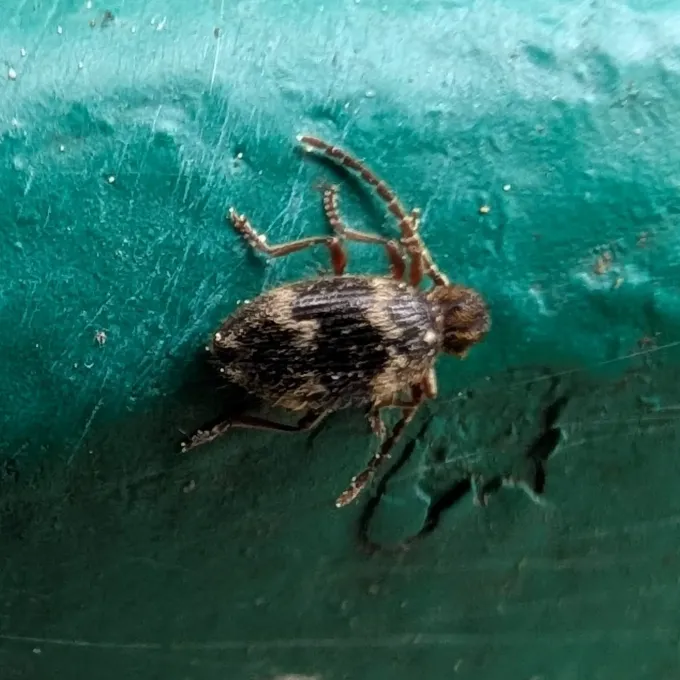
Ptinus rufipes is a species of beetle belonging to the Ptinidae family, commonly known as spider beetles due to their characteristic morphology resembling spiders.
Adult beetles are typically 2.5 to 4 mm long with a rounded, convex body shape. Their coloration is deep brown or black, distinguished by bright reddish-colored legs and antennae.
The body is covered with dense setae or scales, which provide a dull appearance. Like many other Ptinidae, they exhibit 'thanatosis' or playing dead when disturbed, drawing their appendages close to their bodies.
The larvae are white, C-shaped, and usually found deep within the food substrate, making them difficult to detect without a thorough inspection of the grain mass.
These insects are highly synanthropic, preferring stable, protected environments such as warehouses, mills, granaries, and sometimes even dry storage areas in homes.
What it damages
Ptinus rufipes is a generalist feeder that primarily targets stored grain products, including wheat, rye, barley, and various processed cereal products.
Beyond grains, they are known to attack dried fruits, legumes, nuts, medicinal herbs, and occasionally animal-derived materials like skin or wool items stored in the same vicinity.
Larval feeding involves boring into individual grains or food particles, leading to substantial weight loss and the creation of fine dust or frass within the product batch.
Adults contribute to infestation by reproducing rapidly and disseminating larvae into clean areas of the warehouse, facilitating the spread of the colony.
Infestations often lead to the heating of the grain mass, which encourages secondary mold growth, further degrading the nutritional quality and market value of the stored goods.
When it appears
In temperature-controlled warehouses, Ptinus rufipes can maintain continuous breeding cycles throughout the year, independent of external weather conditions.
The optimal development occurs at temperatures ranging between 20°C and 25°C, with high humidity levels favoring the survival and growth of the larval stages.
During colder months in unheated environments, development slows down, but the beetles are highly resilient and can easily overwinter in all life stages within building cracks.
Population surges are most common in late spring and summer as rising temperatures accelerate the metabolic processes and the overall lifecycle of the beetle.
The complete generation time is highly variable and depends on nutritional availability and environmental conditions, often extending over several months.
Signs of infestation
The primary sign of infestation is the appearance of silk-like webbing on the surface of the grain or around food containers, spun by larvae during the pupation process.
The presence of fine, powdery waste (frass) and small exit holes in seeds are clear indicators that the internal tissues of the grain have been consumed.
Adults can often be spotted during twilight hours or at night, as they are nocturnal and move across surfaces in search of mates or new food sources.
A musty or rancid odor emanating from the storage bins often suggests a well-established colony and the presence of associated microbial rot.
Routine inspections of grain spills, corners, and under-storage pallets are essential, as these locations serve as primary breeding grounds for initial colonization.
Control measures
Preventative sanitation is the most effective defense, involving the frequent removal of grain dust, debris, and spilled commodities that can harbor the beetles.
Maintaining low moisture content in stored grains (below 12%) is critical, as high humidity creates the ideal conditions for larval survival and development.
Regular warehouse inspections using pheromone traps can help detect the presence of adults early before the population reaches an economically damaging level.
In cases of confirmed infestation, professional fumigation of the premises or the use of approved contact insecticides may be necessary to eradicate the pest.
- Seal all structural cracks and crevices in the warehouse walls and floors.
- Use FIFO (First-In, First-Out) inventory rotation to minimize long-term storage risks.
- Regularly screen incoming shipments for signs of latent infestation.
Taxonomy
- Latin name
- Ptinus rufipes
- Order
- Coleoptera (beetles)
- Family
- Ptinidae
- EPPO code
- PTINRU
Discussion
No discussions yet — be the first.