
Australian spider beetle
Ptinus ocellus
Description
How to identify
The Australian spider beetle (Ptinus ocellus) is a small insect belonging to the family Ptinidae, known as a significant pest of stored products.
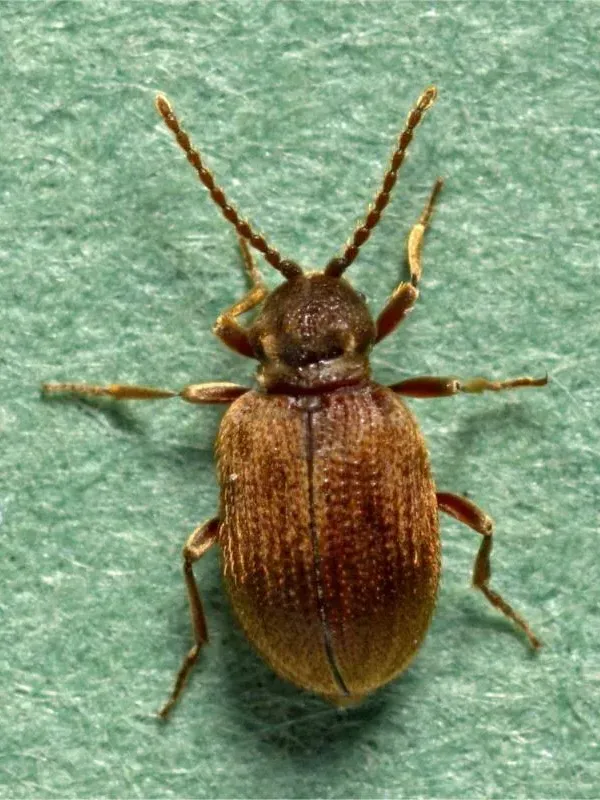
Adult beetles typically reach a size of about 2.5 to 4 mm and possess a distinctive rounded, humpbacked body shape covered in fine hairs.
Their appearance is unique due to their long legs and antennae, which make them look strikingly similar to small spiders, hence the common name.
The elytra (wing covers) are usually reddish-brown to dark brown and may feature pale, fuzzy patches, giving the beetle a mottled appearance.
Larvae are white, C-shaped grubs with a brown head capsule, specialized in tunneling through and feeding on various dried organic materials.
What it damages
This beetle is a generalist feeder and acts as a major pest for a wide variety of dry food products stored in warehouses and households.
It commonly infests cereals, flour, grains, pasta, bread products, and other dry pantry items, causing significant losses in food quality.
Besides grain products, it is frequently found in dried herbs, spices, tobacco, medicinal plants, and even dried pet food or animal feed.
The Australian spider beetle is also known to infest materials of animal origin, including dried milk, meat meal, and even wool or feather products.
Infested products become contaminated with larval frass, silk webbing, and insect remains, making them entirely unsuitable for human consumption.
When it appears
The life cycle of the Australian spider beetle is closely tied to the environmental conditions of the storage facility or building.
In heated indoor environments, this pest can reproduce continuously throughout the entire year without distinct seasonal interruptions.
Optimal development occurs in temperatures ranging from 20°C to 25°C, with higher humidity levels further accelerating the life cycle.
Adults are typically nocturnal, preferring to hide in dark, undisturbed corners during the day and becoming active under low-light conditions.
The total duration of the life cycle from egg to adult is highly variable and depends largely on the availability and quality of the food source.
Signs of infestation
The presence of tiny, circular exit holes in product packaging or on the surface of grain kernels is a primary indicator of an established infestation.
Infested flour or finely ground products often appear clumped together or webbed, as the larvae produce silk while feeding and crawling.
A persistent, musty odor emanating from the storage area is often the first warning sign that a significant population of beetles is developing.
Direct observation of the adult beetles, especially during late hours, confirms the infestation, as they are most active in the dark.
Checking shelves, cracks, and floor crevices in pantries or warehouses often reveals the presence of larvae or adult beetles hiding in debris.
Control measures
Strict sanitation practices, including regular cleaning of shelves and removal of food spills, are essential to prevent and manage infestations.
Storing all susceptible dry goods in sealed, airtight containers made of glass or hard plastic prevents beetles from entering and spreading.
Maintaining a dry, well-ventilated storage environment helps discourage the beetle from settling, as it thrives in slightly humid conditions.
If an infestation is discovered, all contaminated items should be immediately discarded or treated with extreme cold or heat to kill eggs and larvae.
For commercial facilities, professional fumigation and the use of monitoring pheromone traps are the most effective methods to suppress populations.
Taxonomy
- Latin name
- Ptinus ocellus
- Order
- Coleoptera (beetles)
- Family
- Ptinidae
- EPPO code
- PTINOC
Discussion
No discussions yet — be the first.