
Spider beetle
Ptinus
Description
How to identify
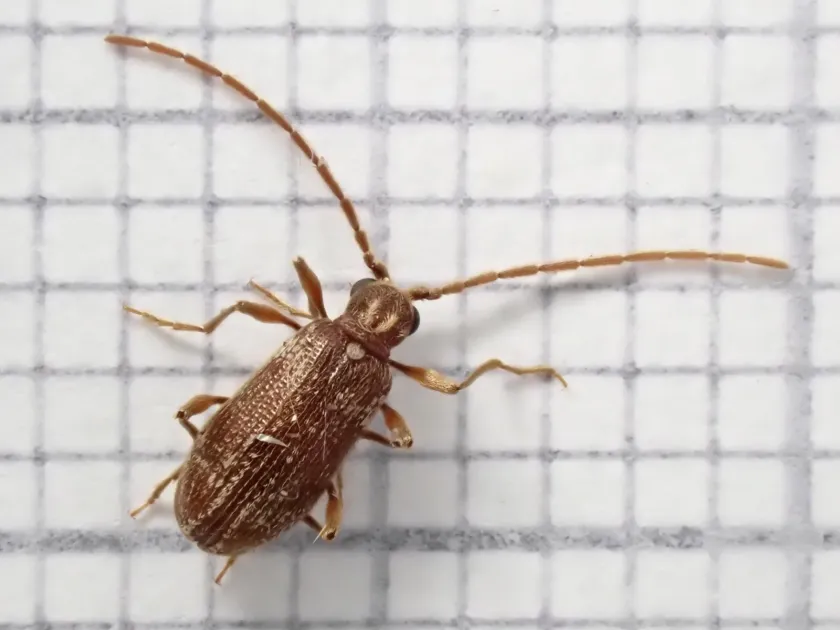
The spider beetle (genus Ptinus) belongs to the Ptinidae family of beetles. They are named for their unique behavior of tucking their legs and antennae close to their bodies to feign death when threatened.
Adult spider beetles are relatively small, typically measuring 2 to 4 mm in length. Their bodies are generally rounded or globular and covered with dense hairs or scales, giving them a distinct, dull appearance.
The larvae are typically C-shaped, cream-colored with a brown head, and spend their entire development phase hidden deep within the food substrate, which makes early detection quite challenging.
The life cycle undergoes complete metamorphosis, consisting of egg, larva, pupa, and adult stages. These beetles are highly resilient and can thrive in diverse environments, including unheated buildings and dark storage areas.
In optimal indoor conditions, they can maintain a continuous breeding cycle throughout the year, causing significant economic impact if left uncontrolled in grain storage or food processing facilities.
What it damages
Spider beetles are polyphagous pests known to infest a wide array of stored goods, including cereals, grains, flour, animal feed, spices, dried fruits, and various medicinal herbs.
Beyond plant-based products, they are also known to infest products of animal origin, such as wool, leather, hair, and even dried meat or fish stored in warehouses.
The damage is primarily caused by larvae that burrow into individual kernels or food particles, leaving behind hollowed-out shells and waste material known as frass.
An infestation can lead to significant weight loss of the product, loss of nutritional quality, and a complete loss of marketability due to the contamination of the grain with insect debris.
Furthermore, their presence often creates warm, moist spots in stored grain, which can trigger secondary problems like fungal and mold growth, further degrading the stored harvest.
Signs of infestation
The most visible sign of an infestation is the presence of small, round exit holes in grain kernels or product packaging where the adult beetles have emerged from the pupal stage.
In infested stockpiles, one may observe large amounts of fine dust or "frass" at the base of sacks or bins, resulting from the larval feeding and burrowing process.
Adult beetles are nocturnal, so spotting them crawling on floors, walls, or near storage containers during a nighttime inspection is a clear indicator of a well-established colony.
Clumping of grain or food particles, often held together by light webbing or silk produced by the larvae, is a common observation in advanced stages of infestation.
A musty or rancid odor emanating from the storage area is another frequent symptom, caused by the accumulation of larval excrement and the subsequent spoilage of the infested commodity.
Control measures
Strict warehouse hygiene is the cornerstone of control: ensure all areas are free from grain spills, dust, and debris that act as reservoirs for the beetle's life stages.
Climate control is highly effective; maintaining cool and dry storage conditions significantly reduces the reproductive potential of spider beetles and slows down their larval development.
Regular monitoring using pheromone or sticky traps allows for the early detection of adult populations, which is critical for implementing timely management actions before the infestation spreads.
In cases of severe infestation, professional fumigation of the grain or structural treatment of the storage facility with registered residual insecticides is required to eradicate the pests.
- Practice "First-In, First-Out" (FIFO) inventory rotation.
- Seal all cracks and crevices in storage structures.
- Inspect all incoming shipments for signs of insect activity.
- Use sealed, insect-proof storage containers for long-term protection.
Taxonomy
- Latin name
- Ptinus
- Order
- Coleoptera (beetles)
- Family
- Ptinidae
- EPPO code
- PTINSP
Discussion
No discussions yet — be the first.