
Apple sucker
Psylla vasilievi
Description
How to identify
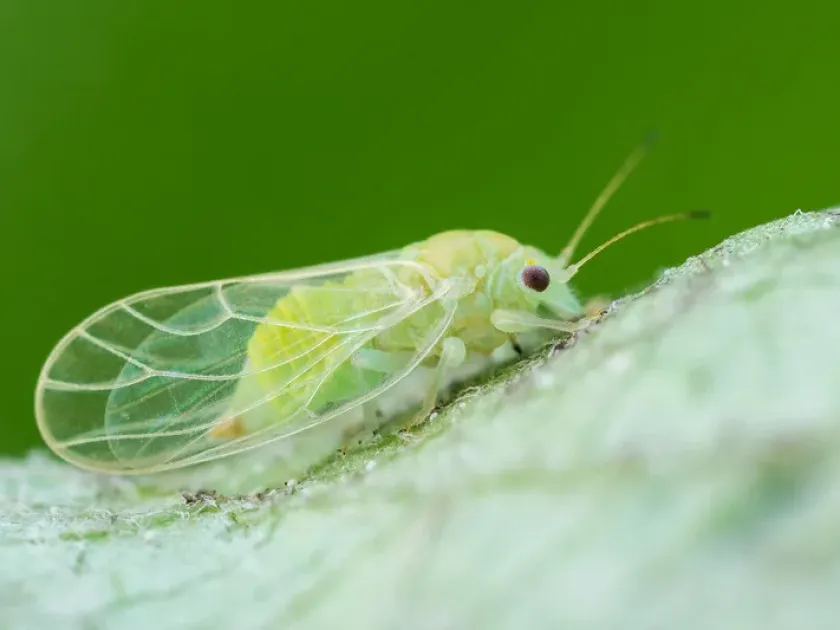
The apple sucker (Psylla vasilievi) is a small insect belonging to the Psyllidae family. These pests are known for their ability to jump and their rapid development cycles in orchard environments.
Adult insects measure about 3 mm in length. Their coloration changes throughout the season, generally shifting between shades of green and brown to match the foliage of apple trees.
The life cycle begins with overwintering adults that hide in bark crevices during the cold months. As soon as temperatures rise, they emerge to lay eggs on the buds and young shoots.
Larvae pass through five instars. Throughout their development, they feed on plant sap and are often protected by a waxy secretion, making them harder to target with standard treatments.
Multiple generations can occur in a single season, allowing the population to build up quickly if conditions remain favorable for their growth and survival.
What it damages
The apple sucker primary damages apple trees by feeding on the sap of developing buds, leaves, and flowers, leading to significant stress for the host plant.
Damaged flower buds often fail to open properly and eventually wither, causing a direct reduction in fruit set and lower overall harvest quality.
Their feeding results in the secretion of honeydew, a sticky substance that promotes the growth of sooty mold, which blocks sunlight and hinders photosynthesis.
In cases of heavy infestation, leaves become severely curled, stunted, and distorted, which weakens the tree's vigor and its ability to withstand winter conditions.
The cumulative effect of this damage is a stunted growth of young shoots and an overall decline in the productivity of the affected apple orchard.
When it appears
Activity typically begins in early spring as temperatures reach about 5-7 degrees Celsius, corresponding with the bud-break phase of apple trees.
The most critical period for infestation is from the green-tip stage until flowering, when larvae are most vulnerable to chemical control measures.
Peak populations are usually observed during the late spring and early summer months as the young foliage provides ample food for the developing generations.
As summer draws to a close, adults begin seeking shelter in cracks in the bark or among fallen leaves to prepare for the overwintering phase.
Consistent monitoring throughout the vegetative period is essential to determine the timing for protective sprays and other management strategies.
Signs of infestation
The most recognizable sign is the curling of young leaves, which often appear stunted or deformed compared to healthy foliage nearby.
Sticky honeydew deposits on the underside of leaves or on branches are indicative of an active apple sucker infestation within the tree canopy.
The presence of black sooty mold covering the leaf surface serves as a secondary indicator that a large population has been feeding for an extended period.
If buds appear dried up and are covered in sticky droplets, it is a clear sign that the larvae have destroyed the developing flower tissues.
During physical inspection, adults can be seen jumping away when branches are shaken, providing immediate evidence of their presence in the tree.
Control measures
Early intervention is key. Preventive spraying during the bud-swelling phase is often the most effective way to reduce the initial overwintering population.
Systemic insecticides are recommended for mid-season control, as they can reach the larvae hidden within the foliage or protected by waxy secretions.
- Perform regular pruning to improve airflow and reduce pest hiding spots.
- Remove and destroy fallen leaves in autumn to disrupt overwintering sites.
- Install sticky traps or bands on trunks to monitor and capture adult insects.
- Encourage beneficial insects such as ladybugs and lacewings in the garden.
- Rotate chemical classes to prevent the development of pesticide resistance.
Maintaining optimal tree health through balanced fertilization and irrigation helps trees recover faster from any stress caused by pest feeding.
Always consult with local agricultural guidelines regarding the most appropriate timing and product selection for your specific region and orchard size.
Taxonomy
- Latin name
- Psylla vasilievi
- Order
- Hemiptera (bugs, aphids, leafhoppers)
- Family
- Psyllidae
- EPPO code
- PSYLVA
Discussion
No discussions yet — be the first.