
Pittosporum psyllid
Psylla tobirae
Description
How to identify
The Pittosporum psyllid (Psylla tobirae) is a small insect belonging to the family Psyllidae, commonly known as jumping plant lice. These pests are characterized by their ability to jump using powerful hind legs when disturbed.
Adults are typically small and possess a body structure optimized for piercing plant tissues. Their coloration often blends in with the foliage of the host plant, making them difficult to spot without close inspection of the branch tips.
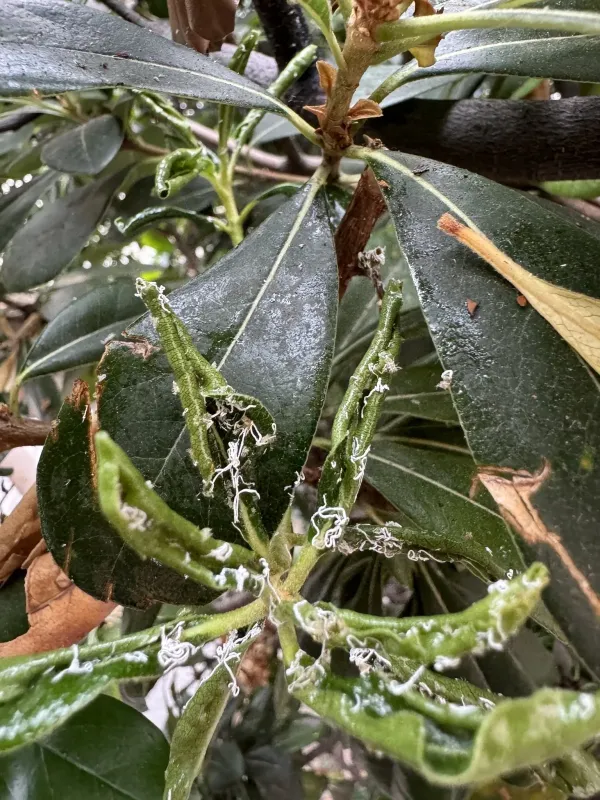
Nymphs are often found in clusters and are known for producing waxy, white, thread-like secretions. These secretions serve as a protective barrier against environmental stress and predators during their development.
The life cycle involves multiple nymphal instars, where the insect grows and changes slightly in morphology. Each developmental stage is highly dependent on the availability of nutrient-rich phloem sap.
Accurate identification usually involves examination under magnification to distinguish this specific species from other psyllids that might inhabit similar ornamental plants in the same region.
What it damages
The primary host for this pest is Pittosporum tobira, a popular ornamental shrub. The insects primarily target young, tender tissues at the growing points, which are most susceptible to damage.
By constantly extracting sap, the psyllids weaken the plant's structural integrity. This physiological stress manifests as stunted growth and a general decline in the plant's health and vigor.
Feeding often causes the leaves to curl, twist, or become malformed. These visual impairments significantly diminish the ornamental value of the plant, which is often its main purpose in a landscape.
The secretion of honeydew is a major consequence of psyllid infestation. This sticky substance covers the leaves and provides a substrate for sooty mold, which blocks sunlight and hinders photosynthesis.
In severe cases, if the infestation is left unmanaged, the plant may experience premature leaf drop, dieback of branch tips, and a long-term reduction in overall foliage density.
When it appears
The activity of the Pittosporum psyllid is highly synchronized with the growth cycle of its host. In spring, as new shoots emerge, the population begins to rise rapidly due to the availability of fresh food.
During the warmer summer months, the insect completes multiple generations. High temperatures can accelerate the development of nymphs, leading to a sudden surge in population numbers.
In indoor environments like greenhouses or conservatories, where temperatures remain stable, the psyllid can breed continuously throughout the winter, posing a constant risk to plant health.
Autumn conditions may slightly slow down reproduction, but if weather remains mild, the insect can continue to inhabit and damage the plant well into the end of the season.
Frequent monitoring is essential because population dynamics can shift quickly, and overlapping generations mean that multiple life stages are often present on the plant at the same time.
Signs of infestation
The most immediate sign of infestation is the curling or distortion of young leaves. If you notice the tips of your Pittosporum look twisted and lack their usual sheen, psyllids are a likely cause.
The presence of white, cotton-like or waxy secretions on the stems and undersides of leaves is a definitive indicator. This is where the nymphs are actively feeding and developing.
Sticky residue on lower leaves, caused by honeydew, often attracts ants. If you see persistent ant activity on your shrub, it is a strong signal to check for the presence of sucking insects.
- Deformed and curled leaves.
- White, waxy secretion on growing tips.
- Sticky honeydew buildup on foliage.
- Black sooty mold growth on leaves.
- Stunted growth of new shoots.
Adult psyllids are easily startled; a quick shake of the affected branches will often cause them to jump away, providing confirmation of their presence.
Control measures
Management begins with cultural practices, such as pruning away heavily infested shoots. Removing these areas early in the season can significantly lower the overall population pressure.
Systemic insecticides are the most effective chemical approach, as they are absorbed by the plant and target the nymphs while they feed on the sap. These should be applied according to label instructions.
It is important to rotate chemical classes of insecticides to prevent the psyllids from developing resistance, which is a common issue with rapidly reproducing pests.
For greenhouse settings, biological control options are highly effective. Introducing natural enemies, such as lacewings or specialized parasitic wasps, can help keep the population at manageable levels.
Maintaining plant health through proper watering and fertilization ensures the shrub is better equipped to handle minor infestations, though active management is still required for severe outbreaks.
Taxonomy
- Latin name
- Psylla tobirae
- Order
- Hemiptera (bugs, aphids, leafhoppers)
- Family
- Psyllidae
- EPPO code
- PSYLTO
Discussion
No discussions yet — be the first.