
Willow psyllid
Psylla minuticornis
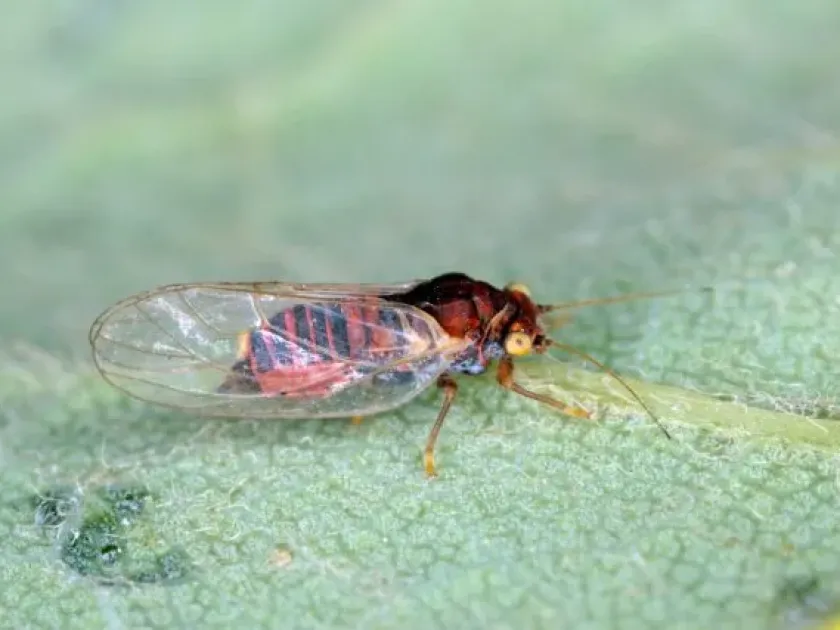
Description
How to identify
The willow psyllid (Psylla minuticornis) is an insect belonging to the Psyllidae family within the order Hemiptera. These small insects are characterized by their strong hind legs adapted for jumping and their ability to disperse via flight during the warmer months of the year.
What it damages
This pest specifically targets various species of willow (Salix). By feeding on the phloem sap of the host plants, both nymphs and adults disrupt the nutrient transport system, which can severely weaken young trees and affect their seasonal growth.
When it appears
The life cycle begins in early spring when nymphs hatch from overwintered eggs. The population density typically peaks during the mid-spring season, coinciding with the rapid development of tender new foliage, which is the primary food source for this species.
Signs of infestation
Infestation signs include curling, crinkling, and yellowing of the leaves, often accompanied by the formation of characteristic galls. Furthermore, the accumulation of honeydew secreted by the insects leads to the growth of sooty mold, which coats the leaves and hinders photosynthesis.
Control measures
Effective management involves the application of systemic insecticides targeted at early nymph stages to prevent population buildup. Additionally, proper irrigation and cultural practices such as pruning infected branches can significantly reduce the pressure of this pest in horticultural settings.
Taxonomy
- Latin name
- Psylla minuticornis
- Order
- Hemiptera (bugs, aphids, leafhoppers)
- Family
- Psyllidae
- EPPO code
- PSYLMI
Discussion
No discussions yet — be the first.