
Psylla hartigi
Psylla hartigi
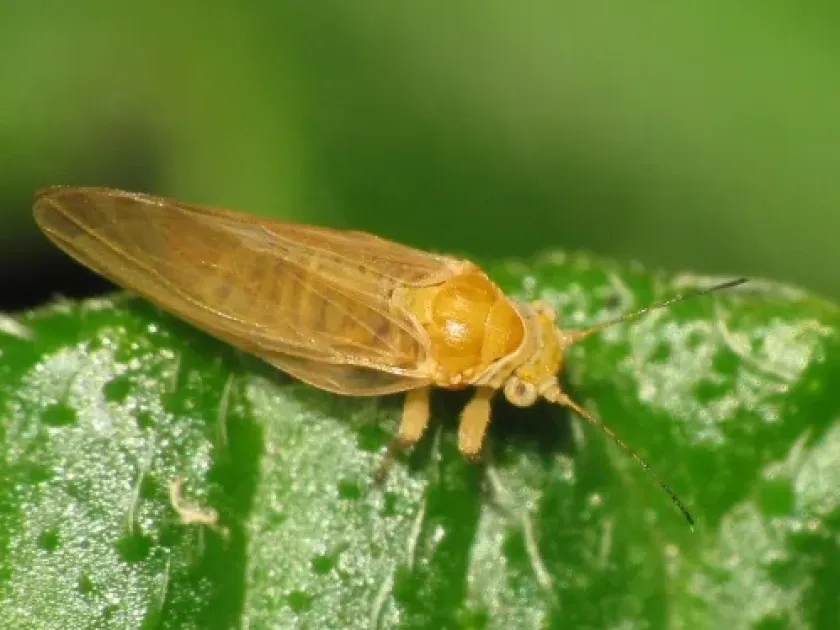
Description
How to identify
Psylla hartigi is a member of the Psyllidae family within the order Hemiptera. These tiny insects are commonly known as jumping plant lice due to their powerful hind legs.
Adults possess specialized wing venation patterns that are crucial for morphological identification under field conditions.
The insect undergoes several nymphal stages, which are typically found clustered on the undersides of leaves or tucked near the leaf buds.
The life cycle is strictly synchronized with the phenology of host plants, specifically birch trees, ensuring food availability for the emerging offspring.
Entomologists monitor the seasonal appearance of adults to determine the optimal timing for management interventions.
What it damages
Psylla hartigi is primarily a pest of birch species (Betula spp.), causing both direct and indirect damage to the host plant.
Both adults and nymphs use their piercing-sucking mouthparts to extract sap, which depletes the tree's energy reserves during active growth.
This sap depletion often leads to leaf curling, stunted growth of young shoots, and general physiological stress for the tree.
Continuous feeding causes chlorosis and premature leaf abscission, which significantly reduces the tree's photosynthetic capacity.
The indirect damage caused by the accumulation of honeydew can lead to the proliferation of sooty mold, further hindering leaf respiration.
Signs of infestation
Early symptoms of infestation include the puckering and deformation of young foliage at the tips of the branches.
The presence of honeydew on the leaves is a clear indicator, often accompanied by a sticky residue that attracts ants and other insects.
Nymphs can often be found beneath a protective layer of white waxy filaments, which makes them difficult to spot at first glance.
Reduced vigor and late-season dieback of twigs are common signs of a high infestation level that has persisted over the season.
A quick tap on the infested branch will reveal the adults, which are highly active and jump readily in response to movement.
Control measures
Management strategies for Psylla hartigi focus on integrated pest management (IPM) to minimize the use of broad-spectrum chemicals.
Systemic insecticides applied to the soil or as foliar sprays are effective during the critical nymphal stages of development.
Promoting natural predators, such as lacewings and ladybeetles, is a key biological control method for maintaining population balance.
Good horticultural practices, including proper irrigation and nutritional management, increase the host tree's natural resilience to pests.
- Monitor populations using yellow sticky cards early in the spring.
- Apply horticultural oils to target eggs and early-stage nymphs.
- Prune and destroy heavily infested branches to reduce local pest pressure.
Taxonomy
- Latin name
- Psylla hartigi
- Order
- Hemiptera (bugs, aphids, leafhoppers)
- Family
- Psyllidae
- EPPO code
- PSYLHA
Discussion
No discussions yet — be the first.