
Erythrina psyllid
Psylla erythrinae
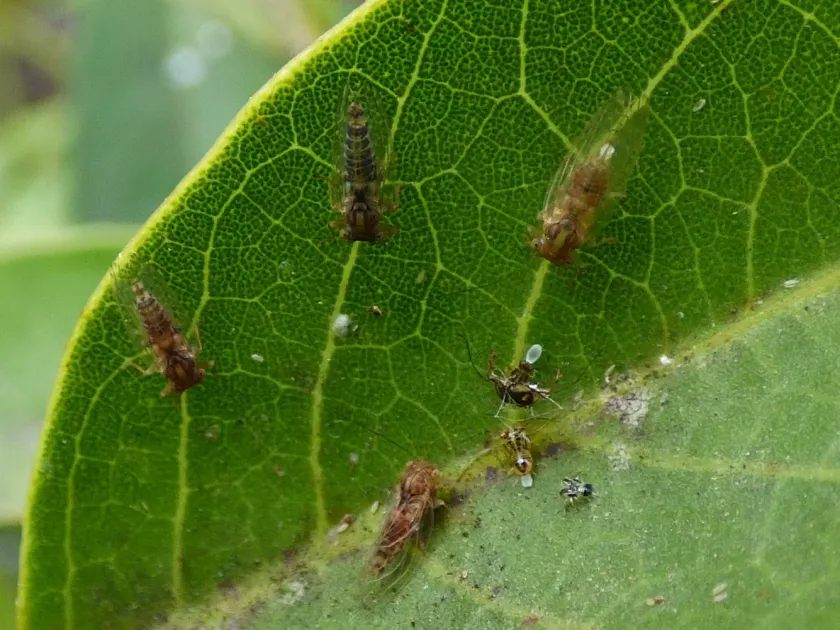
Description
How to identify
The Erythrina psyllid (Psylla erythrinae) belongs to the Psyllidae family within the order Hemiptera. These small insects are highly specialized, often targeting specific host plants in the genus Erythrina.
Adult psyllids possess strong jumping hind legs and membranous wings held roof-like over their bodies. Their mouthparts are designed for piercing plant tissues and sucking sap.
The life cycle involves incomplete metamorphosis. Nymphs are usually the most damaging stage; they are sedentary and often hidden under their own waxy secretions.
The insects are typically small and colored in shades that provide camouflage against the foliage of their host tree, making them difficult to detect without careful inspection.
Development is heavily influenced by temperature, with warmer climates promoting overlapping generations and rapid population increases throughout the growing season.
What it damages
Erythrina trees, commonly known as coral trees, are the primary hosts. The psyllids infest young, tender leaves and growing tips, causing significant stress to the plant.
By feeding on the phloem, the insects deprive the plant of vital nutrients, leading to stunted development and a loss of vigor in the infested branches.
Feeding damage leads to characteristic leaf curling, twisting, and deformation. In severe cases, the entire growth tip may become necrotic and wither.
Premature leaf drop is a common consequence of heavy infestation, which reduces the tree's overall photosynthetic capacity and aesthetic appearance.
The accumulation of honeydew secreted by the nymphs often leads to the growth of sooty mold, which blocks sunlight and further damages the health of the leaves.
Signs of infestation
Leaf distortion and crinkling of the youngest foliage at the tips of branches are the most reliable indicators of an active Erythrina psyllid presence.
Observing the underside of the leaves usually reveals colonies of tiny, waxy-covered nymphs nestled against the veins of the plant.
The presence of a sticky, glistening substance on the leaves, followed by black patches of sooty mold, is a classic sign of honeydew-producing insect infestation.
Stunted growth of new shoots, where leaves fail to expand fully, suggests that the psyllid population has been established for a period of time.
When the branches are disturbed, the sudden flight of numerous small insects confirms that the tree is currently supporting a significant psyllid population.
Control measures
Effective management requires a combination of early detection and the targeted use of systemic insecticides that protect the plant from within.
Sanitation is a vital cultural control method; pruning and disposing of heavily infested shoots can significantly lower the pest population.
Enhancing plant health through proper irrigation and nutrition helps the tree recover from the stress caused by the feeding psyllids.
Integrated Pest Management (IPM) strategies, including the encouragement of natural predators, are recommended for long-term control.
- Apply systemic insecticides targeting sucking insects.
- Prune and destroy heavily infested growth.
- Use horticultural oils to suppress nymph stages.
- Monitor trees weekly during the peak growing season.
Taxonomy
- Latin name
- Psylla erythrinae
- Order
- Hemiptera (bugs, aphids, leafhoppers)
- Family
- Psyllidae
- EPPO code
- PSYLER
Discussion
No discussions yet — be the first.