
Elaeagnus psyllid
Psylla elaeagni
Description
How to identify
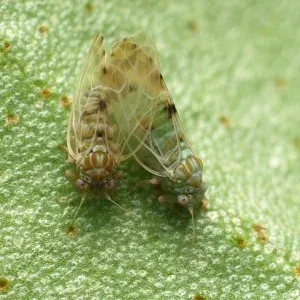
The Elaeagnus psyllid (Psylla elaeagni) is a small insect belonging to the family Psyllidae, commonly known as jumping plant lice, within the order Hemiptera.
Adult psyllids measure approximately 2–3 mm in length and possess powerful hind legs designed for jumping, which is a signature behavior when disturbed.
They have transparent wings held in a roof-like position over their abdomen, and their coloration typically ranges from light green to brownish hues.
The nymphs are relatively sedentary and are often covered in white, waxy secretions, which provide them with protection against natural predators and environmental stressors.
Their life cycle consists of an egg stage, five nymphal instars, and the adult stage, enabling them to adapt well to the growth rhythms of their host plants.
What it damages
This pest specifically targets the Russian olive or Oleaster (Elaeagnus angustifolia), which is highly valued for ornamental and landscape purposes.
Both adults and nymphs feed by piercing plant tissues and extracting sap from young leaves, tender shoots, and developing buds.
Feeding activities disrupt the plant's metabolic processes, leading to stunted shoot growth, distorted foliage, and reduced overall vigor of the host tree.
Heavy infestations can cause early leaf drop and unsightly disfigurement, significantly diminishing the aesthetic value of urban green spaces.
The stress induced by the psyllid makes the host tree more susceptible to secondary fungal infections and cold damage during harsh winter months.
When it appears
Overwintered adults emerge early in the spring, coinciding with the initial bud burst and the start of the plant's seasonal growth.
The most critical damage occurs during the peak activity period in late spring and early summer when the population of nymphs is at its highest.
As temperatures rise during the summer months, the developmental rate increases, potentially leading to multiple overlapping generations within a single season.
As autumn approaches and temperatures drop, the adults seek protected overwintering sites, such as bark crevices or leaf litter, to survive the winter.
Monitoring should begin early in the season, as early intervention prevents the rapid population growth that occurs during the warmer months.
Signs of infestation
The first noticeable sign is the curling and distortion of new leaf tips, which often look crumpled rather than developing into healthy foliage.
The presence of sticky honeydew on the leaves is a major indicator, which often leads to the growth of black, sooty mold fungi on the surface of the plant.
Clusters of nymphs can be found on the undersides of leaves, often obscured by fluffy white waxy threads produced by the feeding insects.
A sudden disturbance of the branches will cause adult psyllids to jump, providing a clear visual confirmation of their presence in the canopy.
General chlorosis or yellowing of the leaves in the middle of summer can indicate a long-term infestation that has drained the plant's energy.
Control measures
Management strategies should focus on both cultural and chemical control methods to maintain the health and appearance of the trees.
Pruning and disposing of heavily infested branches early in the season can significantly reduce the local population density of the pest.
- Apply systemic insecticides during the early stages of infestation to target the nymphs.
- Use insecticidal soaps or horticultural oils to suffocate nymphs, particularly in the early spring.
- Encourage natural predators like lady beetles and lacewings that feed on psyllids.
Ensure thorough coverage during spraying, as the waxy secretions of the nymphs can protect them from direct contact with many insecticides.
Regular monitoring of the canopy and timely intervention are essential to prevent the aesthetic damage caused by repeated feeding over several months.
Taxonomy
- Latin name
- Psylla elaeagni
- Order
- Hemiptera (bugs, aphids, leafhoppers)
- Family
- Psyllidae
- EPPO code
- PSYLEL
Discussion
No discussions yet — be the first.