
Birch psyllid
Psylla betulaenanae
Description
How to identify
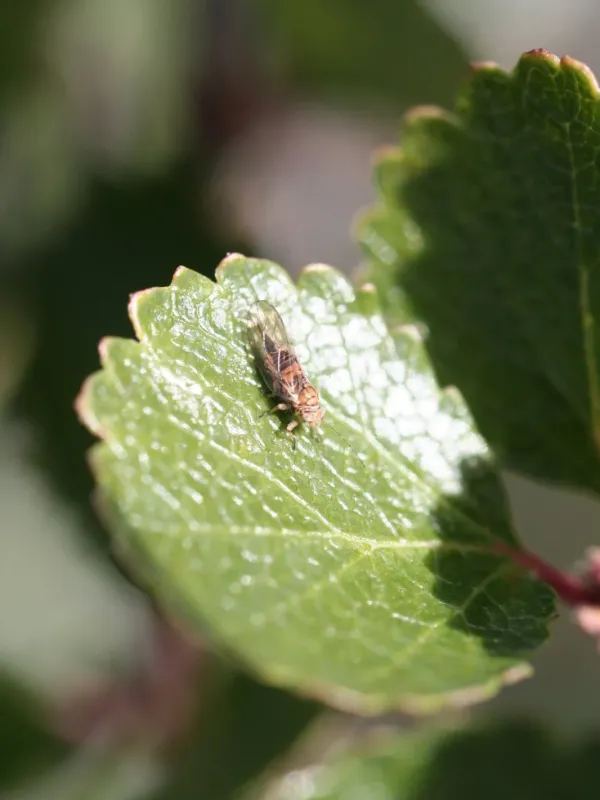
The birch psyllid (Psylla betulaenanae) belongs to the family Psyllidae, known as jumping plant lice. These insects are specialized pests that primarily target birch species, particularly dwarf birch.
Adult insects are small and possess powerful hind legs, allowing them to jump rapidly when disturbed. Their body coloration is usually cryptic, blending seamlessly with the texture and color of the host plant's bark.
The life cycle includes egg, nymph, and adult stages. Nymphs often produce waxy secretions that form protective covers, helping them survive dry conditions and avoid exposure to natural predators.
Identifying the species involves observing wing venation in adults and the specific morphological features of nymphs. These insects are highly adapted to the cooler climates of northern and temperate regions.
Their distribution is closely tied to the presence of Betula species. In nurseries, they can be significant pests if their population density is not managed during the early stages of development.
What it damages
The primary host for this pest is the dwarf birch (Betula nana). The insects feed by inserting their piercing-sucking mouthparts into the phloem of young leaves and tender green shoots.
Feeding causes significant disruption to the host plant's physiological processes. The extraction of nutrients leads to reduced photosynthetic capacity and overall stunted growth of the affected birch tree.
Damage often manifests as leaf curling, discoloration, and premature abscission. These symptoms significantly impact the aesthetic value of the trees and weaken their structure over several growing seasons.
Birch psyllids are also known vectors for various plant pathogens, including phytoplasmas. The transmission of these diseases can cause systemic damage, leading to permanent deformities in the tree crown.
In high-density populations, the accumulation of honeydew can lead to secondary infections. Sooty mold fungi grow on these sugary secretions, further blocking sunlight from reaching the leaf surface.
When it appears
The activity period starts in early spring, coinciding with the bud burst of the host birch. Newly hatched nymphs immediately begin feeding on the sap-rich tissues of the developing buds.
Depending on the climatic zone, the insect completes one or two generations per year. The population usually reaches its highest density during the warmer months of early to mid-summer.
Adults emerge during the summer to mate and disperse. This is the stage where the pest actively searches for new host plants, facilitating the spread of the infestation throughout the local population.
As temperatures drop in autumn, the insects prepare for diapause. They typically overwinter as eggs, which are deposited in bark crevices or near bud scales, ensuring their survival until the next spring.
Environmental factors significantly influence their development. Warm, humid springs tend to accelerate the life cycle, while cold, wet weather can act as a natural check on population growth.
Signs of infestation
One of the earliest signs of infestation is the curling of leaf margins on young shoots. Examining the underside of these curled leaves usually reveals the presence of nymphs or their debris.
A white, woolly, or waxy substance on the leaves is a definitive indicator of psyllid activity. This material is secreted by the nymphs as a protective barrier against external elements.
The presence of honeydew—a sticky, sweet substance—often attracts ants and encourages the growth of black sooty mold. This layer of mold on the leaves and branches is a visible sign of a significant infestation.
General tree health decline, including slowed internodal growth and yellowing foliage, indicates that the tree is suffering from chronic nutrient loss due to pest feeding.
Adult psyllids are highly active and will jump away when the branches are brushed. This distinctive behavior is a reliable identification method for field inspections of birch trees.
Control measures
Cultural control practices include the manual removal and destruction of heavily infested shoots. Regular pruning helps reduce the overwintering population of eggs.
Biological control options involve using natural enemies such as lady beetles, lacewings, and parasitic wasps, which can naturally regulate psyllid populations if pesticides are avoided.
If chemical intervention is necessary, systemic insecticides are the most effective. These products are absorbed by the plant and kill the insects as they feed on the internal sap.
Maintaining optimal tree health through proper fertilization and irrigation is crucial. Vigorous trees are more resilient to psyllid attacks and recover more quickly from potential damage.
Monitoring using yellow sticky traps is an excellent strategy for timing control measures. Application of treatments is most effective during the early nymphal stages before the waxy protective cover is fully formed.
Taxonomy
- Latin name
- Psylla betulaenanae
- Order
- Hemiptera (bugs, aphids, leafhoppers)
- Family
- Psyllidae
- EPPO code
- PSYLBE
Discussion
No discussions yet — be the first.