
Acacia psyllid
Psylla acaciae-decurrentis
Description
How to identify
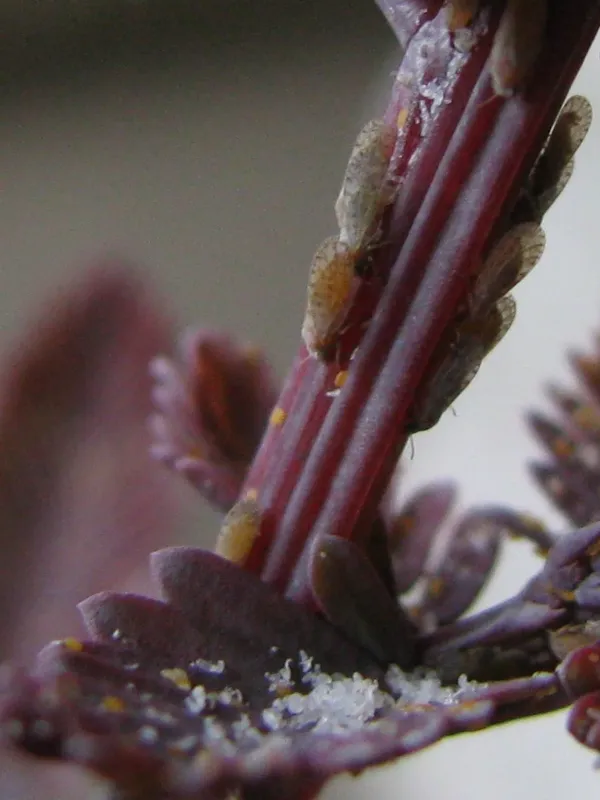
The acacia psyllid (scientific name: Psylla acaciae-decurrentis) is a member of the Psyllidae family, commonly known as jumping plant lice. These insects are specialized sap-suckers that target acacia species.
Adult psyllids are very small, usually measuring a few millimeters in length. They possess wings and powerful hind legs, which enable them to jump or fly quickly when disturbed.
The nymphs are the most damaging stage, as they are largely stationary and feed on the underside of leaves or at the base of young shoots. They are often covered in waxy secretions that act as a shield.
Their coloration is typically green or pale yellow, blending in perfectly with the young, tender foliage of the host tree, making them difficult to spot without close inspection.
Entomological studies confirm that their mouthparts are specifically adapted to pierce through the plant epidermis and reach the nutrient-rich phloem.
What it damages
The primary damage occurs during the feeding process, where both adults and nymphs deplete the plant's resources. This leads to reduced vigor and stunted growth of the host plant.
Affected leaves often show signs of curling, yellowing, and deformation. In severe cases, the tips of the shoots can die back entirely due to the loss of sap.
A major indirect threat is the production of honeydew, a sticky waste product. This substance promotes the growth of sooty mold, a dark fungal layer that covers the foliage.
Sooty mold prevents the plant from performing photosynthesis efficiently, further weakening the tree's immune system and making it susceptible to other diseases.
In nurseries, an infestation can severely damage the aesthetic value of the trees, rendering them unsellable and causing significant economic losses to growers.
When it appears
The life cycle of the acacia psyllid is highly synchronized with the seasonal growth of the host tree. Activity begins in early spring as soon as new buds start to open.
Throughout the warmer months, multiple generations can emerge. The population peaks during the spring and early summer when the host plant produces the most tender new growth.
High temperatures and humidity can accelerate the development of the nymphs, leading to a rapid increase in population density if not managed correctly.
As the season progresses and the foliage hardens, the psyllid population usually declines. The adults look for sheltered overwintering sites as winter approaches.
Understanding these seasonal patterns allows agronomists to time insecticide applications precisely, ensuring maximum impact on the larval stages.
Signs of infestation
Recognizing the early signs of a psyllid infestation is crucial for effective control. The most obvious indicator is the visual alteration of the foliage.
- Curled, distorted leaves on the youngest stems.
- A sticky, shiny residue (honeydew) on the upper surface of leaves.
- Black sooty mold growth on the leaves and bark.
- Small, white, fluffy wax deposits in leaf axils.
- A sudden presence of tiny jumping insects when shaking a branch.
If you suspect an infestation, use a magnifying glass to check the undersides of the leaves, where the nymphs typically cluster during their development.
Control measures
Integrated Pest Management (IPM) is the best approach for controlling the acacia psyllid. This involves combining cultural, biological, and chemical methods.
Cultural control includes the regular pruning and removal of heavily infested shoots. Proper disposal of this waste helps reduce the population size for the next cycle.
Chemical control should be limited to the use of systemic insecticides, which are absorbed by the plant and target the sap-feeding insects effectively.
Biological control plays a significant role; encouraging the presence of natural predators such as ladybugs, lacewings, and parasitic wasps can keep psyllid levels low.
Always rotate chemical products to prevent the psyllids from developing resistance, and ensure that treatments are applied before the infestation reaches a critical level.
Taxonomy
- Latin name
- Psylla acaciae-decurrentis
- Order
- Hemiptera (bugs, aphids, leafhoppers)
- Family
- Psyllidae
- EPPO code
- PSYLAD
Discussion
No discussions yet — be the first.