
Psyllid
Psylla
Description
How to identify
Psyllids (family Psyllidae, genus Psylla), commonly known as jumping plant lice, are small sap-sucking insects. They are closely related to aphids but are distinguished by their ability to jump using well-developed hind legs.
Adult psyllids are typically 2–3 mm long and resemble tiny cicadas. They possess transparent or slightly patterned wings that are held roof-like over their bodies when at rest. Their coloration varies from green to brown depending on the season.
The life cycle involves incomplete metamorphosis. Females lay eggs in crevices of the bark or near bud scales. After hatching, the nymphs go through several instars, frequently secreting protective waxes or honeydew.
The number of generations per year is dictated by the specific species and local climatic conditions. Some species may produce only one generation, while others can have multiple, leading to population explosions.
Monitoring is best conducted in early spring by tapping branches over a white sheet. This helps identify the presence of overwintered adults before they start laying eggs for the first seasonal brood.
What it damages
Psyllids are notorious pests for rosaceous crops, specifically apples (Psylla mali) and pears. They feed exclusively by inserting their mouthparts into the phloem to extract essential plant nutrients.
Constant sap depletion leads to severe stress in the host tree. This often manifests as stunted growth, reduced leaf size, and a significant decrease in overall tree vigor over several seasons.
Beyond direct feeding, psyllids are primary vectors for various phytoplasma diseases. These pathogens cause systemic infections that can lead to the slow decline and eventually the death of entire orchards.
The feeding activity also causes deformities in buds and blossoms. Fruits that do develop on infested branches are often stunted, misshapen, and possess poor market quality, leading to economic losses for growers.
The accumulation of waste products further contributes to plant damage. By weakening the tree's immune system, psyllid infestations open the door for secondary attacks by wood-boring insects and opportunistic fungal pathogens.
Signs of infestation
One of the earliest symptoms is the twisting or curling of young leaves, often accompanied by chlorosis. This leaf deformation occurs because the insects concentrate on developing tissues at the branch tips.
The production of large amounts of honeydew is a characteristic indicator of a psyllid infestation. This sticky substance coats the foliage, creating a medium for the growth of sooty mold, which appears as a black, powdery coating.
Sooty mold prevents the foliage from effectively photosynthesizing. This leads to early leaf drop, further weakening the tree during the critical mid-summer growth period.
Blossom damage is another key sign. Buds may fail to open properly or may wither and dry out prematurely, directly reducing the fruit set for the season.
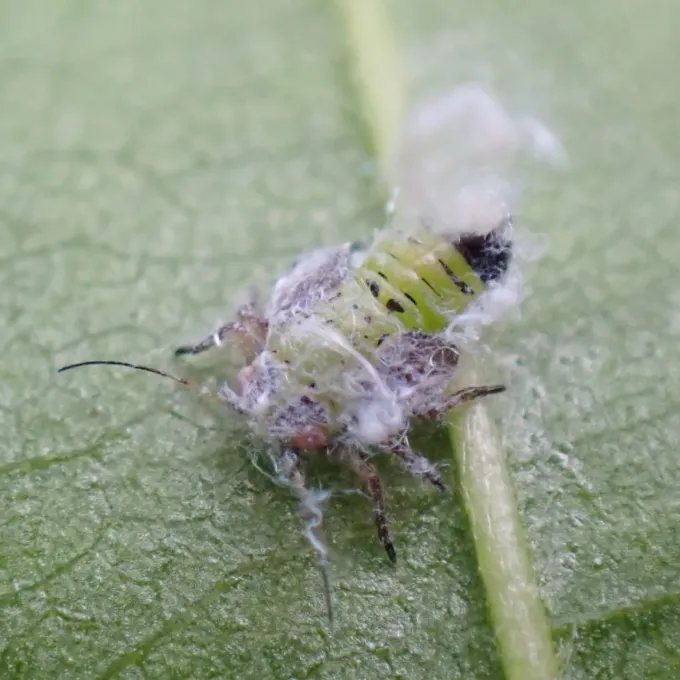
Small, flattened nymphs are often found huddled together at the base of leaves or within the folds of terminal buds. Their presence is frequently masked by the sticky, white wax filaments they produce for protection.
Control measures
Effective control requires an integrated approach. Cultural practices such as winter pruning to open the canopy significantly reduce the humidity and shelter available for overwintering psyllids.
Dormant oil applications are highly effective for targeting overwintering eggs on the bark. By covering the eggs with oil, you can disrupt the hatching process and significantly lower the initial spring population.
During the growing season, systemic insecticides are the preferred choice for managing active infestations. It is crucial to time these applications before the nymphs develop thick waxy coatings that repel contact sprays.
- Encourage beneficial predators like lacewings, lady beetles, and hoverflies.
- Use yellow sticky traps for monitoring adult population spikes.
- Apply botanical oils or insecticidal soaps as a targeted, safer alternative.
- Ensure adequate tree nutrition to foster natural resistance against pest pressure.
Resistance management is vital; never rely on a single chemical class. Rotate products with different modes of action to maintain long-term effectiveness and protect the orchard environment.
Taxonomy
- Latin name
- Psylla
- Order
- Hemiptera (bugs, aphids, leafhoppers)
- Family
- Psyllidae
- EPPO code
- PSYLSP
Discussion
No discussions yet — be the first.