
Rattling grasshopper
Psophus stridulus
Description
How to identify
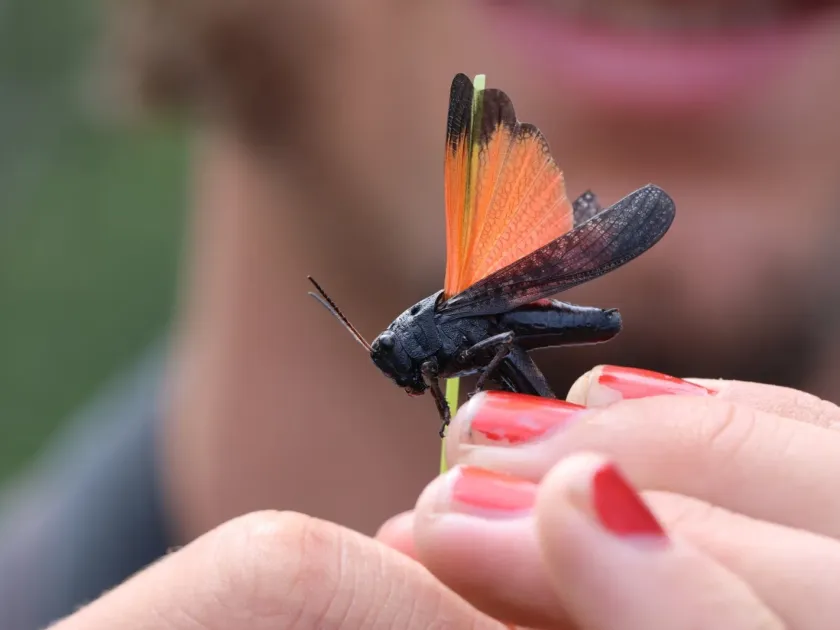
The rattling grasshopper (Psophus stridulus) is a distinct species of the family Acrididae, characterized by its cryptic coloration ranging from greyish to dark brown.
This medium-to-large insect typically measures between 25 and 40 millimeters in length, making it well-adapted to camouflage against stony and dry soil surfaces.
Its most notable feature is the vibrant red coloration on the hind wings, which is only visible during flight, accompanied by a loud crackling sound.
The body is robust with powerful hind legs that allow the insect to perform sudden, long-distance jumps to escape potential predators or threats.
As a species with incomplete metamorphosis, it lays its eggs in protected soil pods, ensuring survival through harsh environmental fluctuations.
What it damages
As a typical grasshopper species, it acts as a polyphagous pest, capable of consuming a wide variety of agricultural crops and wild forage plants.
Feeding damage is primarily caused by both adults and late-instar nymphs, which graze upon foliage, stems, and sometimes the developing grains of crops.
In pastures and meadows, high populations of this species can significantly reduce biomass production, leading to decreased forage availability for livestock.
Young, succulent plants are at the highest risk, as intense grazing can stunt growth and leave crops susceptible to secondary pathogen attacks.
While local outbreaks are less frequent than those of migratory locusts, significant damage can occur during hot, dry summers that favor population growth.
When it appears
Adult rattling grasshoppers are most active during the peak summer months, typically spanning from late June through August.
Nymphs emerge from overwintered egg pods in late spring, usually May, when soil temperatures rise enough to initiate the hatching process.
The developmental period from egg to mature adult involves several molting stages, with feeding intensity increasing as the insect grows.
Reproductive activity and egg-laying occur towards the end of the summer season, securing the next generation within the soil profile.
After the first autumn frosts, the adult population dies off, leaving the eggs as the primary overwintering stage for the following year.
Signs of infestation
The most immediate sign of their presence is the distinct crackling sound they produce during flight, which helps identify their activity in the field.
Visual signs on plants include uneven, ragged leaf margins caused by the grasshoppers' mandibles during the feeding process.
The presence of droppings on the soil surface beneath the plants is a clear indicator of high pest density and active feeding areas.
Morning and evening hours are the best times to spot the insects moving across the soil or within the lower canopy of the vegetation.
Discovery of empty egg pods in the upper layer of soil post-harvest serves as an indicator of potential infestation levels for the upcoming season.
Control measures
Deep autumn plowing is the most effective cultural control method, as it exposes and destroys egg pods, rendering them vulnerable to environmental factors.
Maintaining clean field margins by removing weeds reduces the habitat where these insects often aggregate before moving into the main crop.
Chemical control with insecticides is generally reserved for situations where population density exceeds the economic threshold, usually via spot spraying.
Crop rotation and maintaining healthy soil structure help disrupt the lifecycle of the grasshopper, making the area less attractive for egg-laying.
- Regular monitoring of field edges during the spring hatching period.
- Encouraging natural predators such as insectivorous birds that control grasshopper numbers.
- Application of biological insecticides containing entomopathogenic fungi for eco-friendly population management.
Taxonomy
- Latin name
- Psophus stridulus
- Order
- Orthoptera (locusts)
- Family
- Acrididae
- EPPO code
- PSOHST
Discussion
No discussions yet — be the first.