
Stone moroko
Pseudorasbora parva
Description
How to identify
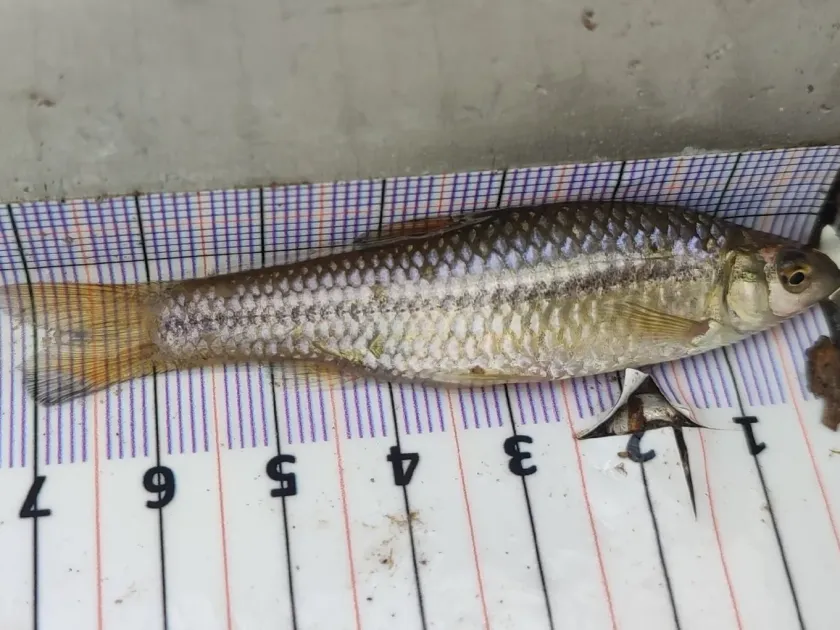
The stone moroko is a small cyprinid fish, usually reaching 8 to 12 cm in length. It features an elongated, laterally compressed body covered with large, silvery-grey scales and a distinct dark horizontal stripe along the mid-body.
Its head is small with a superior mouth, which is a key diagnostic feature separating it from similar small cyprinids. The fins are generally transparent or slightly greyish, lacking bright coloration.
During the spawning season, males become darker, sometimes appearing almost black, and develop small, hard nuptial tubercles on their head. This change in appearance is vital for mating displays and defending spawning territories.
The species is remarkably hardy and can withstand low oxygen levels, high turbidity, and significant temperature fluctuations. This plasticity allows it to thrive in degraded habitats where other species fail.
Stone moroko are known for their parental care; males clean and guard the nesting site, which significantly increases the survival rate of the offspring compared to other broadcast-spawning fish.
What it damages
As an invasive species, stone moroko competes aggressively with native and commercial fish for food resources such as plankton and benthic invertebrates, often leading to the collapse of local fish populations.
They are notorious egg predators. In aquaculture settings, they consume the eggs and larvae of valuable species like carp, leading to massive financial losses and a complete failure of breeding cycles.
Stone moroko act as asymptomatic carriers of several harmful pathogens and parasites, such as the rosette agent. By introducing these to healthy fish stocks, they can cause widespread disease outbreaks and high mortality.
In ornamental ponds, they can be devastating by consuming beneficial aquatic plants and disrupting the delicate balance of the ecosystem. Their rapid reproduction turns them into a nuisance that is difficult to eradicate.
Their sheer density in a pond alters the nutrient cycling, often causing water quality issues that stress or kill sensitive native fish and invertebrates that are crucial for the pond's health.
When it appears
Activity commences in early spring as water temperatures approach 10 degrees Celsius. The fish begin exploring nesting sites and preparing for their first spawning events of the year.
Summer is the peak period for both activity and reproduction. The fish benefit from warm water to accelerate their metabolism, resulting in rapid population growth and intense competition for food.
During autumn, as temperatures decline, they prepare for winter by forming dense shoals in deeper, warmer sections of the water body to minimize energy expenditure while remaining active.
Winter does not halt the stone moroko's life cycle; it remains active even under ice if oxygen levels allow. Their ability to survive winter conditions ensures a quick start for the next spawning season.
The species is highly prolific, with females capable of spawning multiple times in a single season. This strategy allows them to outcompete almost any other small fish in a closed ecosystem.
Control measures
Total eradication is the most effective approach in closed aquaculture ponds, usually achieved by draining the water completely and applying lime to disinfect the pond bottom and kill remaining eggs.
For ornamental or natural ponds, biological control using native predators like pike or perch is recommended. These predatory fish can help keep stone moroko populations in check by consuming juveniles.
Mechanical removal using fine-mesh seine nets is necessary for partial control, although it rarely succeeds in complete eradication due to the species' small size and ability to hide in vegetation.
Strict biosecurity is essential: avoid transferring fish from unknown sources to your ponds. Always quarantine new arrivals to ensure they are free of invasive pests and disease vectors.
- Remove dense aquatic vegetation to reduce available spawning habitats for the fish.
- Install fine-mesh screens on all water inlets to prevent unauthorized access.
- Monitor fish stocks regularly for signs of stunted growth or high density.
Taxonomy
- Latin name
- Pseudorasbora parva
- Family
- Cyprinidae
- EPPO code
- QRASPA
Discussion
No discussions yet — be the first.