
Vicente's cricket
Pseudomogoplistes vicentae
Description
How to identify
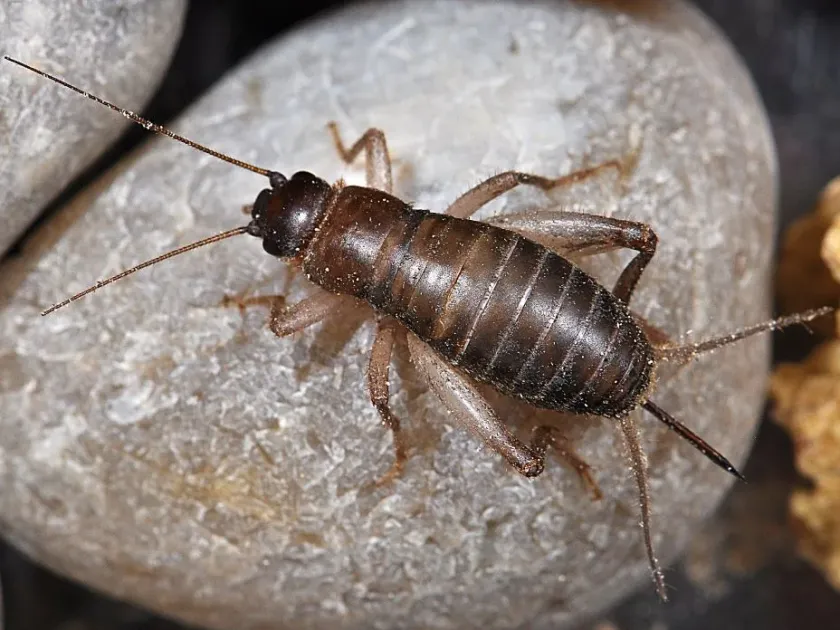
Vicente's cricket (Pseudomogoplistes vicentae) belongs to the family Mogoplistidae, known as scaly crickets, within the order Orthoptera.
These insects are characterized by their small size and bodies covered in tiny, delicate scales that are easily rubbed off during handling.
A distinctive feature of this species is the complete absence of wings in adults, rendering them incapable of flight and restricted to ground movement.
They possess long, thread-like antennae that serve as vital sensory organs for navigating through dense ground cover and plant debris.
The nymphs appear as smaller versions of the adults, though their color is typically lighter, which helps them blend into the soil environment.
What it damages
Primarily, these crickets feed on decomposing plant matter, leaf litter, and organic material found on the surface of the soil.
Under favorable conditions, such as high moisture or overcrowding, they may consume young shoots and seedlings of vegetables.
Damage to berries or low-hanging fruits occurs when the insects chew on the surface, creating entry points for fungal pathogens.
These small wounds can quickly deteriorate into soft rots, leading to significant post-harvest losses or early fruit drop.
In greenhouses, their presence can be particularly problematic due to the lack of natural predators and consistently high humidity.
When it appears
The activity cycle of this species begins in late spring, following the emergence of nymphs from their overwintering sites in the soil.
Population density typically peaks during the warm summer months, coinciding with the maturation of adult crickets.
As nocturnal creatures, they are most active during the night, hiding under mulch or within soil crevices during the heat of the day.
The life cycle is generally completed in a single year, with late summer and autumn dedicated to egg-laying.
Overwintering occurs primarily in the egg stage, which shows high resilience against low temperatures and environmental fluctuations.
Signs of infestation
The most common sign of infestation is the presence of irregular, notched holes on the edges of leaves near the soil line.
Tiny black fecal pellets scattered around the base of plants serve as a clear indicator of cricket activity in the immediate area.
Seedlings may suddenly wilt or die due to stem feeding, which is often mistaken for damping-off diseases if the cricket is not observed.
Small, shallow lesions on the surface of fruits that contact the soil surface are another telltale sign of their presence.
Disturbing organic mulch or soil clods in the early morning often reveals the insects as they scurry to find new hiding spots.
Control measures
Effective management begins with sanitation, such as removing excess debris and weeds that provide shelter for the insects.
Regular cultivation and hoeing of the soil surface help to disrupt the eggs and nymphs, reducing the overall population density.
In high-value areas, replacing heavy mulch with less attractive options or improving drainage can discourage their presence.
Biological controls, such as introducing predatory insects or applying entomopathogenic fungi, can be effective in sustainable systems.
Chemical intervention should be considered a last resort and strictly limited to applications that do not harm beneficial pollinators or soil biota.
Taxonomy
- Latin name
- Pseudomogoplistes vicentae
- Order
- Orthoptera (locusts)
- Family
- Mogoplistidae
- EPPO code
- PMOGVI
Discussion
No discussions yet — be the first.