
Pseudomogoplistes
Pseudomogoplistes
Description
How to identify
Pseudomogoplistes belongs to the order Orthoptera and the family Mogoplistidae. These are specialized cricket-like insects characterized by the complete absence of wings in adult stages.
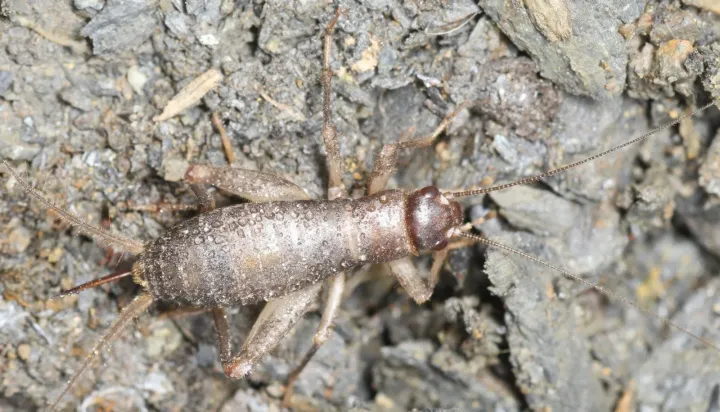
The body is flattened and covered in fine, easily detached scales, which give the insect a silvery or dull appearance. Adult sizes typically range from 8 to 15 millimeters in length.
The coloration generally varies from light brown to dark gray, allowing the pest to camouflage effectively on soil surfaces and amidst plant debris. The head features long, thread-like antennae that exceed the body length.
They can be distinguished from related species by their hind legs, which are less developed for jumping compared to typical crickets. These insects are nocturnal and prefer environments with high humidity.
Larvae look like miniature versions of the adults and undergo several molts during their development. They predominantly inhabit the top layer of soil or remain hidden under organic plant litter.
What it damages
This pest mainly affects vegetable crops, ornamental plants, and seedlings in both greenhouses and open fields. It is particularly dangerous to young plants in their early developmental stages.
Pseudomogoplistes feeds on tender tissues of young shoots, leaves, and roots. Damage at the root collar often leads to plant death due to the severing of the main stem.
In greenhouses, the pest can cause significant damage to flowers by feeding on buds and young foliage. Such activity reduces the overall vigor of the plants and lowers the quality of the produce.
In addition to direct feeding, these insects can facilitate the spread of fungal diseases by carrying spores to injured tissues. This exacerbates the damage, especially under moist conditions.
High levels of damage are typically reported in gardens or farms with poor sanitation, where last year's plant debris is left to accumulate, providing breeding grounds for the population.
Signs of infestation
The first sign of the pest's presence is the appearance of eaten patches on the lower leaves of plants. Foliage often shows characteristic jagged edges or irregular holes of varying sizes.
Excrement, appearing as small dark granules, may be found on the soil surface around the plant base. This is a clear indicator of the insect's activity during the night.
Unexpected wilting of seedlings often suggests damage to the root collar caused by Pseudomogoplistes. It is recommended to carefully inspect the soil around the stem to locate the pest.
The presence of scales on the soil surface or lower leaves is an indirect sign of insect activity. These scales are shed when the pest makes contact with plants or the substrate.
Due to their nocturnal nature, visual inspections are best conducted at night using a flashlight or by checking soil-based traps set up in the evening.
Control measures
The primary control method is strict crop rotation and thorough soil cultivation. Eliminating plant debris removes the pest's overwintering sites and reduces their ability to reproduce.
Maintaining high sanitary standards in greenhouses and surrounding areas by regular weeding is essential, as weeds often serve as a reservoir for the pest population.
When pest populations are high, contact or stomach-action insecticides approved for use on specific crops may be applied. Applications are most effective when performed in the evening.
Biological control methods include the application of entomopathogenic nematodes, which target larvae within the soil. This is an environmentally friendly way to reduce the population.
Regular monitoring of plant health and timely implementation of protective measures are key to minimizing harvest losses. A comprehensive management strategy ensures effective protection.
Taxonomy
- Latin name
- Pseudomogoplistes
- Order
- Orthoptera (locusts)
- Family
- Mogoplistidae
- EPPO code
- PMOGSP
Discussion
No discussions yet — be the first.