
Scaly cricket
Mogoplistes brunneus
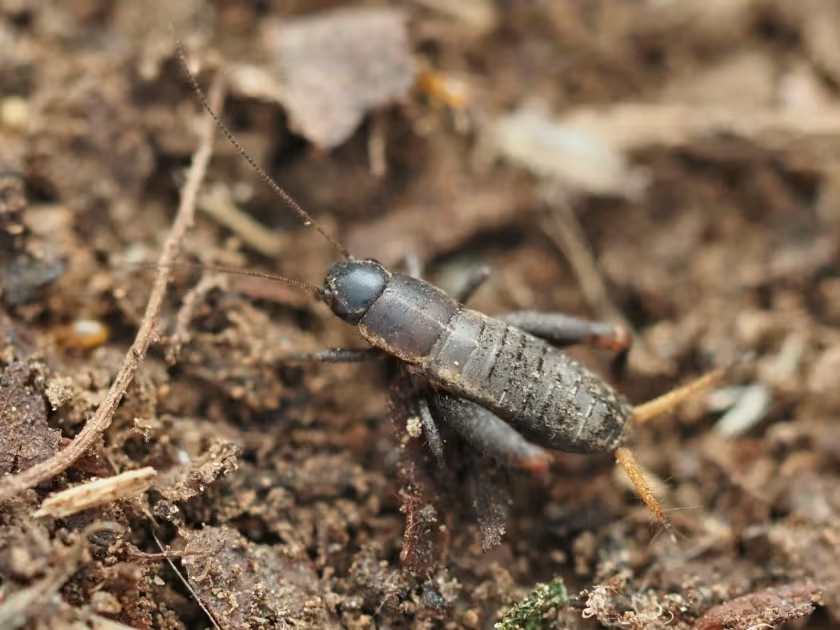
Description
How to identify
The scaly cricket, scientifically known as Mogoplistes brunneus, is a member of the Mogoplistidae family. These insects are easily distinguished by the dense layer of tiny, deciduous scales covering their bodies, which are easily rubbed off.
They are characterized by their small size and the complete absence of developed wings, which makes them look somewhat like large, mature nymphs throughout their entire lifespan.
The antennae of these crickets are remarkably long and thread-like, often several times the length of their body, helping them navigate in dark, cluttered environments like soil crevices.
The hind legs are well-developed for jumping, although these crickets spend most of their time scuttling along the ground or hiding under debris rather than leaping.
Females possess a long, sword-shaped ovipositor, which they use to insert eggs into moist soil, damp organic matter, or decaying plant tissues.
What it damages
Mogoplistes brunneus acts as an opportunistic feeder, primarily targeting the roots, stems, and lower foliage of young, tender vegetable crops and greenhouse plants.
The most severe damage occurs at the seedling stage, where the crickets gnaw on the root collar, effectively girdling the stem and causing the plant to wither and collapse.
They also consume the leaf tissue of low-lying plants, leaving behind irregular, shothole-like feeding marks that degrade the quality of the harvested crop.
In high-density populations, these insects can cause significant stand loss, forcing farmers to replant affected areas, which increases production costs.
Furthermore, the damage caused by their feeding often creates entry points for various soil-borne pathogens, leading to secondary rot and plant disease outbreaks.
When it appears
The lifecycle of the scaly cricket is highly dependent on humidity and temperature. They typically emerge from overwintering in late spring as the ground begins to warm.
Active feeding and reproduction continue throughout the summer months, with population numbers peaking during periods of high humidity and rainfall.
As temperatures begin to drop in autumn, these crickets seek shelter deep within the soil or under dense vegetation to survive the winter season in a dormant state.
In temperate zones, they typically have one or two generations per year, depending on the length of the growing season and local environmental conditions.
Greenhouse environments provide ideal year-round conditions, allowing these insects to bypass natural diapause and remain active and harmful throughout the year.
Signs of infestation
The primary indicator of a scaly cricket infestation is the unexplained wilting of young seedlings, often appearing as patches of dying plants across the garden.
Visual inspection under mulch, fallen leaves, or greenhouse covers during dawn or dusk often reveals the presence of these shy, elusive insects as they scurry for cover.
Tiny fecal pellets found at the base of affected plants serve as a clear sign of persistent feeding activity in that specific microhabitat.
Leaves showing irregular, jagged feeding holes near the soil surface level are classic symptoms of their nocturnal activity.
Disturbed soil surfaces and small burrows in the substrate around the roots often signify active nesting or movement areas for the cricket population.
Control measures
The most effective strategy involves cultural control: keeping the field clean of crop debris and weeds significantly reduces the habitat available for the crickets.
Regular cultivation and tilling of the soil disrupt the crickets' breeding grounds and expose eggs and nymphs to predators and harsh weather conditions.
Moisture management is key; reducing excessive standing water or damp mulch near the base of vulnerable plants can deter the insects from colonizing those areas.
Biological controls, such as encouraging the presence of ground beetles and birds, can help suppress their numbers to levels where damage is negligible.
When chemical control is necessary, targeted baiting or soil drenching with systemic insecticides should be applied with caution to minimize environmental impact.
Taxonomy
- Latin name
- Mogoplistes brunneus
- Order
- Orthoptera (locusts)
- Family
- Mogoplistidae
- EPPO code
- MOGOBR
Discussion
No discussions yet — be the first.