
Lesser marsh grasshopper
Pseudochorthippus curtipennis
Description
How to identify
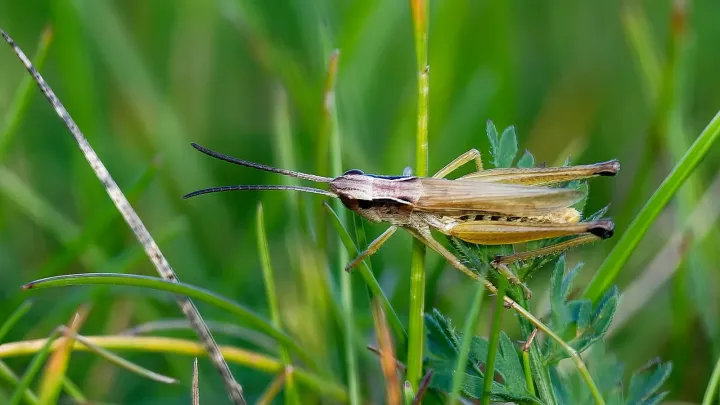
The Lesser marsh grasshopper (Pseudochorthippus curtipennis) belongs to the order Orthoptera and the family Acrididae. This species is characterized by its small size, with males typically reaching 14–18 mm and females 18–25 mm in length.
The defining feature of this species is its shortened wings. In females, the wings often fail to reach the tip of the abdomen, while in males, they reach or slightly exceed the abdomen's end.
Their coloration is highly variable, ranging from green to brown or grayish, which provides excellent camouflage within dense grassland vegetation. They lack distinct high-contrast markings on their bodies.
The head is conical, and the pronotum features well-developed side keels that are slightly concave in the middle. These morphological traits are crucial for correct identification in the field.
They prefer moist habitats such as meadows, river floodplains, and damp grassy areas, where the vegetation is sufficiently dense to provide the necessary humidity for their survival.
What it damages
This grasshopper is a polyphagous pest that feeds primarily on the vegetative parts of various plants. They pose a significant threat to grasses, particularly cereal crops and pasture forage.
During outbreaks, they can cause extensive damage to wheat, barley, and oat fields by chewing on leaves and stems. This damage reduces the plant's photosynthetic capacity and hinders development.
The species is particularly problematic on permanent pastures and hayfields, where it feeds on high-quality forage grasses, leading to a direct decrease in biomass production.
Feeding damage causes the leaves to wither prematurely. At high densities, the grasshoppers can consume the majority of the foliage, rendering the remaining material unsuitable for livestock.
In cases of food scarcity due to drought or overgrazing, the population may migrate toward vegetable plots or other neighboring crops, expanding the scope of their damage.
When it appears
The lifecycle of the Lesser marsh grasshopper is univoltine, meaning there is one generation per year. They overwinter exclusively in the egg stage, deposited in the soil or under grass clumps.
Egg hatching typically occurs in late spring (May). The timing depends on soil temperature and the specific moisture conditions of the habitat, which influence the emergence of nymphs.
Nymphs develop through five instars over approximately 40 to 60 days. Adults emerge in mid-summer, usually in July, and remain active until the first significant autumn frosts.
The breeding period follows the emergence of adults. Females spend much of their time laying egg pods in the soil surface, ensuring the survival of the next generation through the winter.
Cool and wet conditions in the early summer can slow development, whereas warm and dry seasons often correlate with increased population densities.
Signs of infestation
The most common sign of infestation is the presence of irregular, notched feeding patterns on the margins of leaf blades. These marks are distinct from the damage caused by caterpillars.
Active jumping or flying of grasshoppers when walking through a field is a clear indicator of a significant infestation. This is easily observed during the warm hours of the day.
Small cylindrical droppings found on the soil or at the base of plants serve as evidence of high grasshopper activity in the immediate vicinity.
- Withered and brown leaf tips on affected grasses.
- Patches of thinned vegetation on pastures and field edges.
- Visible presence of nymphs in the lower canopy of the grass.
In extreme cases, whole fields may show widespread leaf stripping, significantly reducing the visual density and quality of the forage crop.
Control measures
Cultural control is the most effective approach. Regular mowing of field edges, roadsides, and irrigation ditches removes essential habitat and breeding grounds for the grasshoppers.
Tillage and deep plowing of fallow land in late autumn or early spring can physically destroy eggs buried in the soil, preventing the next generation from emerging.
Chemical control is advised only when populations exceed economic damage thresholds. Registered insecticides should be applied during the early nymphal stages for maximum efficacy.
Maintaining healthy, dense crop stands can sometimes reduce the attractiveness of the area to these pests, as they favor open, less dense patches for basking.
Preserving natural predators, including various bird species and carabid beetles, helps in maintaining the grasshopper population at an equilibrium that prevents major economic losses.
Taxonomy
- Latin name
- Pseudochorthippus curtipennis
- Order
- Orthoptera (locusts)
- Family
- Acrididae
- EPPO code
- CHOHCU
Discussion
No discussions yet — be the first.