
Camphor scale
Pseudaonidia duplex
Description
How to identify
Camphor scale (Pseudaonidia duplex) belongs to the Diaspididae family, order Hemiptera. This small insect is distinguished by a hard, protective scale that covers its body, providing significant resistance to environmental stressors and chemical treatments.
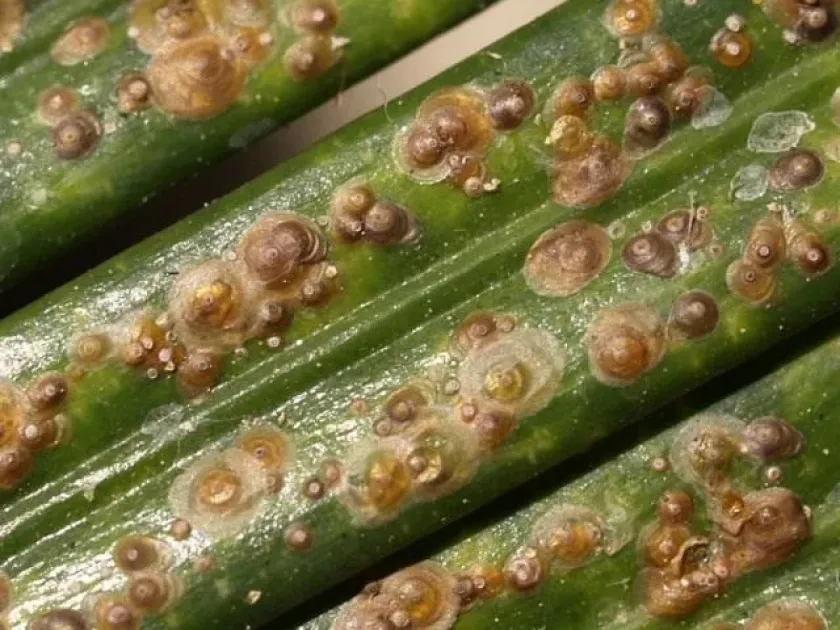
The adult female possesses a rounded or slightly elongated brownish-grey scale, often featuring a darker central area. In contrast, males are much smaller, winged, and short-lived, with the primary role of reproduction.
Females lead a sedentary life under their scales, lacking developed legs or antennae. They use a needle-like piercing-sucking mouthpart to penetrate plant tissues and feed on sap.
First-instar nymphs, known as "crawlers," are the only mobile stage. They have functional legs, allowing them to disperse across the host plant to locate optimal feeding sites.
This species is a destructive sap-sucking pest that depletes plant nutrients, leading to physiological decline and reduced vitality of the affected host plant.
What it damages
Pseudaonidia duplex is a polyphagous pest, with a particular preference for citrus crops such as tangerines, lemons, and oranges. It also infests tea plants, camellias, and a wide variety of ornamental broad-leaved trees.
In subtropical climates, the scale massively colonizes trunks, branches, foliage, and fruits. Fruit damage results in significant economic loss, as affected produce fails to meet market quality standards.
High infestation density causes stunted growth and bending of young shoots. The plant becomes weakened, losing turgor and becoming more susceptible to opportunistic pathogens.
The sites of feeding often become entry points for secondary infections, including fungal diseases that flourish on the honeydew secreted by the scales, leading to premature leaf drop.
Severe infestations can result in the dieback of individual branches, and without proper management, it may eventually lead to the total collapse of the plant, especially in nursery settings.
When it appears
The development of camphor scale is highly temperature-dependent, with breeding and life cycles accelerating during warmer periods of the year.
The pest typically undergoes several generations per year. In warmer regions, development can be nearly continuous throughout the entire vegetation season.
The most critical window for control is the crawler stage, which coincides with the period of active plant growth. This is when the insect is most vulnerable and mobile across the host canopy.
Overwintering usually occurs as fertilized females or older nymphs protected by their scales on tree bark. With the return of consistent warmth, they become active and resume egg-laying.
Multiple overlapping generations throughout the season make control challenging, as plants may host various life stages of the insect simultaneously.
Signs of infestation
The primary symptom of infestation is the appearance of small, hard, rounded scales on branches, leaves, or fruit. Lifting these scales reveals the insect underneath.
Chlorosis, characterized by yellowing spots around feeding sites, is a common indicator. This indicates that the insect has disrupted the plant's metabolic and photosynthetic processes.
Leaf surfaces may become coated in a sticky substance or black sooty mold, which grows on the insect's honeydew. This mold blocks light and further reduces photosynthetic capacity.
On fruits, infestation appears as pitted marks or discolored spots, which degrade the physical appearance and quality of the crop.
- Presence of dark or grey scale-like bumps on branches.
- Wilting and premature shedding of foliage.
- Significant growth retardation.
- Sticky residue or sooty mold on leaves.
Control measures
Managing camphor scale requires an integrated approach because the hard scale provides high protection against standard contact insecticides.
Timing is crucial; treatments are most effective when applied during the crawler stage, before the insects develop their protective shells. Contact pesticides are highly lethal during this mobile phase.
Systemic insecticides are often preferred as they circulate within the plant tissues, targeting the sap-sucking insects and providing extended protection even against hidden populations.
Cultural practices are vital: regular pruning of infested branches, appropriate irrigation, and balanced fertilization help maintain plant vigor, allowing the host to better withstand pest pressure.
Biological control methods involving natural enemies, such as predatory beetles or parasitic wasps, can significantly suppress population levels, offering an environmentally friendly alternative to chemicals.
Taxonomy
- Latin name
- Pseudaonidia duplex
- Order
- Hemiptera (bugs, aphids, leafhoppers)
- Family
- Diaspididae
- EPPO code
- PSDADU
Discussion
No discussions yet — be the first.