
Acanthaspidiotus scale
Acanthaspidiotus
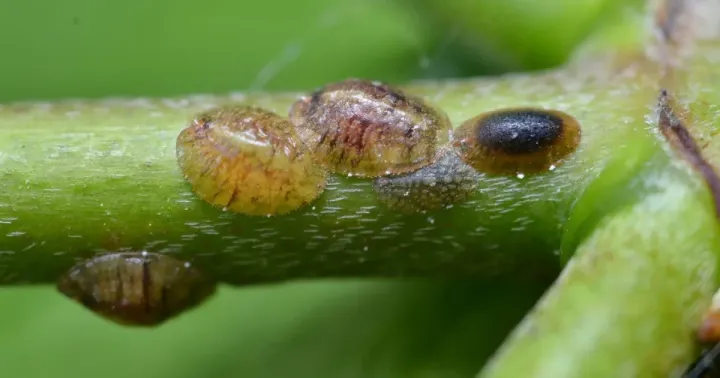
Description
How to identify
Acanthaspidiotus is a genus of armored scale insects belonging to the Diaspididae family. These pests are characterized by a hard, waxy test (shield) that protects the insect from environmental stresses and chemical treatments.
Adult females are generally sedentary, remaining fixed to the host plant under their protective covers. They possess a specialized stylet used to pierce plant tissues and extract nutrients from the phloem.
The first-instar nymphs, known as crawlers, are the only mobile stage in the life cycle. They are microscopic and move across the plant surface to find a suitable feeding site before settling down.
Taxonomically, identifying Acanthaspidiotus requires an examination of the pygidial margin of the female, which contains specific structures unique to the genus and species.
Reproduction typically involves the female laying eggs under her shield. Once the eggs hatch, the crawlers emerge to begin the cycle again, ensuring the survival of the population.
What it damages
Acanthaspidiotus scale primarily affects woody plants, including various conifer species like juniper and pine, as well as deciduous ornamentals. It can become a serious pest in nurseries and landscape plantings.
The feeding process depletes the host plant of essential nutrients. Because the insects aggregate in large numbers, the cumulative impact on the tree's vascular system can be severe.
Heavy infestations lead to yellowing of needles or leaves, stunted growth, and premature foliage drop. Over time, the host plant loses its vigor and may suffer from dieback of individual branches.
Stressed trees infested with scale become more susceptible to other biotic and abiotic stressors, such as fungal pathogens and extreme weather conditions.
Economic damage is most pronounced in commercial nurseries where infested plants lose market value or must be destroyed to prevent the spread of the pest to other stock.
When it appears
The life cycle of the scale is highly dependent on regional temperatures. Emergence from winter dormancy usually coincides with the start of the spring sap flow in host trees.
Summer is the period when crawlers are most active. This is the optimal time for monitoring, as the newly emerged nymphs are vulnerable before they develop their hard protective shields.
The number of generations per year varies based on the climate. In warmer regions, the insect can produce multiple generations, leading to rapid population growth during the growing season.
As temperatures drop in autumn, the scale insects prepare for overwintering. Most individuals remain in a developmental stage that is resistant to cold, tucked beneath their waxy shields.
Winter survival is a limiting factor for the population density. However, because they are well-protected on bark surfaces, they can survive harsh winter conditions quite effectively.
Signs of infestation
The presence of tiny, hard, scale-like bumps on the bark or needles is the most common diagnostic sign of infestation. These bumps can often be scraped off with a fingernail.
Host plants may exhibit signs of general decline, including chlorosis (yellowing), wilting, and thinning of the canopy. Branch dieback is common in long-term, untreated infestations.
A crust-like layer may appear on the bark where the insects have settled in high densities. In some cases, the needles or leaves may become distorted as the plant reacts to the feeding.
The absence of honeydew differentiates armored scales like Acanthaspidiotus from soft scales, though secondary fungal growth on the bark may sometimes be mistaken for other issues.
- Hard waxy shields visible on twigs and bark.
- Yellowing and premature drop of needles or leaves.
- Reduction in annual shoot growth.
- Dieback of smaller branches.
Control measures
Chemical control is most effective during the crawler stage, as the hard shells of older insects provide a high level of resistance to contact insecticides.
Systemic insecticides are frequently used to manage populations, as these move through the plant's vascular system and reach the feeding insects directly.
Pruning out and disposing of heavily infested branches can help reduce the overall population pressure in a landscape or orchard setting.
Horticultural oils applied in the early spring can target overwintering stages by suffocating them. This is a common practice in integrated pest management programs.
Biological control, such as the use of predatory lady beetles or parasitoid wasps, can play a role in suppressing scale populations in sustainable or natural environments.
Taxonomy
- Latin name
- Acanthaspidiotus
- Order
- Hemiptera (bugs, aphids, leafhoppers)
- Family
- Diaspididae
- EPPO code
- AASPSP
Discussion
No discussions yet — be the first.