
Abgrallaspis
Abgrallaspis
Description
How to identify
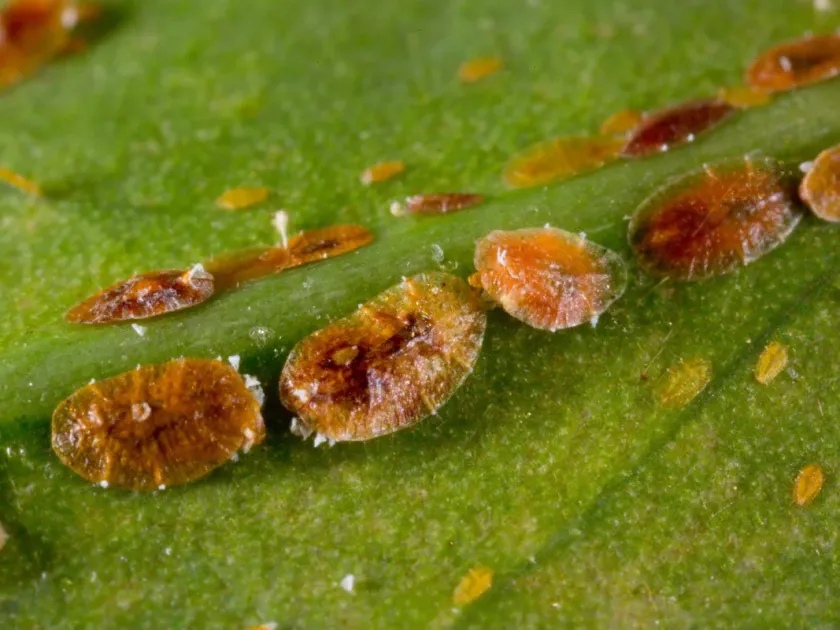
Abgrallaspis is a genus of armored scale insects within the family Diaspididae. These tiny pests are specialized plant parasites that construct a tough, wax-like protective covering, known as a scale or shield, which shields their delicate bodies from external environmental stressors and chemical treatments.
The adult females are sessile, meaning they remain attached to one spot on the plant for the duration of their lives. Lacking legs and functional eyes, they spend their time feeding on plant sap. Their shields are often circular or pear-shaped and match the color of the host plant's bark, making them extremely cryptic.
Males, in contrast, are winged and mobile, though their lifespan is remarkably short. Their sole purpose is to locate females for mating, and they do not possess mouthparts for feeding, which highlights the highly specialized nature of their life cycle.
The life cycle proceeds from egg to crawler, nymph, and adult. The crawler stage is the most significant phase for the spread of an infestation, as these tiny, active nymphs move across the plant surfaces to find ideal feeding sites before settling down and secreting their protective shields.
Depending on ambient temperature and humidity, the development time of one generation can vary. In warm or greenhouse conditions, these insects can complete multiple life cycles in a single year, allowing populations to expand rapidly if left unchecked.
What it damages
Abgrallaspis acts as a generalist pest, attacking a wide range of woody species, including deciduous trees, conifers, and various ornamental shrubs. They are particularly noted for causing significant damage in nurseries and orchards where they weaken host plants.
By inserting their needle-like stylets into plant tissues, these insects drain the plant of vital sap. This constant depletion of nutrients puts extreme stress on the plant, leading to stunted growth, reduced vigor, and in severe cases, the death of branches or entire plants.
Infested leaves often show signs of chlorosis, appearing yellow or speckled where the insects have fed. Over time, these leaves may wither, curl, and drop prematurely, severely reducing the plant's photosynthetic capacity.
The feeding sites created by the scales serve as entry points for pathogens and opportunistic fungi, leading to secondary infections. These can manifest as necrotic lesions, bark splitting, or the development of sooty mold on the sticky honeydew secreted by associated pests.
For ornamental plants, the presence of these insects ruins the visual appeal, while in fruit production, damage to the fruit skin reduces marketability and quality, making the produce less desirable or unusable.
Signs of infestation
The first indication of an Abgrallaspis infestation is the presence of small, bump-like structures on the bark of twigs, leaf stalks, or the underside of leaves. These bumps are the protective shields and are easily dislodged if scratched with a fingernail.
Leaves will show localized discoloration, typically starting as small yellow or brown spots. As the infestation progresses, these symptoms become more widespread, eventually causing leaves to turn entirely yellow and fall off well before the natural autumn senescence.
In cases of heavy infestation, stems and branches may look encrusted with a gray or brownish layer of scales. This can make the bark feel rough and create a distinct, unhealthy appearance that is easily recognizable upon close inspection.
Reduced terminal growth and dieback of the upper canopy are common symptoms of an established colony. If a plant appears to be failing to thrive despite proper fertilization and watering, it is often a sign of a hidden infestation on the less accessible parts of the tree.
Using a magnifying glass or hand lens is recommended for scouting, especially during the spring and summer when crawlers are most active and visible as tiny, light-colored specks moving along the plant stems.
Control measures
Controlling Abgrallaspis is challenging due to the protective scale, which acts as a barrier to most conventional pesticides. The most effective window for intervention is during the crawler phase, as these nymphs are highly susceptible to contact insecticides before they develop their hard shields.
Systemic insecticides are often employed to manage established populations. By applying these to the roots or spraying them on the foliage, the chemical is absorbed into the plant's system, killing the scale insects as they feed on the toxic sap.
Cultural control practices, such as the pruning and destruction of heavily infested branches, help to drastically reduce the population density. This also improves air circulation and light penetration, making the plant less hospitable for future colonization.
Dormant oil sprays applied in the late winter or early spring are highly effective at suffocating the overwintering generation. These oils coat the bark, creating a physical barrier that prevents the insects from breathing.
- Regularly inspect new nursery stock before introducing it to your landscape.
- Maintain plant health with balanced nutrition to help them resist minor pest attacks.
- Encourage natural predators such as ladybirds and parasitic wasps that target scale insects.
- Avoid over-fertilizing with nitrogen, which can lead to succulent growth that attracts pests.
Taxonomy
- Latin name
- Abgrallaspis
- Order
- Hemiptera (bugs, aphids, leafhoppers)
- Family
- Diaspididae
- EPPO code
- ABGRSP
Discussion
No discussions yet — be the first.