
Acutaspis
Acutaspis
Description
How to identify
Acutaspis is a genus of scale insects within the family Diaspididae. These pests are characterized by a protective, waxy scale covering that shields them from predators, environmental stresses, and contact insecticides.
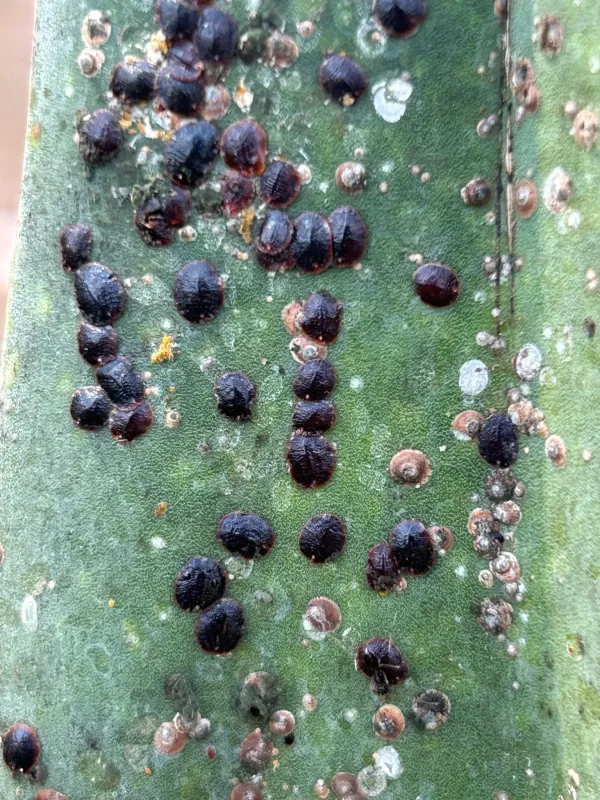
Adult females are sessile, possessing a firm, circular or elongated cover, typically dark brown or black. Males, in contrast, are much smaller, winged, and do not feed, existing solely for reproductive purposes.
The first-instar nymphs, known as crawlers, represent the only motile stage of the insect's life cycle. They possess functional legs and actively disperse across the plant surface to find suitable sites for permanent attachment.
Classification of Acutaspis species often requires detailed microscopic analysis of the pygidium, as morphological similarities between different scale species can be significant.
This pest is primarily found in tropical and subtropical regions, thriving in warm, humid climates, although it can also become a persistent issue in greenhouses and nurseries worldwide.
What it damages
Acutaspis species primarily infest woody perennial plants, with a strong preference for citrus, avocado, mango, and various ornamental greenhouse foliage. They feed by inserting their stylets into the plant's tissues.
By extracting plant sap, these insects cause widespread physiological stress. This depletion of nutrients leads to reduced photosynthesis, stunted growth, and a general decline in the plant's vigor.
Severe infestations result in the yellowing of leaves, leaf drop, and the eventual dieback of branches. In young trees, high pest populations can lead to total plant mortality if left untreated.
Direct damage to fruits is a major economic concern, as the presence of scales causes unsightly blemishes, necrotic spots, and reduced marketability of the produce.
Furthermore, the persistent feeding wounds and the excretion of honeydew create an environment conducive to secondary infections by sooty mold, which further hampers plant health.
Signs of infestation
The most prominent sign of infestation is the appearance of small, hard, crust-like coverings on the underside of leaves and along stems. These scales are often difficult to remove and may be mistaken for plant defects.
Chlorotic spots or generalized yellowing usually appear around the feeding sites due to the injection of salivary toxins by the insects. Sticky honeydew on the leaves is another common indicator.
Affected plants often display signs of dehydration, as the sucking insects disturb the plant's hydraulic system. This results in wilted leaves and premature senescence of the foliage.
On fruits, the scales appear as dark or pale spots that leave permanent marks after removal, significantly degrading the aesthetic quality and storage life of the harvest.
In advanced cases, the bark or stems may become entirely encrusted with scales, giving the wood a rough, uneven texture that is easily distinguishable from healthy tissue.
Control measures
Managing Acutaspis requires an integrated pest management (IPM) strategy to effectively reduce population numbers while protecting plant health and the environment.
- Regular monitoring of nurseries and orchards to detect early infestations.
- Pruning and destroying severely infested branches to reduce local pest density.
- Applying horticultural oils during dormant periods to smother overwintering adults.
- Targeted use of systemic insecticides during the peak crawler activity period.
- Conservation or introduction of natural parasitoids and predators that feed on scale insects.
Timing is critical in chemical control; applications must coincide with the crawler stage, as these young nymphs lack the protective waxy shield and are highly susceptible to contact treatments.
Maintaining proper cultural practices, such as balanced fertilization and appropriate irrigation, helps plants withstand the pressure from pest populations and recovers more quickly from feeding damage.
Taxonomy
- Latin name
- Acutaspis
- Order
- Hemiptera (bugs, aphids, leafhoppers)
- Family
- Diaspididae
- EPPO code
- ACUTSP
Discussion
No discussions yet — be the first.