
Phorid fly
Pseudacteon
Description
How to identify
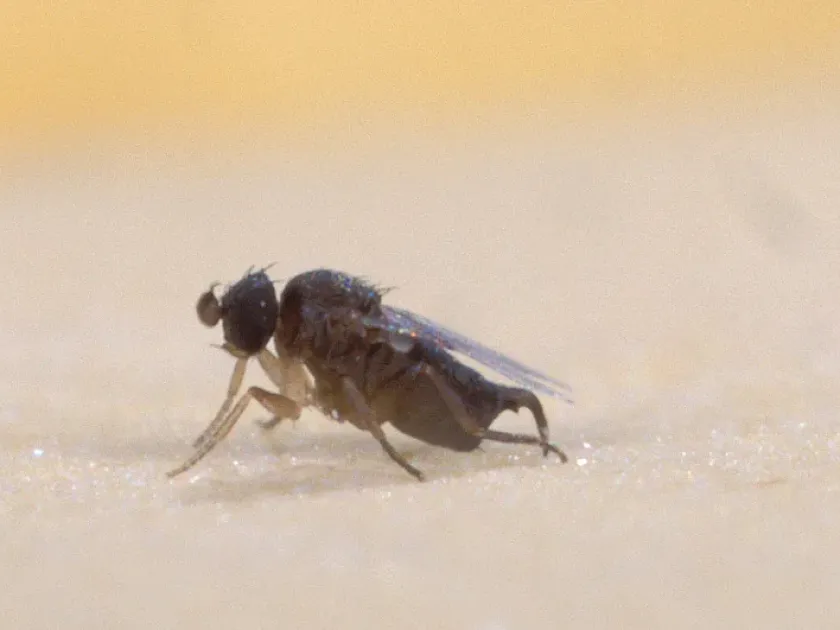
The Pseudacteon genus, commonly known as phorid flies, consists of small dipteran insects characterized by a distinct "humpbacked" appearance. They belong to the family Phoridae and are highly specialized parasitoids.
Adult flies are tiny, typically measuring between 1 and 2 millimeters in length. Their wings are relatively short, and their bodies are often dark brown or black, optimized for agile flight during the pursuit of host ants.
The female fly possesses an ovipositor modified for precision egg-laying. She targets specific ant species, depositing a single egg into the ant's thorax while in flight or during brief physical contact.
The life cycle involves the larvae developing inside the ant's head, which eventually leads to the host's death. This process is a classic example of evolutionary adaptation for high-precision biological control.
Identifying these flies in the field requires specialized knowledge of their behavior, as they are not easily distinguished from other small flies without close observation of their association with ant colonies.
What it damages
Phorid flies of the genus Pseudacteon are not plant pests. Instead, they serve as vital natural enemies of invasive ant species, particularly the red imported fire ant, which can cause significant damage to agricultural crops.
Invasive ants often damage crops by nesting in root zones, chewing through irrigation lines, and consuming seeds or young seedlings. By parasitizing these ants, phorid flies disrupt colony foraging activity.
The presence of Pseudacteon forces the ants to adopt defensive behaviors, reducing their time spent on harvesting and plant destruction. This behavioral change directly benefits the crop's health and yield.
As biological agents, they are extremely efficient because they are host-specific, ensuring that they do not harm beneficial insect populations like pollinators or other natural predators.
The economic impact of their presence is positive, as it reduces the need for frequent soil-applied insecticides, which are often costly and harmful to the environment.
Control measures
No control measures are needed against Pseudacteon, as they are beneficial organisms. The focus of modern agronomy is to conserve and promote their populations within the agroecosystem.
To support phorid fly survival, farmers should avoid indiscriminate use of broad-spectrum insecticides. Such chemicals are often detrimental to the flies and can eliminate the benefits of biological control.
Maintaining floral strips or hedgerows around fields provides essential nectar sources for adult phorid flies, helping to keep their populations stable throughout the growing season.
Adopting an Integrated Pest Management (IPM) strategy allows for the monitoring of parasitoid activity. If parasitism rates are high, the reliance on synthetic chemicals for ant control should be decreased.
Future agricultural practices aim to integrate the release of mass-reared Pseudacteon flies into farming systems to sustain long-term ecological balance and protect crops from invasive ant pressure.
Taxonomy
- Latin name
- Pseudacteon
- Order
- Diptera (flies)
- Family
- Phoridae
- EPPO code
- PSTNSP
Discussion
No discussions yet — be the first.