
Mushroom phorid fly
Megaselia halterata
Description
How to identify
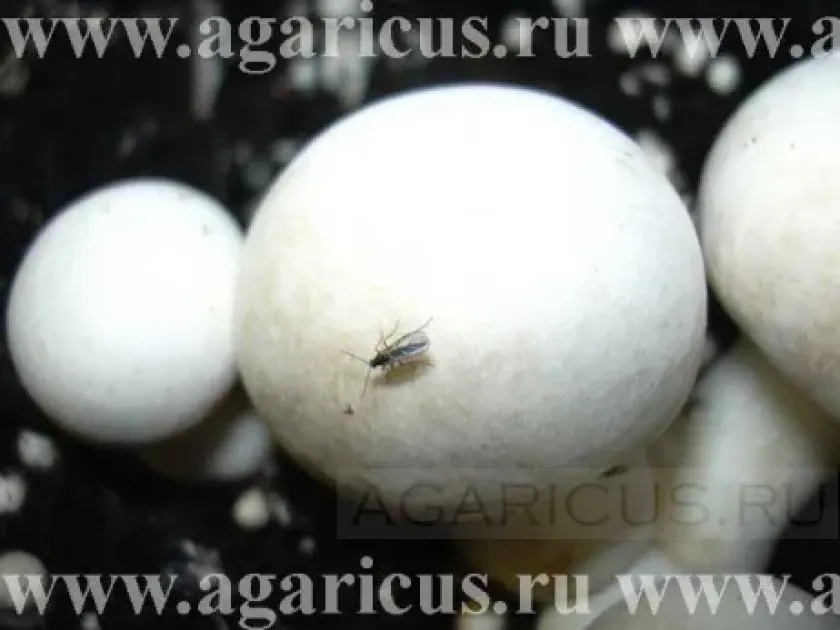
The mushroom phorid fly (Megaselia halterata) is a small insect belonging to the family Phoridae, order Diptera. Adults are characterized by a hunched back appearance, typically reaching 2–3 mm in length.
They are generally dark-colored with translucent wings and have strong legs that allow them to run quickly across substrate surfaces and mushroom caps.
The larvae are small, white, legless creatures, growing up to 4 mm in size. They possess specialized mouthparts that allow them to feed efficiently on fungal tissues.
The life cycle is temperature-dependent, ranging from 15 to 25 days. Adults are highly attracted to the scent of the mushroom mycelium, facilitating rapid infestation of production rooms.
These flies are not only pests but also vectors for various pathogens, including viral and bacterial diseases that affect the commercial cultivation of Agaricus bisporus.
What it damages
The primary damage is caused by the larvae feeding on the mycelium, which reduces the overall density and vitality of the mushroom spawn in the substrate.
Feeding activity often destroys the mycelial network, preventing the formation of pinheads and causing significant reductions in crop yields during all flushes.
Larvae can tunnel into the developing sporophores, burrowing through the stems and caps, which renders the mushrooms unmarketable and prone to rapid decay.
Infested areas exhibit signs of tissue softening and necrosis, often accompanied by foul odors caused by secondary bacterial infections introduced by the flies.
In severe cases, the fly population can explode in numbers, leading to total crop failure if immediate cultural or chemical controls are not implemented.
Signs of infestation
The most obvious sign of an infestation is the presence of adult flies hovering over the casing layer, particularly near fans and ventilation shafts.
Visual inspection of the casing soil may reveal holes or tunnels where larvae have migrated from the substrate up into the mushroom beds.
When cutting open a mushroom, the presence of internal tunnels or larvae indicates a deep-seated infestation that has likely been occurring for several days.
Stunted mushroom growth or localized bare patches in the beds are classic indicators of larval feeding damage on the underlying mycelium.
The accumulation of debris and waste around the base of the mushrooms or on the substrate surface is another clear sign of activity by these larvae.
Control measures
Strict biosecurity and hygiene protocols are paramount, including the installation of fly-proof mesh screens on all ventilation intakes to block fly entry.
Effective compost pasteurization is the first line of defense, ensuring that all life stages of the fly within the raw ingredients are eliminated before spawning.
- Deployment of sticky traps to monitor and reduce adult fly populations.
- Prompt removal of diseased or infested mushrooms from the growing room.
- Application of approved insecticides to the casing layer to disrupt the life cycle.
- Maintaining optimal temperature and humidity to discourage fly reproduction.
Post-harvest cleaning and terminal disinfection of rooms between crops are crucial for breaking the lifecycle and preventing carry-over of the pest to new batches.
Regular monitoring allows for early detection, which is essential to keep the population below economic injury levels and ensure high-quality mushroom production.
Taxonomy
- Latin name
- Megaselia halterata
- Order
- Diptera (flies)
- Family
- Phoridae
- EPPO code
- MGASHA
Discussion
No discussions yet — be the first.