
Phorid fly
Megaselia pygmaea
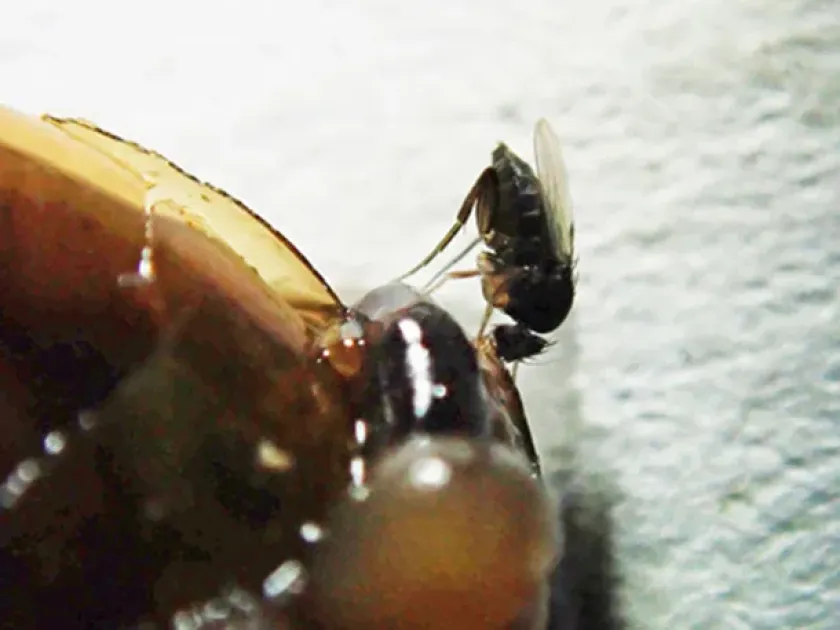
Description
How to identify
The Phorid fly (Megaselia pygmaea) belongs to the family Phoridae, order Diptera. These are tiny flies, typically measuring 1 to 3 mm in body length.
Adults are known for their distinctively humped thorax, which is the origin of their common name. They are usually black or dark brown in color with transparent wings featuring characteristic venation.
The head is small with large compound eyes. The antennae are short and often partially hidden, which serves as a key diagnostic feature for identification.
The larvae are legless, white to yellowish in color, and cylindrical in shape. They grow up to 4-5 mm in length before reaching the pupation stage.
Distinguishing this species from other phorid flies requires examination of the tibial bristles and specific wing vein patterns, usually performed by entomologists.
What it damages
The primary food source for the larvae is fungi, particularly cultivated mushrooms. The pest can damage both the mycelium and the fruiting bodies at various developmental stages.
Beyond mushroom farms, Megaselia pygmaea thrives on a wide range of organic matter. They are commonly found in decaying plant residues, compost piles, and rotting vegetables.
In greenhouses, these flies pose a significant threat as high humidity and the presence of nutrient-rich organic substrates provide ideal breeding grounds.
The pest acts as a vector for various pathogens, including molds and bacteria, which cause secondary rot in plant and mushroom tissues.
Mass infestations can lead to complete loss of product quality and can reduce mushroom yields by 30-50% if left unchecked.
When it appears
The activity of the Phorid fly is strictly dependent on temperature. The most favorable range for their development is between +20 and +25 degrees Celsius.
In indoor environments and mushroom facilities, the pest can reproduce year-round, as stable, comfortable conditions are consistently maintained.
The lifecycle from egg to adult takes approximately 15–20 days under optimal conditions, allowing populations to expand exponentially in a short period.
Adult flies are active throughout the day, especially near moist substrates where they lay eggs in cracks or damp areas.
Population peaks usually occur due to poor sanitation in growing rooms and inadequate ventilation of the growing substrate.
Signs of infestation
The first sign of infestation is the presence of small black flies fluttering over the substrate or crawling across the mushroom blocks.
Tiny holes appear on the surface of mushroom fruiting bodies, indicating larval feeding as they tunnel into the mushroom tissue.
Mycelium damage manifests as localized die-back, with the mycelium turning gray or brown due to bacterial infections brought in by the flies.
The substrate surface may become coated in a slime-like film accompanied by an unpleasant odor, signaling advanced larval activity.
Using yellow sticky traps is an effective way to detect the presence of adults even at low population densities, which is crucial for early intervention.
Control measures
The primary control measure is strict sanitation, including the thorough disinfection of rooms and equipment after every production cycle.
Installing fine-mesh screens on windows and air vents prevents adult flies from entering the cultivation chambers.
Biological control agents, such as entomopathogenic nematodes, are highly effective against larvae residing within the substrate.
The use of UV light traps and adhesive cards helps reduce the number of adult flies during their peak flight periods.
In severe cases, authorized insecticides for mushroom farming may be used, provided their application strictly follows safety regulations to ensure consumer protection.
Taxonomy
- Latin name
- Megaselia pygmaea
- Order
- Diptera (flies)
- Family
- Phoridae
- EPPO code
- MGASPY
Discussion
No discussions yet — be the first.