
Megaselia
Megaselia
Description
How to identify
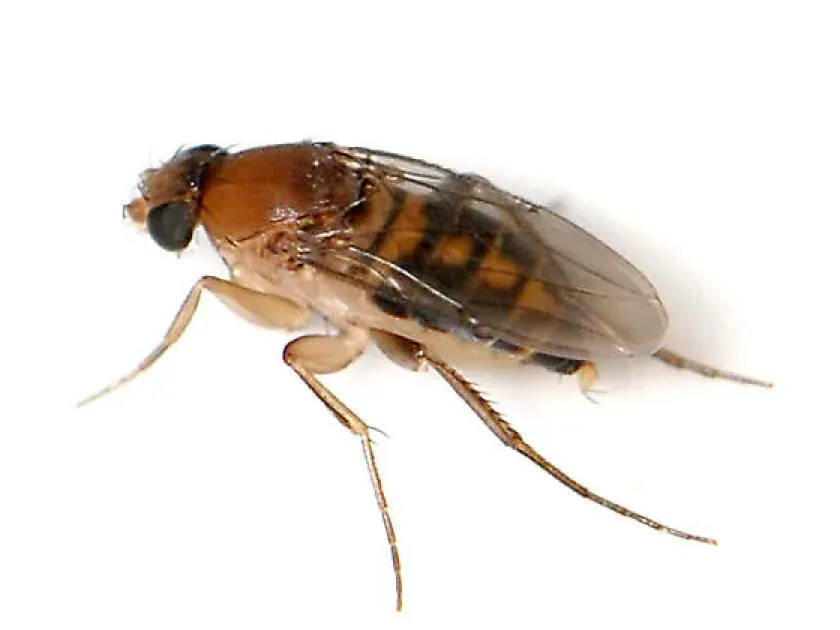
Megaselia is a genus of small flies belonging to the family Phoridae. These insects are commonly known as scuttle flies or phorid flies due to their unique habit of running rapidly across surfaces instead of flying immediately.
The adult fly typically measures between 1 and 3 mm in length. Its body is characterized by a notably arched thorax, which gives the insect its distinct hunched appearance. The wings are clear, and the wing venation is highly specific to the family.
The larvae are small, legless, and white, resembling typical fly maggots. They possess a sclerotized head capsule and develop through several instars, feeding on decaying organic matter or living plant tissues.
These flies are highly mobile and exhibit a preference for humid environments. Their ability to squeeze through tiny gaps makes them a significant nuisance in greenhouse environments and laboratories.
The life cycle is remarkably rapid, especially at warmer temperatures, allowing for multiple generations to occur in a very short period under optimal conditions.
What it damages
Megaselia species are notorious pests in commercial mushroom farming. The larvae tunnel into the mushroom compost and directly attack the fruiting bodies, rendering them unmarketable and prone to rapid decay.
In greenhouses, these flies damage seedlings of various vegetables, including cucumbers and tomatoes. The larvae feed on the roots and the base of the stems, causing the plant to wilt and eventually die.
Besides direct feeding damage, they are known vectors for various plant pathogens, including bacteria and molds, which can destroy the health of an entire crop within a short time frame.
In post-harvest storage, the flies infest root vegetables, such as potatoes. Their larvae bore deep into the tissue, creating holes that introduce secondary rot and destroy the produce quality.
The economic impact is twofold: loss of yield due to direct plant damage and the cost associated with increased sanitation efforts and insecticide applications needed to suppress the population.
When it appears
Indoors, such as in mushroom houses or heated greenhouses, Megaselia can reproduce throughout the year. The optimal temperature range for rapid development is 20°C to 28°C.
In outdoor environments, the flies are most active during the warmer months, typically from late spring through early autumn. They thrive in environments with high humidity and abundant moisture.
A single generation can complete its development in as little as 10 to 14 days under ideal conditions. This high reproductive rate allows populations to explode quickly if sanitation is neglected.
The flies are particularly attracted to decaying organic matter. In commercial setups, the lack of proper crop rotation or substrate disposal usually correlates with an increased presence of the pest.
During the winter, the flies may survive in protected microhabitats, such as damp basements, piles of compost, or hidden areas within greenhouses where temperatures remain relatively stable.
Signs of infestation
The most obvious sign of an infestation is the presence of small flies scurrying across the surface of the soil or the growing substrate. They often exhibit quick, erratic, and jumping movements.
For mushroom producers, signs include tunnels within the stems of the mushrooms and a characteristic putrid smell arising from the substrate caused by rot and insect activity.
In greenhouse crops, the sudden wilting of young seedlings is a major indicator. If the plant can be easily pulled out, check the root system for presence of white larvae or damaged tissues.
- Presence of tiny holes in infested root vegetables or fruit.
- Adult flies hovering around the base of plants or potting containers.
- Yellowing of leaves in seedlings despite regular watering.
- Presence of pupae on the edges of trays or pots.
Heavy infestations are often marked by a noticeable smell of decay and a visible presence of larvae in the topmost layers of the substrate or soil.
Control measures
Strict hygiene is the primary method of control. Removing all plant debris, ensuring proper drainage, and keeping surfaces dry are essential to break the fly's life cycle.
Yellow sticky traps are highly effective for monitoring and reducing the population of adult flies. These should be placed near the most vulnerable crops or substrate sources.
Chemical control involves applying insecticides during the adult flight phase to prevent egg-laying. Always ensure that the selected product is labeled for use on the specific crop being grown.
Biological control using entomopathogenic nematodes has shown great success. These microscopic worms seek out and infect the larvae in the soil or substrate without leaving toxic residues.
Preventative measures, such as sterilizing new growing media or compost, are crucial for avoiding the introduction of the pest into clean facilities or storage areas.
Taxonomy
- Latin name
- Megaselia
- Order
- Diptera (flies)
- Family
- Phoridae
- EPPO code
- MGASSP
Discussion
No discussions yet — be the first.