
Mushroom phorid fly
Megaselia agarici
Description
How to identify
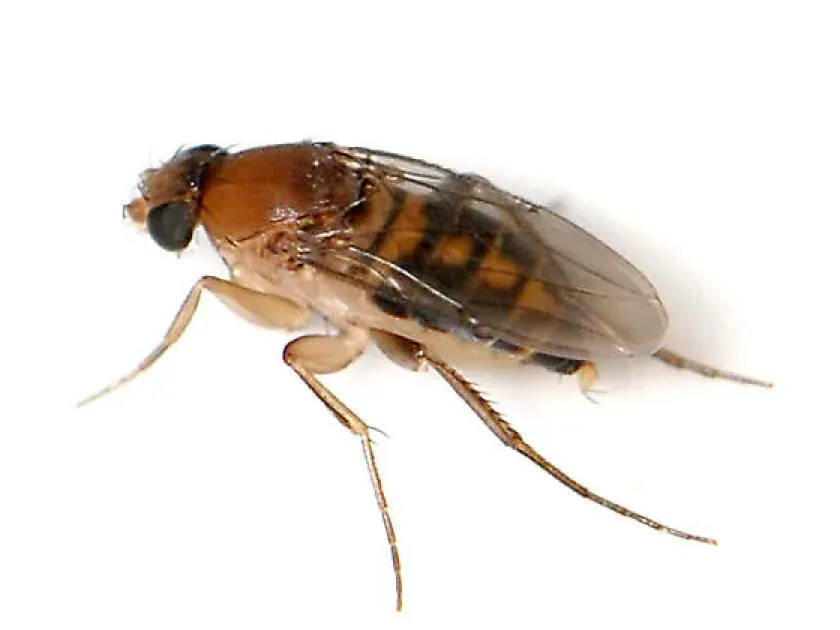
The mushroom phorid fly (Megaselia agarici) is a small dipteran insect belonging to the Phoridae family. It is easily recognized by the humpbacked appearance of its thorax, which gives the insect its characteristic profile.
Adult flies are generally 2 to 3 mm in length, with a dark brownish or blackish coloration and wings that exhibit a distinct venation pattern typical of this family.
The larvae are small, legless, and white or yellowish in color. They possess specialized mouthparts used for feeding on the fungal tissues of mushrooms.
The life cycle is relatively short, often completing its development in less than three weeks when environmental conditions are optimal for mushroom production.
Females are highly active and capable of laying hundreds of eggs throughout their short lifespan, targeting moist substrates and mushroom primordia for oviposition.
What it damages
Megaselia agarici is a significant pest in commercial mushroom cultivation, particularly affecting crops such as Agaricus bisporus and various oyster mushroom species.
The primary damage is caused by the larvae, which tunnel through the stipes and caps of mushrooms, rendering them unmarketable and unattractive to consumers.
Beyond physical destruction, these flies are vectors for various fungal pathogens, bacteria, and viruses that can cause severe secondary infections in mushroom beds.
Infested mushrooms often undergo rapid deterioration, developing a putrid odor and softening of the tissues, which leads to total yield loss in severely affected areas.
The presence of adult flies can cause localized panic in a facility and indicates an underlying infestation that threatens the entire growth cycle.
Signs of infestation
The most noticeable sign of an infestation is the presence of adult flies fluttering around the mushroom beds or congregating on the surface of the casing soil.
Symptoms in the mushrooms themselves include small, dark pinholes on the stalk and cap surfaces, often accompanied by interior galleries created by feeding larvae.
A foul, sweetish, or sickly smell often emanates from the mushroom blocks as a result of the decay and bacterial growth associated with the larval activity.
In cases of heavy infestation, one can see mass emergence of pupae near the edges of growing containers or on the surface of the substrate.
Discoloration of the mushroom surface and localized soft rot are common indicators that the larvae have compromised the integrity of the growing fungi.
Control measures
Management of the mushroom phorid fly relies heavily on rigorous sanitation, including the thorough cleaning and steaming of mushroom houses between crops.
Effective exclusion techniques, such as installing fine-mesh screens on all air intake vents, prevent adult flies from entering the cultivation area.
Yellow sticky traps are recommended for routine monitoring of fly populations, providing an early warning system before a full-scale infestation occurs.
- Implement strict hygiene protocols for staff and visitors entering the growing rooms.
- Use heat-treated or pasteurized casing soil to eliminate potential larvae or eggs.
- Promptly discard and remove any old or damaged mushrooms to prevent further breeding.
If chemical interventions are necessary, they must be applied early in the cycle, ensuring compliance with strict safety regulations regarding food crops.
Taxonomy
- Latin name
- Megaselia agarici
- Order
- Diptera (flies)
- Family
- Phoridae
- EPPO code
- MGASAG
Discussion
No discussions yet — be the first.