
Raccoon
Procyon
Description
How to identify
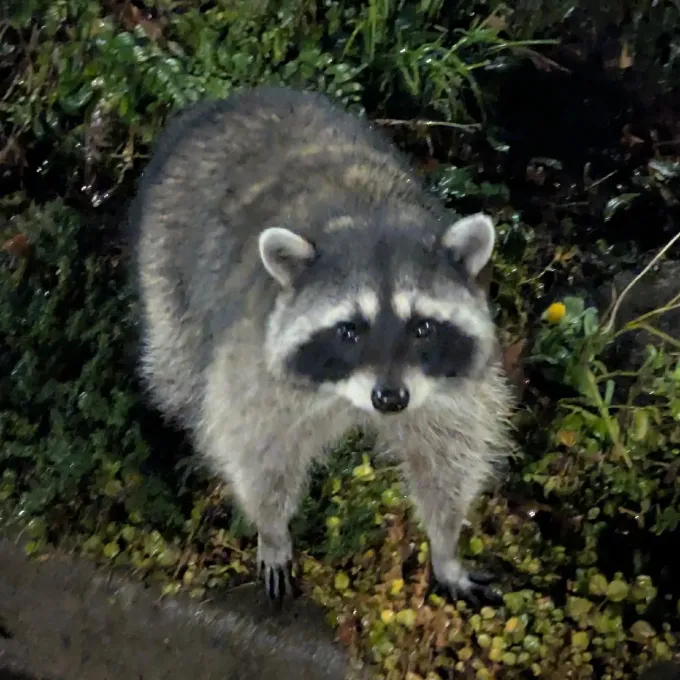
The raccoon (Procyon lotor) is a mammal belonging to the order Carnivora and the Procyonidae family. It is easily recognized by its stocky body, dense grayish-brown fur, and the distinctive black "mask" pattern across its eyes.
A key physical characteristic is its ringed tail, which features alternating light and dark bands. The raccoon’s front paws are exceptionally dexterous, possessing a highly developed sense of touch and the ability to manipulate objects, including latches and containers.
Adult raccoons typically weigh between 5 and 10 kilograms and measure 45 to 70 centimeters in length. They are primarily nocturnal, which allows them to operate under the cover of darkness and often go unnoticed by landowners.
Raccoons are highly intelligent and adaptable, frequently choosing to reside near water sources and forested areas adjacent to agricultural land. Their curiosity and dexterity make them a challenging pest to manage.
As omnivores, raccoons exploit a wide variety of food sources. Their ability to solve complex problems and learn through experience makes them persistent visitors to gardens and fields.
What it damages
Raccoons are notorious for causing significant damage to corn crops, particularly when the kernels reach the milk stage. They pull down stalks to reach the ears, often consuming only part of the yield while trampling the rest.
Small fruits and berries, including strawberries, raspberries, and grapes, are favorite targets. A raccoon can strip a patch of berries in a single night, leaving little to nothing for the grower.
Orchards also suffer, as raccoons climb trees to feed on apples, peaches, and plums. They often break branches or strip bark, causing lasting damage to the structural integrity of fruit-bearing trees.
Vegetable gardens are frequently raided for melons, watermelons, and root crops. Their sharp claws easily penetrate the rinds of melons, rendering the fruit susceptible to rot and secondary pest attacks.
Beyond crop consumption, raccoons damage irrigation equipment and soil structure by digging. They can also introduce parasites into the garden through their fecal matter, posing a health risk to both crops and humans.
When it appears
Activity levels peak during the summer months when garden produce is most abundant and palatable. Late summer, specifically July and August, represents the highest risk period for crop loss.
In the spring, raccoons emerge from their winter dormancy in search of high-calorie foods. This is when they may target newly planted seedlings or early-season crops as they re-establish their foraging range.
Autumn brings an increase in foraging intensity as raccoons work to build up fat reserves for the winter. During this time, they are particularly aggressive in raiding gardens and storage areas.
Breeding and the rearing of offspring increase the food requirements of a raccoon family. The need to feed young kits drives the adults to raid agricultural properties more frequently.
While winter is generally a period of reduced activity, raccoons do not hibernate in the true sense. In milder climates, they remain active year-round and may continue to forage if temperatures allow.
Signs of infestation
The most common sign of a raccoon's presence is their footprint. Raccoon tracks look similar to a small human handprint, showing five distinct, long toes and a wide pad, commonly found in soft soil or mud near vegetable beds.
In cornfields, look for broken stalks and partially eaten ears with husks shredded or pulled back. This messy style of feeding is a signature trait of a raccoon raid.
Damage to tree fruit is often accompanied by remnants of the fruit left on the ground. Scratches on the bark of trees near the garden are further evidence of their regular climbing paths.
Raccoons often establish "latrines" — designated areas where they repeatedly deposit feces. Finding these in or near your garden is a clear indicator of a resident or frequent visitor.
Nocturnal noises, including chattering, hissing, or the sound of rustling in the bushes, often indicate their activity. The reaction of pets, particularly barking at the night, can often alert gardeners to a raccoon nearby.
Control measures
Exclusion is the most effective long-term control method. Installing sturdy fencing, especially with an electrified strand at the top, is highly effective at preventing raccoons from entering protected areas.
Motion-activated deterrents, such as sprinklers or bright lights, can startle raccoons and discourage them from returning. These are most effective when used in combination with other methods to prevent habituation.
Practice good garden sanitation by removing fallen fruit immediately and securing all compost piles. Never leave pet food or garbage containers outside overnight, as these are primary attractants.
In cases of severe infestation, humane live traps can be used to catch and relocate individuals. Always check local wildlife regulations before choosing to trap or transport any wildlife.
Trim tree branches that hang over garden fences or roofs to limit access points. By reducing the convenience of your garden as a food source, you encourage the animals to seek sustenance elsewhere.
Taxonomy
- Latin name
- Procyon
- Family
- Procyonidae
- EPPO code
- PROYSP
Discussion
No discussions yet — be the first.