
Ringtail
Bassariscus
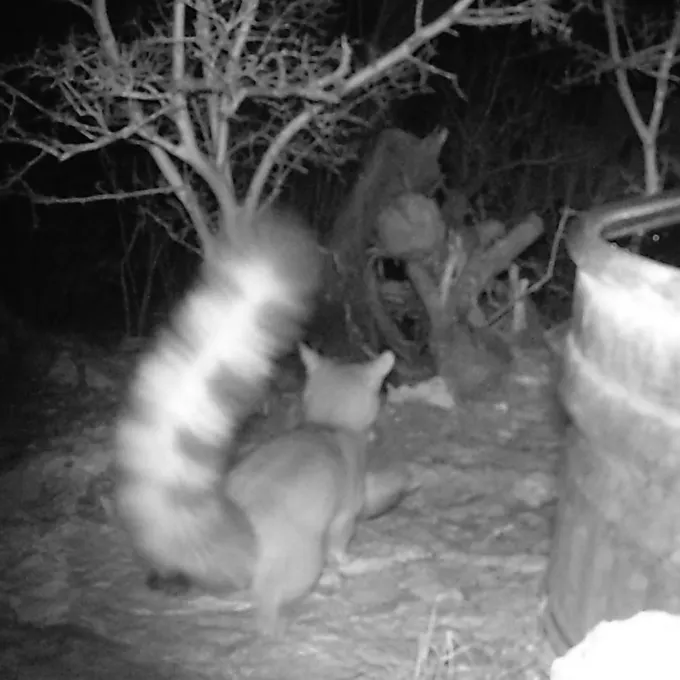
Description
How to identify
The Ringtail (Bassariscus astutus), also known as the miner's cat, is a mammal belonging to the Procyonidae family. It is characterized by its slender body, large eyes, and a long, bushy tail with distinct black and white rings.
These animals are agile climbers, equipped with sharp, semi-retractable claws and an extremely flexible spine, allowing them to navigate rocky terrain and trees with remarkable precision.
Despite being related to raccoons and classified as carnivores, they have an omnivorous diet. They are strictly nocturnal, which makes them very difficult to observe in their natural agricultural environment.
The average adult weighs between 0.8 and 1.5 kilograms, with a total body length that can reach up to 80 centimeters including the tail. Their size allows them to squeeze through small openings in structures.
They are known for their solitary nature, except during the mating season. Their intelligence and curiosity drive them to explore human-made structures in search of food and shelter.
What it damages
Ringtails can become agricultural pests when they inhabit areas surrounding orchards and vineyards. They feed on ripe fruits, particularly grapes, berries, and stone fruits, causing yield loss and damaging the visual quality of produce.
In farm facilities, ringtails are known to infiltrate storage units and barns. They can rip open grain sacks and contaminate stored feed, leading to product loss and sanitation issues.
Poultry farming is also at risk, as these animals may prey on eggs or young chicks. This behavior can lead to significant economic losses for small-scale poultry operations.
Although they do not cause large-scale deforestation or plant destruction, their presence in high densities can affect the overall health of an orchard due to constant foraging pressure.
Damage to agricultural equipment or irrigation hoses has also been reported in cases where the animals try to reach water sources or find a path into secure areas.
##season##Activity levels fluctuate throughout the year, with a noticeable peak during the fruit ripening season. Mid-to-late summer is when these animals are most attracted to cultivated plots.
Springtime marks the period of increased movement due to breeding cycles. During this time, the animals are more active in exploring new territories, which increases their proximity to farm buildings.
In regions with colder winters, ringtails reduce their activity, though they do not hibernate. They seek refuge in warm, sheltered areas, which often brings them into closer contact with residential and farm structures.
Nocturnal activity is the primary behavioral pattern, regardless of the season. They avoid any interaction with light or daytime human presence.
Environmental factors such as drought or lack of natural food sources in the wild act as catalysts, forcing the ringtails to shift their foraging habits toward agricultural crops.
Signs of infestation
Detecting ringtails is primarily done through identifying their specific paw prints in soft dirt, which are rounded and show distinct toe pads, often confused with cat tracks.
- Bite marks on fruits hanging from trees or vines.
- Scat containing undigested seeds and fruit remains found near foraging areas.
- Small entry holes in building foundations or ventilation gaps.
- Distinctive scratching marks on wooden surfaces or tree barks.
Auditory signs include various vocalizations, such as chirps or chattering, which occur during the night, particularly during territorial disputes or mating rituals.
A strong, musky odor in barns or storage areas is a common indicator of their presence, as they use scent marking to delineate their territory.
Sudden disturbances in nearby livestock or domestic animals, especially at night, often serve as an early warning that a predator or unwanted visitor is in the vicinity.
Control measures
The most effective management strategy is physical exclusion. Sealing all cracks and gaps in farm buildings with durable materials like hardware cloth or metal mesh is essential.
Proper sanitation is critical; keeping grain and fruit stores in airtight, predator-proof containers significantly reduces the site's attractiveness to the animals.
Live-trapping is a standard, humane method for managing individuals that have already become accustomed to foraging in agricultural zones, allowing for relocation.
Vegetation management is also important; removing brush piles and dense weeds near orchards reduces the available cover and makes the area less inviting to ringtails.
The use of motion-activated lights or sound-based repellents can provide temporary deterrence, but these methods should be used in combination with structural improvements for long-term success.
Taxonomy
- Latin name
- Bassariscus
- Family
- Procyonidae
- EPPO code
- BASSSP
Discussion
No discussions yet — be the first.