
Coati
Nasua
Description
How to identify
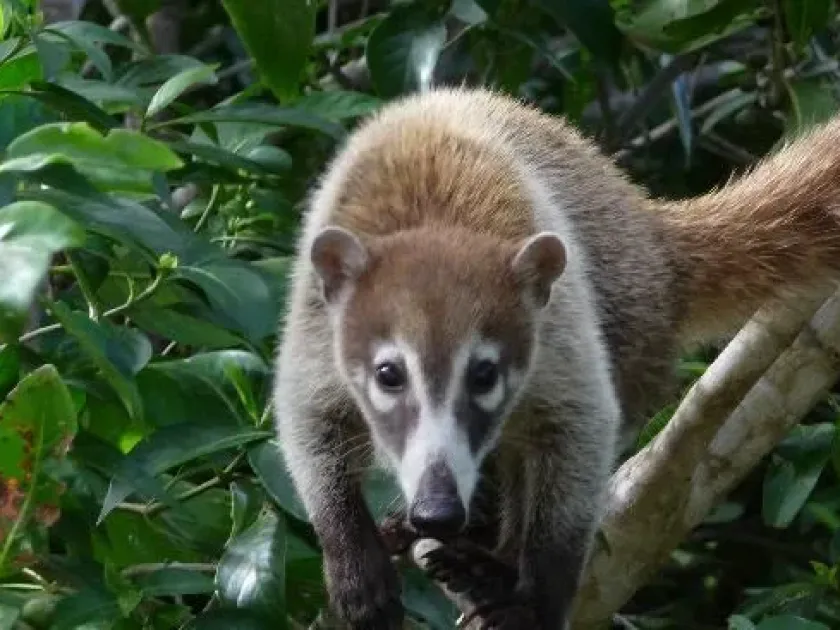
The coati (genus Nasua), also known as the coatimundi, belongs to the Procyonidae family and is often considered a nuisance in agricultural settings.
They are characterized by their elongated, flexible snout, long ringed tail, and strong claws designed for digging and foraging.
Adult coatis typically measure between 40 and 70 centimeters in length and live in social groups known as bands, which increases their potential for damage.
Despite being classified as carnivores, they are highly opportunistic omnivores, showing a strong preference for fruits, vegetables, and seeds.
Their intelligence and manual dexterity make them particularly adept at overcoming simple obstacles designed to keep them out of fields.
What it damages
Coatis cause extensive damage to fruit orchards by consuming or damaging ripened citrus, tropical fruits, and various berries.
They are known to dig up crops, potentially destroying the root systems of young plants and freshly sown seeds in search of food.
Grain crops, such as corn, are frequently raided, with the animals breaking stalks to access the ears and causing significant harvest losses.
Mechanical damage to trees and vegetation occurs when they climb to reach fruits, often breaking delicate branches in the process.
Their group-foraging behavior means that an entire band can devastate a small plantation or garden plot in a very short amount of time.
When it appears
Peak damage generally occurs during the ripening season of fruits and cereals when food sources are at their most nutritional and sugar-rich stage.
In spring, they frequently target newly planted garden vegetables and root crops, attracted by the soil moisture and fresh vegetation.
Summer and autumn months are critical, as the abundance of harvestable crops draws coatis out of their natural forest habitats into agricultural areas.
Activity is primarily diurnal, meaning they forage during the day, which can lead to direct confrontations with farmers protecting their land.
Drought conditions often exacerbate the issue, as coatis move towards irrigated farmland to source water from succulent plant parts.
Signs of infestation
Disturbed soil around the base of trees or in garden beds, characterized by numerous small, dug-up holes, is a primary indicator of their presence.
Observation of broken branches and discarded fruit rinds with distinct tooth marks provides clear evidence of a coati foraging session.
Damage to perimeter fencing, specifically at the base where they attempt to dig tunnels to gain entry, is a common sign.
Footprints similar in shape to those of a small bear or a raccoon can often be found in damp soil near the affected crops.
Noticeable reduction in yield from lower branches of fruit trees and piles of partially eaten produce scattered on the ground.
Control measures
Installing robust, tall fencing with an underground mesh extension is the most effective way to prevent them from entering growing areas.
Motion-activated deterrents, including sprinklers or light and sound systems, can discourage bands from lingering in the vicinity of crops.
Implementing a strict harvest schedule ensures that ripe produce is removed from the fields before it attracts local coati populations.
Clearing tall grass and brush from the perimeter of orchards reduces the available cover, making the area less attractive for the animals.
Professional humane trapping and relocation may be necessary in areas where coati populations are high and causing consistent economic loss.
Taxonomy
- Latin name
- Nasua
- Family
- Procyonidae
- EPPO code
- NASASP
Discussion
No discussions yet — be the first.