
Olive moth
Prays parilis
Description
How to identify
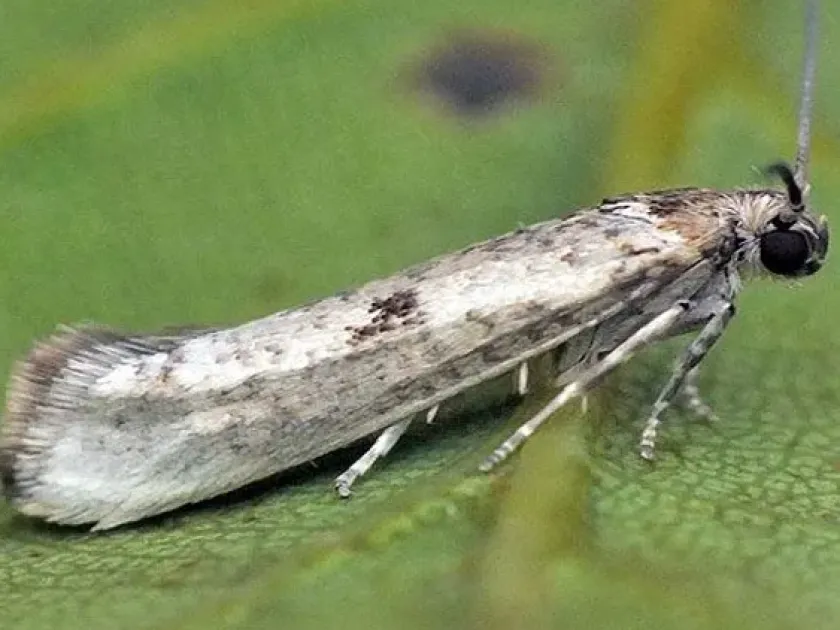
The olive moth (Prays parilis) is a small lepidopteran insect belonging to the family Plutellidae, known primarily for its destructive impact on olive cultivars.
The adult moth is relatively small with cryptic coloration that allows it to remain inconspicuous against the bark and foliage, making manual identification difficult.
The life cycle encompasses egg, larval, pupal, and adult stages, with each stage specifically adapted to exploit the physiological phases of the olive tree.
The larvae are the most active stage, characterized by their ability to feed internally within tissues, which provides them with high protection against external threats.
Monitoring this pest relies heavily on the use of pheromone-baited traps, as adult activity is mostly concentrated in the evening and night hours.
What it damages
The olive moth is a specialized pest that exclusively targets members of the Olea genus, with Olea europaea (the common olive) being the primary host.
Damage is cumulative throughout the season as the pest attacks three distinct parts of the plant: leaves, flowers, and fruit.
Leaf damage manifests as mining, where larvae create internal tunnels that impede photosynthesis, leading to reduced tree vigor and leaf senescence.
Flower destruction is perhaps the most significant damage type, as larvae hollow out the buds and flowers, resulting in massive blossom drop and drastically lower yields.
Fruit damage occurs when larvae bore into the olives, damaging the pulp and the developing stone, which often leads to the fruit dropping before reaching maturity.
When it appears
The phenology of Prays parilis is intricately synced with the growth cycle of the olive tree to ensure an continuous supply of food resources.
The first generation typically emerges in early spring, coinciding with the development of flower buds, making them the most critical target for protective measures.
The second generation occurs during the summer months, focusing its feeding activity on the developing young olives, which impacts both quantity and fruit oil quality.
The third generation appears in the autumn and typically feeds on leaves, where the larvae may enter a state of dormancy or remain active during warmer periods.
Environmental factors, particularly temperature and humidity levels, dictate the success rate of larvae emergence and the overall intensity of the pest outbreak.
Signs of infestation
The most reliable sign of an olive moth infestation is the presence of serpentine mines on the leaf surface, created by the feeding activities of the larvae.
Visible webbing between floral clusters, which holds damaged buds together, is a clear indication of larval presence during the blooming season.
Entry holes in the skin of young olives are characteristic of the summer generation, often accompanied by localized dark spots where the fruit skin starts to decay.
Significant, unexplained premature dropping of flowers and small fruits serves as a strong signal to inspect the orchard for signs of moth activity.
- Serpentine mines on leaves.
- Webbing within flower clusters.
- Small entry holes on developing fruits.
- Premature fruit and blossom drop.
- Visible frass near damaged plant organs.
Control measures
Effective management begins with integrated pest management (IPM) practices, utilizing pheromone traps to trigger the timing of necessary control measures.
Biological control using formulations of Bacillus thuringiensis is highly recommended as it provides effective control while minimizing harm to beneficial insects.
Chemical control should be implemented judiciously, focusing on systemic or contact insecticides applied during the specific windows before larvae penetrate the plant tissues.
Orchard hygiene, including the removal of dead wood and proper pruning, is essential to decrease the micro-habitats available for larvae during their development.
Promoting the presence of natural predators, such as parasitic wasps, is a sustainable long-term strategy to naturally suppress the moth population within the olive orchard.
Taxonomy
- Latin name
- Prays parilis
- Order
- Lepidoptera (butterflies)
- Family
- Yponomeutidae
- EPPO code
- PRAYPA
Discussion
No discussions yet — be the first.