
Olive moth
Prays oleae
Description
How to identify
The olive moth (Prays oleae) is a small lepidopteran insect belonging to the Yponomeutidae family. Adult moths have a wingspan of approximately 12–15 mm and possess silvery-grey wings with distinctive dark spots.
The insect undergoes a complete metamorphosis involving four distinct stages: egg, larva, pupa, and adult. Each phase is adapted to survive specific environmental conditions throughout the year.
Larvae evolve through several instars, changing appearance and feeding habits according to the stage of the host plant's development. Pupation typically occurs within a protective white silk cocoon.
Adult moths are primarily nocturnal, making them difficult to observe during the day without specialized monitoring equipment like pheromone traps.
The biological cycle of the olive moth is highly synchronized with the phenology of the olive tree, which is a critical factor for successful pest management strategies.
What it damages
The primary host of this pest is the olive tree (Olea europaea). Damage patterns are unique and determined by the specific generation of the insect attacking the tree.
The first generation (anthophagous) attacks the floral buds, feeding on the flower clusters and binding them with silk, which leads to flower drop and reduced fruit set.
The second generation (carpophagous) bores into young fruit, penetrating to the seed. This often results in premature fruit fall, significantly lowering the potential harvest.
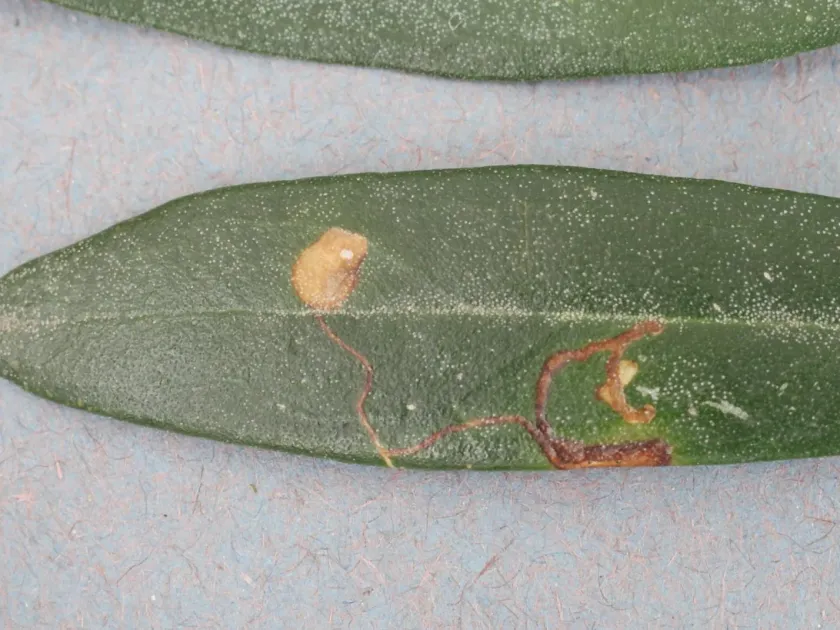
The third generation (phyllophagous) mines the leaves, creating galleries that damage the plant's photosynthetic tissue and weaken the overall vitality of the tree.
If left unmanaged, the cumulative damage from all three generations can drastically reduce both the quantity and the quality of the olive oil production.
When it appears
The activity begins in early spring, triggered by rising temperatures and the onset of the olive tree's flowering stage, marking the start of the first generation.
The second generation occurs in early summer, coinciding with the development and expansion of the young fruit, making the olives highly susceptible to infestation.
The third generation develops in late summer and autumn, with larvae seeking refuge within the leaves to prepare for the winter months.
Overwintering takes place in the larval stage within the leaf parenchyma, allowing the insect to survive cooler periods by remaining in a state of diapause.
The exact timing of each generation varies by region and climate, requiring farmers to rely on real-time observations and heat unit models rather than fixed calendar dates.
Signs of infestation
Evidence of infestation includes webbed flower clusters that look dried or distorted, which is a clear indicator of the first generation's feeding activity.
Fruit damage is characterized by entry holes on the olive surface, often accompanied by larval excrement near the point of entry into the fruit.
Leaf mines appear as thin, pale, and winding tunnels visible under the leaf surface, which are symptoms of the phyllophagous generation's activity.
Unseasonal or premature dropping of young, green olives in June is a strong warning sign of high infestation levels that require immediate attention.
The presence of adult moths in pheromone traps is the most reliable way to monitor population pressure and determine the necessity for intervention.
Control measures
Biological control methods include the application of Bacillus thuringiensis, which specifically targets larvae while being safe for non-target beneficial insects.
Chemical control involves systemic or contact insecticides, applied at the most vulnerable stages of the larval lifecycle to prevent fruit penetration.
Integrated Pest Management (IPM) relies heavily on pheromone traps to pinpoint the peak of adult flights, ensuring that treatments are applied at the most effective time.
Cultural practices, such as proper pruning and canopy management, improve airflow and light penetration, creating a less favorable environment for the moth.
Encouraging natural predators and parasitoids in the orchard can help maintain the olive moth population below the economic injury level, fostering a more sustainable ecosystem.
Taxonomy
- Latin name
- Prays oleae
- Order
- Lepidoptera (butterflies)
- Family
- Yponomeutidae
- EPPO code
- PRAYOL
Discussion
No discussions yet — be the first.