
Ash moth
Prays fraxinella
Description
How to identify
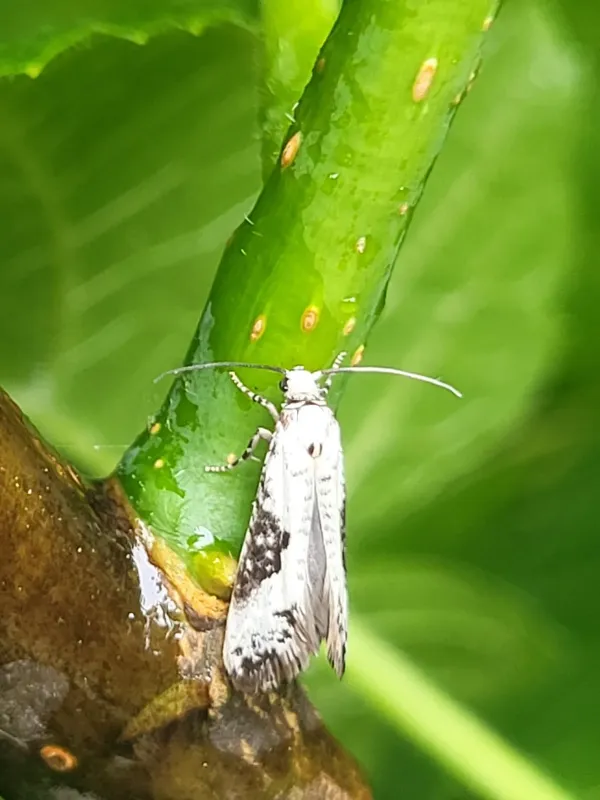
The Ash moth (Prays fraxinella) is a small lepidopteran insect belonging to the family Yponomeutidae. Adult moths have a wingspan of approximately 12–15 mm and display a silver-grey coloration with dark, mottled markings on their wings.
The larvae, or caterpillars, undergo several developmental stages. Initially, they are light-colored, eventually turning a greenish-brown as they mature. They are equipped with biting mouthparts specialized for feeding on tree buds and leaf tissues.
Pupation occurs within a characteristic white, spindle-shaped cocoon, often found attached to bark crevices or rolled leaves. This protective casing allows the pupa to endure fluctuating weather conditions.
The lifecycle is strictly synchronized with the phenology of the European ash (Fraxinus excelsior). The adult emergence typically coincides with the budburst phase, ensuring an immediate food source for the next generation.
The population dynamics of the Ash moth are often regulated by specialized parasitoid wasps and tachinid flies, which naturally suppress the moth's numbers in stable forest ecosystems.
What it damages
The primary host for Prays fraxinella is the ash tree. The larvae exhibit a strong preference for tender plant parts, specifically targeting buds, emerging leaves, and young, succulent shoots.
Early-season feeding is the most destructive phase, where larvae bore directly into dormant or swelling buds. By consuming the contents, they effectively destroy the future foliage before it even unfolds.
Later in the season, the caterpillars feed on leaves by mining or skeletonizing them. This damage results in reduced photosynthetic efficiency and can cause premature leaf senescence and abscission.
Heavy infestations can lead to significant canopy thinning, compromising the overall aesthetic appeal of urban and forest ash plantings and causing physiological stress to the trees.
While mature trees can often withstand occasional defoliation, repeated annual attacks by the Ash moth significantly impair tree vigor, making them susceptible to secondary pests and fungal infections.
When it appears
The species overwinters as young larvae. They typically find shelter within the fissures of the bark or under protective bud scales, entering a dormant state to survive the winter temperatures.
Activity resumes in early spring, triggered by the warming weather and the physiological awakening of the ash tree. This is when the larvae begin their movement towards the buds.
Pupation generally occurs in late spring or early summer. Following a short pupal period, the adult moths emerge to mate and lay eggs on the newly developed foliage or stems.
The moth is typically univoltine, meaning it produces one generation per year. However, the timing of the adult flight can vary slightly depending on local microclimatic conditions.
By late summer, the newly hatched larvae settle into their overwintering sites, remaining inactive until the following spring, effectively closing the annual cycle of the pest.
Signs of infestation
One of the first signs of infestation is the failure of buds to open in the spring. These buds may appear dried out or shriveled, often mistaken for frost damage by casual observers.
The presence of fine webbing (silk) on the ends of twigs is a key diagnostic indicator. Caterpillars often construct silken shelters, which can cause leaves to stick together or curl up.
Skeletonized leaf patches and tiny entry holes in the buds provide clear evidence of larval feeding activity that occurs during the active growth stage of the tree.
The accumulation of frass, appearing as small brownish granules or dust near the base of buds or on the branches, signifies active feeding and the presence of larvae.
- Hollowed or dead buds
- Silken webbing on terminal shoots
- Curled, deformed leaves
- Premature leaf drop
- Visible pupal cocoons on bark
Control measures
Integrated pest management (IPM) for the Ash moth emphasizes early intervention. Contact and systemic insecticides are most effective when applied during the period of larval emergence in early spring.
Good horticultural practices, such as pruning and destroying heavily infested branches, help reduce the local population density and prevent the spread of the larvae to neighboring trees.
Biological control agents, including Bacillus thuringiensis, offer a safer alternative for parkland and urban environments by specifically targeting caterpillars while sparing most beneficial insect species.
Monitoring using pheromone traps can assist arborists in determining the precise timing of adult flight, allowing for precise applications of control measures that maximize efficacy.
Maintaining tree health through proper fertilization and watering can improve the ash tree's resilience, allowing it to better tolerate the stress caused by moderate moth infestations.
Taxonomy
- Latin name
- Prays fraxinella
- Order
- Lepidoptera (butterflies)
- Family
- Yponomeutidae
- EPPO code
- PRAYCU
Discussion
No discussions yet — be the first.