
Citrus flower moth
Prays citri
Description
How to identify
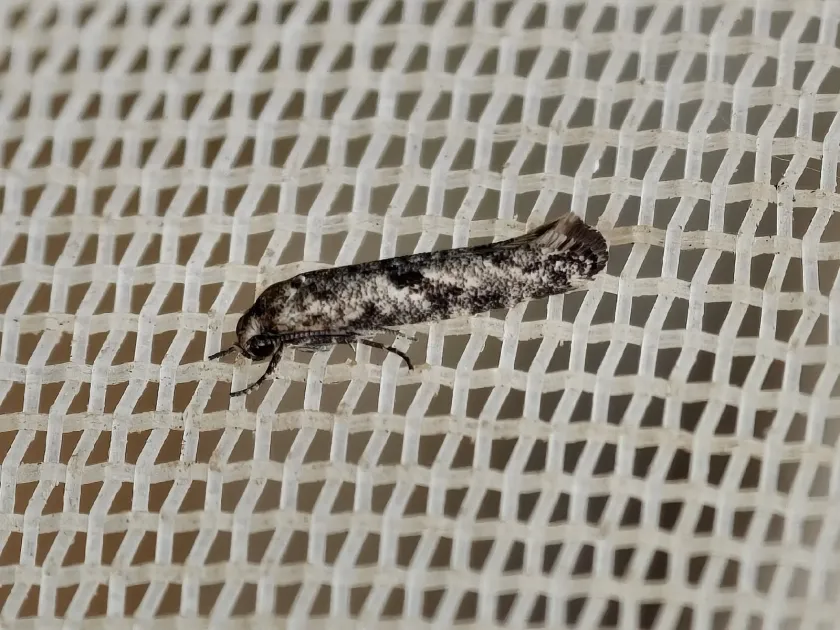
The Citrus flower moth (Prays citri) is a member of the Yponomeutidae family and is a significant pest of citrus trees worldwide. The adult moth is small, with a wingspan of approximately 10-12 mm.
Adults are grey or silvery-grey with characteristic dark spots on the forewings. They are nocturnal, making them difficult to spot during the day, which complicates early detection.
The larvae progress through several instars, changing from a pale color to a vibrant green as they mature, which allows them to blend in with young leaves and buds.
The life cycle involves complete metamorphosis, and in tropical or subtropical climates, the moth can complete multiple generations within a single year.
Overwintering usually occurs in the larval or pupal stage within crevices of the tree bark or protected areas on the host plant's canopy.
What it damages
The larvae specifically target the reproductive and growing parts of citrus trees, including lemons, limes, oranges, and grapefruits, causing severe agricultural losses.
First-generation larvae invade flower buds, feeding on the internal reproductive organs, which prevents pollination and causes premature flower drop.
As the season progresses, larvae bore into young fruit, creating internal tunnels that cause the fruit to shrivel, discolor, and eventually drop from the tree.
Young, succulent shoots are also affected as larvae mine the apical buds, leading to stunted growth, leaf deformation, and structural damage to the branches.
Heavy infestations can result in the loss of nearly the entire potential crop yield if not managed properly during the critical early flowering stages.
When it appears
The activity of the Citrus flower moth typically begins in early spring, synchronized with the onset of budburst and the availability of floral tissues.
The peak emergence of adults coincides with the main flowering period of citrus cultivars, as this period provides the most abundant food supply for offspring.
In warm regions, the generation cycle can be as short as three weeks, allowing the population to build up rapidly if environmental conditions remain favorable.
Activity slows down as temperatures drop, although in protected greenhouse environments, the pest can remain active throughout the winter months.
Management efforts are most effective when timed with the specific developmental stages of the moth, particularly targeting the early spring generations.
Signs of infestation
One of the earliest signs of infestation is the presence of fine webbing spun by larvae between petals, which keeps the buds tightly closed and prevents opening.
Premature abscission of buds and young fruit is a key indicator; if the ground beneath trees is littered with fallen buds, a moth infestation is likely present.
Small entry holes on the surface of young fruits, often surrounded by frass (larval excrement), confirm that larvae have successfully penetrated the tissue.
Wilted, blackened, or deformed tips of growing shoots are another clear symptom of larval mining activity within the terminal buds of the branches.
- Webbing on flower buds
- Excessive flower and fruit drop
- Deformed terminal shoots
- Entry holes on young fruit
Control measures
Cultural control involves the removal and destruction of infested twigs and the collection of fallen buds to break the life cycle of the moth.
Pheromone traps are highly effective for both monitoring population levels and disrupting the mating cycle of adult males during the spring flight period.
Biological control agents, such as parasitoid wasps (e.g., Ageniaspis citricola), have been successfully used to reduce larval populations in large-scale orchards.
Chemical control should be applied strictly according to economic threshold levels, using selective insecticides that minimize the impact on beneficial insects.
Consistent canopy management and routine inspections during the flowering phase are essential for long-term control and prevention of yield losses.
Taxonomy
- Latin name
- Prays citri
- Order
- Lepidoptera (butterflies)
- Family
- Yponomeutidae
- EPPO code
- PRAYCI
Discussion
No discussions yet — be the first.