
Porphyrophora
Porphyrophora
Description
How to identify
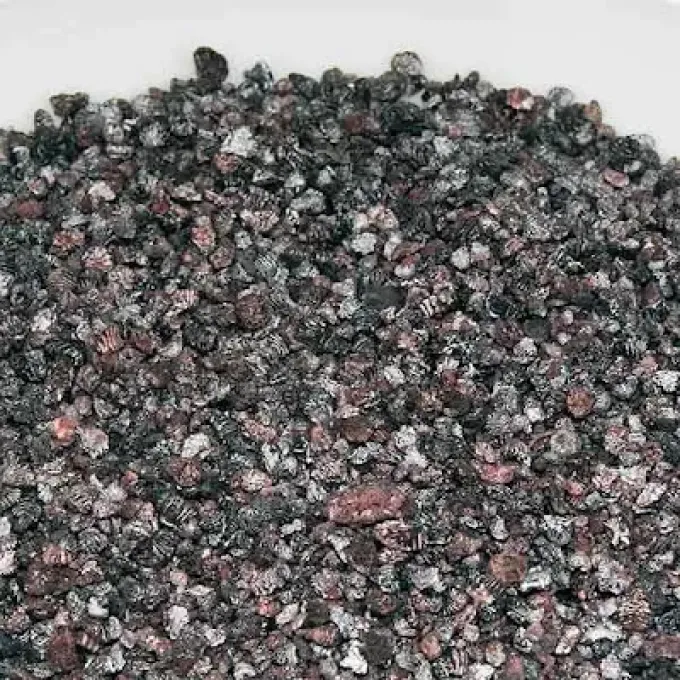
Porphyrophora belongs to the Margarodidae family, known as ground pearls or giant coccids, within the order Hemiptera. These specialized insects have females with oval, highly convex bodies, often lacking wings and limbs, making them resemble galls or seeds.
Adult individuals exhibit pronounced sexual dimorphism. Males are winged and capable of active flight, while females remain stationary or slow-moving, often buried in the soil or attached to plant roots.
Female integuments are usually very dense and colored in reddish or brownish tones. First-instar larvae, known as "crawlers," are small, mobile, and possess legs, allowing them to disperse throughout the field.
The biology of this species is closely tied to the soil environment. Insects overwinter primarily as eggs or larvae inside special waxy cysts, which protect them from adverse external conditions and moisture.
Due to their cryptic lifestyle, detecting this pest visually on the aerial parts of plants is almost impossible until the population reaches a critical level and symptoms of crop stress become evident.
What it damages
The primary hosts of Porphyrophora are cereal crops, including wheat, barley, and rye. The pest can also attack wild grasses, which serve as an infection reservoir during the off-season.
Species that inhabit the roots of perennial grasses and cereals are particularly dangerous, as they extract cell sap from the root system, disrupting the plant's metabolism and nutrition.
As a result of root system damage, photosynthesis efficiency decreases and water transport is impaired, inevitably leading to stunted growth and a critical reduction in crop yield.
Severe infestations over large areas often cause thin stands and the formation of patches of uneven maturation, which significantly complicates mechanized harvesting.
In addition to direct damage, plants weakened by Porphyrophora become vulnerable to secondary infections, such as root rots and various soil-borne fungal diseases.
When it appears
The active developmental phase of the crawlers occurs in the spring, once the soil warms up to optimal temperatures. This is the period when they are most susceptible to control measures.
The flight of adult males typically occurs in late spring or early summer. During this brief period, mating takes place, followed by the female laying eggs in the soil near the host plant roots.
The entire development cycle of the pest often takes about a year, with most of the time spent in a dormant cyst stage, which is resistant to temperature fluctuations and soil moisture changes.
Larval emergence from eggs is often synchronized with the start of the cereal growing season, ensuring immediate access to food resources for full development.
The autumn period is characterized by the population entering diapause, during which the insects form dense protective shells in preparation for overwintering in deep soil layers.
Signs of infestation
The first sign of infestation is localized yellowing and wilting of plants, which cannot be explained by moisture deficit or nutrient imbalances.
When inspecting the root system of affected plants, one may find attached females, which resemble small, rounded, reddish-brown structures, often covered with a white waxy coating.
In the early stages of invasion, crops appear stunted, exhibit delayed development, and possess poorly developed root systems compared to healthy specimens.
- Presence of patches with thin seedlings.
- Specific "wilting spots" in the field.
- Discovery of cysts in the root zone soil.
- Superficial damage to small roots.
If such spots are noticed in the field, laboratory analysis of soil samples is necessary to confirm the presence of the pest and determine the population density to guide management decisions.
Control measures
The cornerstone of control is the implementation of crop rotation, excluding continuous cultivation of cereal crops, which contributes to a natural reduction in pest populations.
Deep autumn plowing and proper soil tillage help to mechanically damage the pest's cysts and bring them to the surface, where they perish due to low temperatures or desiccation.
The use of insecticides is limited by the cryptic nature of Porphyrophora; therefore, only systemic products capable of penetrating the root zone through irrigation or soil application are effective.
Using seeds treated with specialized insecticidal formulations helps protect seedlings during the early growth stages, when they are most vulnerable to crawlers.
An essential element is weed control, particularly of grassy weeds, which serve as refuges for Porphyrophora and allow the population to maintain high levels in the field.
Taxonomy
- Latin name
- Porphyrophora
- Order
- Hemiptera (bugs, aphids, leafhoppers)
- Family
- Margarodidae
- EPPO code
- PORPSP
Discussion
No discussions yet — be the first.