
Dimargarodes
Dimargarodes
Description
How to identify
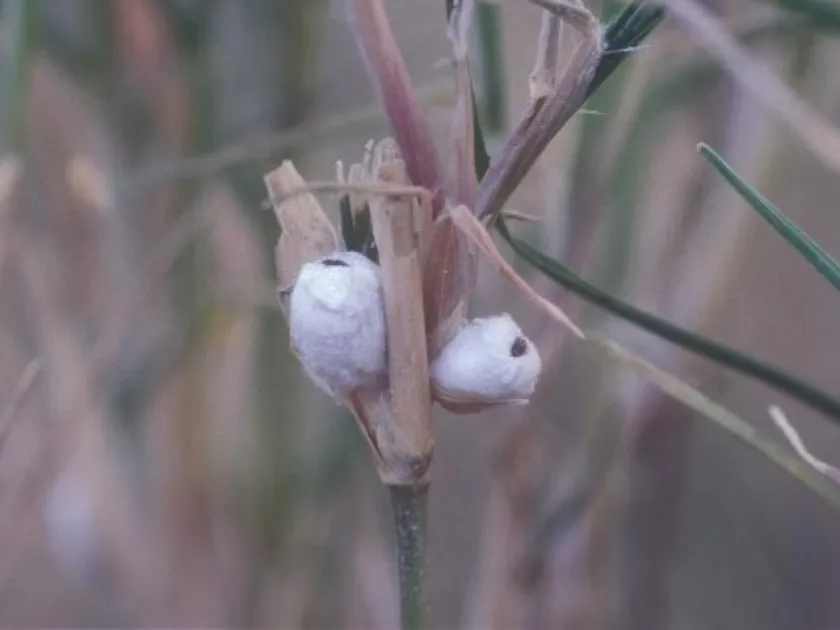
Dimargarodes is a genus of insects belonging to the Margarodidae family, commonly known as giant scale insects. Adult females have a rounded body resembling a pearl, which is why they are often referred to as ground pearls.
The biology of this pest features a complex developmental cycle that includes a cyst stage. In this cyst state, larvae can remain in the soil for several years, surviving adverse environmental conditions.
Males of the genus are rarely seen, as their life cycle is very short and specialized solely for reproduction. The damage is primarily caused by larvae and adult females that live entirely underground.
The development of the insect is closely linked to the root system of host plants, where they attach themselves to the roots to feed on sap. Detection of this pest is challenging due to its presence deep within the soil profile.
Systematically, this genus belongs to the order Hemiptera, which determines their piercing-sucking mouthparts and specific feeding habits on plant sap.
What it damages
The primary host plant for Dimargarodes is the grapevine. These insects parasitize the roots of the vines, draining the plant's resources and disrupting the transport of essential nutrients.
In addition to grapes, some species can affect various woody and shrubby crops, especially in regions with sandy or loamy soils where the pest thrives.
The harm manifests as general plant weakness, making the vines highly susceptible to other pathogens, such as root rot or secondary fungal infections.
During mass infestations, a significant decrease in total vineyard productivity occurs, characterized by slowed shoot growth and smaller fruit size in the bunches.
Prolonged parasitism on the root system without adequate control measures can lead to the total death of individual vines and the loss of entire sections of the vineyard.
Signs of infestation
The first sign of infestation is typically sudden chlorotic yellowing of the leaves, which is not associated with nutrient deficiencies or soil moisture shortages.
Vines appear stunted and show premature wilting of shoot tips during hot summer periods, indicating that the root system is unable to supply enough water to the foliage.
Upon excavating the roots in infested areas, one can identify the characteristic ground pearls, which are the dense cysts or adult females attached to root hairs.
A noticeable reduction in vine cane growth during the growing season becomes apparent during the pruning phase in the autumn or winter months.
In advanced stages of infection, the root system appears necrotic, with various lesions that serve as entry points for secondary infections leading to root decay.
Control measures
Effective management of Dimargarodes is complicated because the majority of the pest's life cycle is spent underground, protected by a hard cuticle or in a dormant cyst stage.
The primary strategy relies on strict adherence to agrotechnical practices, including maintaining soil fertility and promoting beneficial soil entomofauna and microflora.
When establishing new vineyards, it is critical to conduct soil tests for the presence of cysts, especially if the site was previously used for viticulture or has been abandoned.
Chemical control involving soil insecticides has limited efficacy due to the difficulty of reaching the deep root zones where the insects are actively feeding.
It is strongly recommended to restrict the movement of plant material and soil from infested areas to healthy sites to prevent the spread of the pest to new vineyards.
Taxonomy
- Latin name
- Dimargarodes
- Order
- Hemiptera (bugs, aphids, leafhoppers)
- Family
- Margarodidae
- EPPO code
- DIMASP
Discussion
No discussions yet — be the first.