
Ground pearls
Margarodes
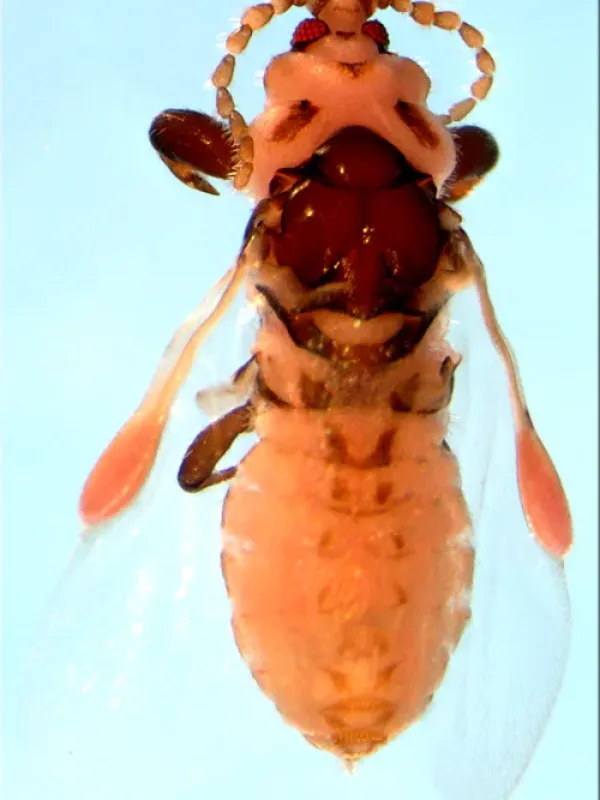
Description
How to identify
Ground pearls (genus Margarodes) belong to the family Margarodidae within the order Hemiptera. These specialized insects are well-known as significant subterranean pests of various agricultural crops, especially grapes.
The common name "ground pearl" refers to the female stage, which has a distinct, spherical or globular body encased in a hard, waxy, pearl-like shell. They possess robust, specialized legs designed for tunneling through soil layers.
The life cycle is complex and often involves a high degree of parthenogenesis, with males being rare, winged, and short-lived. Most of the life cycle occurs underground, making them extremely difficult to detect.
First-instar nymphs, known as "crawlers," are the only active mobile stage. Once they find a suitable host root, they insert their mouthparts to feed and eventually form a protective cyst.
These insects are highly resilient, capable of remaining in a dormant cyst stage in the soil for several years if environmental conditions are unfavorable or if a host plant is absent.
What it damages
Ground pearls primarily infest the root systems of grapevines, although they can also affect a range of other perennial plants and shrubs in agricultural ecosystems.
By attaching to the roots, they extract vital plant sap, which leads to severe weakening of the host plant. This parasitic feeding disrupts the plant's ability to transport water and essential nutrients.
Root feeding causes the development of lesions and deformities on the root system, which not only hinders growth but also creates entry points for various soil-borne pathogens.
Plants infested with Margarodes exhibit reduced vigor, stunted shoots, and a significant decrease in fruit production, often leading to patchy vine decline in vineyards.
In cases of heavy infestation, the root system can be so severely compromised that the plant dies, necessitating the removal and replanting of entire sections of the vineyard.
When it appears
The activity of crawlers typically peaks in the spring when rising soil temperatures trigger their movement in search of new roots to colonize.
Throughout the summer months, the sedentary stages remain fixed to the roots, focusing on nutrition and development while remaining protected by their waxy shells.
As autumn approaches, populations often transition into dormant stages to endure winter conditions, burrowing deeper into the soil profile to avoid freezing temperatures.
The development cycle can be multi-annual, with some individuals remaining in the soil for several seasons before completing their metamorphosis or reproducing.
Because they spend most of their life cycle underground, their seasonal activity is often tracked by observing the decline of the plant's canopy rather than direct observation of the insect.
Signs of infestation
Early symptoms of an infestation include symptoms of nutrient deficiency, such as chlorosis and poor foliage development, which may be mistaken for other vine disorders.
A noticeable decline in vine growth, characterized by shortened internodes and a generally sparse canopy, is a hallmark of ground pearl presence in the root zone.
Confirming the presence of these pests requires digging soil samples near the vine roots to inspect them for the presence of the characteristic hard, pearl-like cysts.
The waxy excretions left by the insects in the soil around the roots can sometimes serve as an indicator of a population outbreak in the vineyard.
Infested vines often show extreme stress during hot, dry periods because their damaged root systems are unable to sustain the plant's water requirements.
Control measures
Managing ground pearls is exceptionally challenging due to their subterranean habitat and the protection provided by their waxy, cyst-like exterior shells.
- Strict quarantine and inspection of planting material are the most critical steps to prevent the introduction of ground pearls into new areas.
- Use of certified, pest-free nursery stock is essential for all new vineyard developments.
- Maintaining high soil fertility and optimal vine health can help plants tolerate low-level infestations, though it does not eliminate the pest.
- Biological control using entomopathogenic fungi or specialized nematodes is an ongoing area of research for long-term population management.
- Avoidance of infested sites and implementing long-term fallow periods can sometimes reduce soil populations before replanting.
Taxonomy
- Latin name
- Margarodes
- Order
- Hemiptera (bugs, aphids, leafhoppers)
- Family
- Margarodidae
- EPPO code
- MARGSP
Discussion
No discussions yet — be the first.