
Ground pearl
Eumargarodes
Description
How to identify
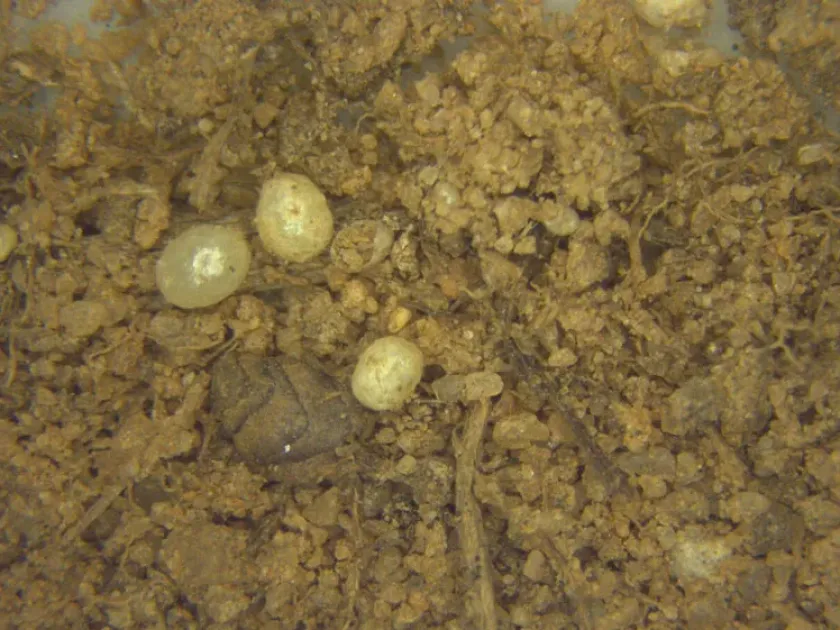
The ground pearl belongs to the Margarodidae family, known as giant scales. Its common name is derived from the appearance of the adult females, which resemble tiny, shiny, round pearls, protected by a hard, waxy outer shell.
The life cycle of the ground pearl is complex and includes a cyst stage, which is a key adaptation for survival in harsh soil environments. This allows the insect to remain dormant for several years, making it an extremely resilient pest.
These insects spend the majority of their lifecycle underground, attached to the root systems of their host plants. Their mobility is limited to the crawler stage, where young larvae move through the soil to find suitable host roots.
Females lay eggs in the soil, often encased in a protective ovisac made of white waxy filaments. This coating provides additional protection against environmental stressors and potential soil-applied treatments.
Detection is difficult because ground pearls are rarely seen on the surface. Identification usually occurs during soil inspections in vineyards where plants show unexplained decline or in nursery stock surveys.
What it damages
The ground pearl is a significant pest of grapevine rootstocks. By attaching to the roots and sucking the sap, the insects deprive the vine of vital water and essential mineral nutrients.
Feeding damage leads to root tissue necrosis and the development of wounds that serve as entry points for secondary pathogens. This root degradation significantly impacts the overall health and vigor of the entire grapevine.
Typical damage manifestations include reduced shoot growth, leaf chlorosis, and smaller berry size. In severe cases, the vine's capacity for photosynthesis is impaired, leading to poor sugar accumulation and reduced crop yield.
The economic impact of this pest is high, as it causes the gradual decline and death of mature vines. Once an area is infested, replanting with new vines is often unsuccessful because the young roots are immediately attacked by the resident population.
Sandy soils are particularly prone to severe infestations, as ground pearls often thrive in these conditions and the grapevine root systems lack the resilience to withstand prolonged feeding.
Signs of infestation
Symptoms of ground pearl infestation often mimic general plant stress or nutrient deficiencies. Growers may notice stunted vines that appear yellow or lack normal vigor during the growing season.
Premature leaf drop and wilting during dry periods are common indicators that the root system is malfunctioning. If the infestation is severe, entire sections of the vineyard may show clear signs of decline, forming patches of struggling vines.
A definitive sign is the presence of hard, pearl-like cysts on the root system when the soil is excavated. These cysts are often accompanied by the white, waxy secretion left behind by the insects on the root surfaces.
Root system inspection in suspected patches often reveals restricted root growth and deformed root tissue. The presence of these pests disrupts the nutrient transport, causing the vines to slowly die back over several years.
The progression of damage in a vineyard is usually slow but steady, with affected areas gradually expanding as the pest population moves through the soil layers.
Control measures
Controlling ground pearls is notoriously difficult due to their protective waxy layer and deep-soil existence. No single chemical treatment has proven to be fully effective for mature infestations.
Prevention through strict nursery certification is the most crucial management strategy. Growers should ensure that all new vine stock is sourced from pest-free areas to prevent the introduction of this insect into clean soil.
Cultural practices, such as maintaining soil health and providing adequate irrigation, can help vines endure minor infestations, though they do not eliminate the pest. Deep cultivation may disrupt some cycles but rarely provides sufficient control.
In cases of heavy infestation, removal of the entire vine and its root system is often the only way to reduce the population density. Soil fumigation might be considered for site preparation, depending on local regulations and economic feasibility.
Research into integrated pest management continues, focusing on biocontrol agents like entomopathogenic fungi or nematodes that might be capable of attacking ground pearls within the soil profile.
Taxonomy
- Latin name
- Eumargarodes
- Order
- Hemiptera (bugs, aphids, leafhoppers)
- Family
- Margarodidae
- EPPO code
- EUMGSP
Discussion
No discussions yet — be the first.