
Grey spider wasp
Pompilus cinereus
Description
How to identify
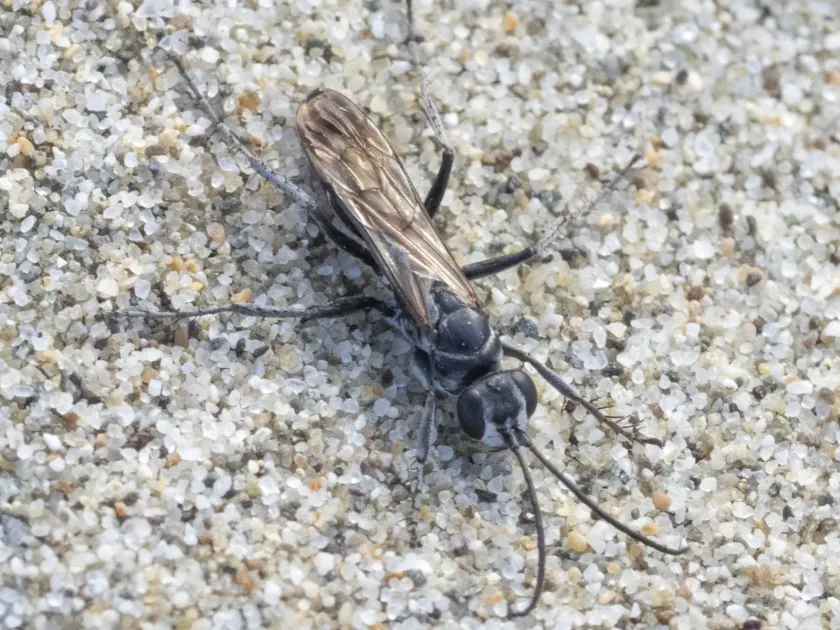
The grey spider wasp (Latin: Pompilus cinereus) is a member of the Pompilidae family. These insects are easily identified by their slender greyish-black bodies, often covered with a fine, dust-like pubescence that gives them a characteristic grey appearance.
They possess long, spiny legs designed specifically for digging in loose, sandy substrates. This physical adaptation is crucial for their life cycle, as they rely on underground nests to protect their developing offspring.
Unlike social wasps, Pompilus cinereus is a solitary species. Females are independent hunters, spending most of their time actively searching for prey to provision their subterranean nests for their larvae.
The life cycle involves complete metamorphosis. After mating, the female digs a burrow, finds a spider, paralyzes it with a sting, and drags it into the burrow. She lays a single egg on the paralyzed prey before sealing the nest.
These wasps are most active during warm, sunny days. They are often spotted near sand pits, dry garden paths, or open soil areas where they can easily dig their tunnels without obstruction.
What it damages
While not a primary herbivorous pest, the grey spider wasp disrupts the ecological balance of a garden. By actively hunting spiders, they remove essential natural predators that keep populations of aphids, mites, and leaf-chewing insects in check.
An indirect negative impact includes the physical disturbance of soil in seedbeds, flower beds, and lawns. Continuous digging can damage the delicate root systems of young seedlings and disrupt the uniformity of garden landscaping.
The removal of spiders, which are beneficial biological control agents, can lead to localized outbreaks of other plant-damaging insects, necessitating more frequent use of chemical pesticides by the gardener.
For humans, these wasps pose a direct risk of painful stings if their nesting areas are disturbed. This restricts the use of certain garden areas and complicates routine maintenance activities for homeowners.
In high concentrations, their nesting activity can lead to poor soil aeration and water retention issues, as the constant tunnel construction creates unwanted air pockets in the ground.
Control measures
The most effective cultural practice is regular soil disturbance. Deep tilling of sandy areas or soil beds in early spring prevents the wasps from successfully establishing their burrows and disrupts their reproductive cycle.
Using physical barriers such as thick mulch, gravel, or landscape fabric is highly recommended for decorative garden areas. Covering open soil makes these sites unattractive for the wasps to initiate tunnel digging.
If direct control is necessary due to high infestation rates, targeted application of pyrethroid-based insecticides into the tunnel entrance during late evening is the most efficient method to minimize harm to non-target species.
Protective clothing is essential when working in areas where these wasps are active. Ensuring that gardeners use sturdy gloves and full-coverage shoes significantly reduces the risk of accidental stings during weeding or planting.
Long-term management should focus on fostering a healthy garden ecosystem that supports a wide variety of predators, which helps to naturally balance the presence of spider-hunting wasps without the need for toxic interventions.
Taxonomy
- Latin name
- Pompilus cinereus
- Order
- Hymenoptera
- Family
- Pompilidae
- EPPO code
- PMPLCI
Discussion
No discussions yet — be the first.