
Ceropales
Ceropales
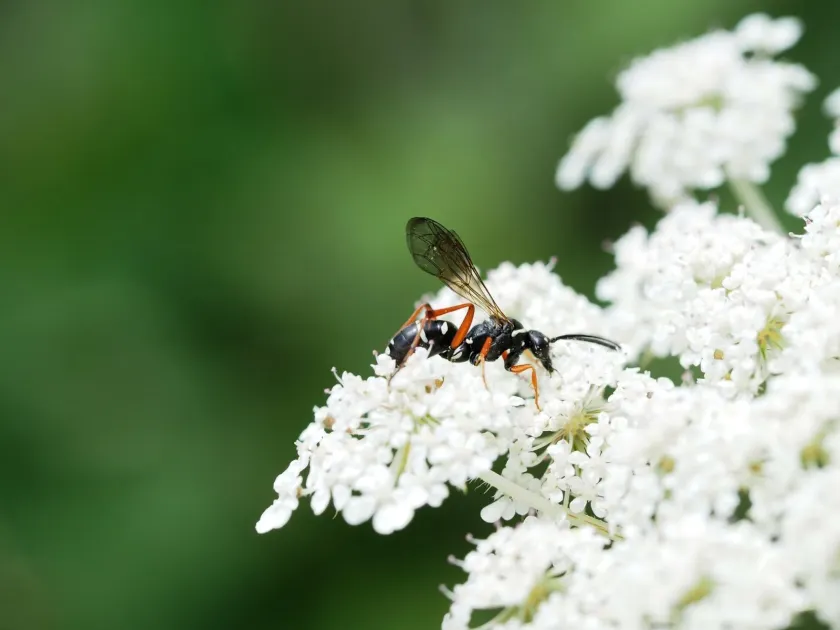
Description
How to identify
Ceropales is a genus of spiders wasps belonging to the family Pompilidae. Unlike other wasps in this family, Ceropales are cleptoparasites, meaning they do not construct their own nests but exploit the work of other hunting wasps.
The adults are typically slender, often marked with vibrant colors or black and yellow patterns. They possess specialized behavioral adaptations that allow them to detect a host wasp carrying paralyzed prey, such as a spider, and quickly deposit an egg onto it.
The lifecycle of Ceropales is fascinatingly complex. The female monitors the hunting activities of other Pompilidae wasps, waiting for the perfect opportunity to strike during the prey transport process.
Once the egg is laid on the paralyzed spider, the Ceropales larva hatches and develops faster than the host's larva. The parasite consumes the host's food supply and often the host larva itself, emerging as an adult later in the season.
These wasps are widely distributed across diverse habitats, favoring sunny, open areas with well-drained or sandy soils where their host species are active. They are most visible during the warmer months when hunting wasps are most active.
What it damages
The primary concern regarding Ceropales in agricultural settings is its role as a parasite of beneficial insects. By targeting spider wasps, Ceropales reduces the population of natural pest control agents.
Spider wasps are effective predators that keep populations of spiders and other arthropods in check. When Ceropales populations are high, the efficiency of these predatory wasps in suppressing pest levels is significantly diminished.
In intensive farming, the reduction of beneficial wasp populations can lead to an increased presence of secondary pests. This forces farmers to consider additional biological or chemical interventions to protect the crop.
While Ceropales does not directly attack plants, its indirect damage to the biological control infrastructure of a farm is significant. It acts as a destabilizer within the agro-ecosystem, favoring the survival of pest species that would otherwise be hunted.
Monitoring the prevalence of such cleptoparasites is essential for integrated pest management (IPM) programs. Excessive parasite pressure can be an early indicator of an ecosystem that is losing its natural resilience.
Control measures
Direct control of Ceropales is generally not recommended, as they are a natural part of the insect community. Management strategies should instead focus on promoting the overall health and population of host wasp species.
Reducing the use of broad-spectrum insecticides is the most effective way to support beneficial wasp populations. Selective pest management ensures that the natural enemies of common garden pests are not destroyed during spraying cycles.
Maintaining floral strips or hedgerows provides essential nectar resources for adult wasps. A healthy population of beneficial wasps is better equipped to survive and compete effectively against cleptoparasitic pressure.
Protecting the soil surface is another vital aspect of wasp conservation. By minimizing intensive soil tillage in non-crop areas, farmers can ensure that the nesting sites of beneficial predatory wasps remain intact throughout the season.
- Minimize pesticide drift into field margins and non-crop areas.
- Incorporate native nectar-producing plants to support wasp energy needs.
- Avoid deep cultivation near areas where wasp nesting activity is observed.
Taxonomy
- Latin name
- Ceropales
- Order
- Hymenoptera
- Family
- Pompilidae
- EPPO code
- KERPSP
Discussion
No discussions yet — be the first.