
Pompelon
Pompelon
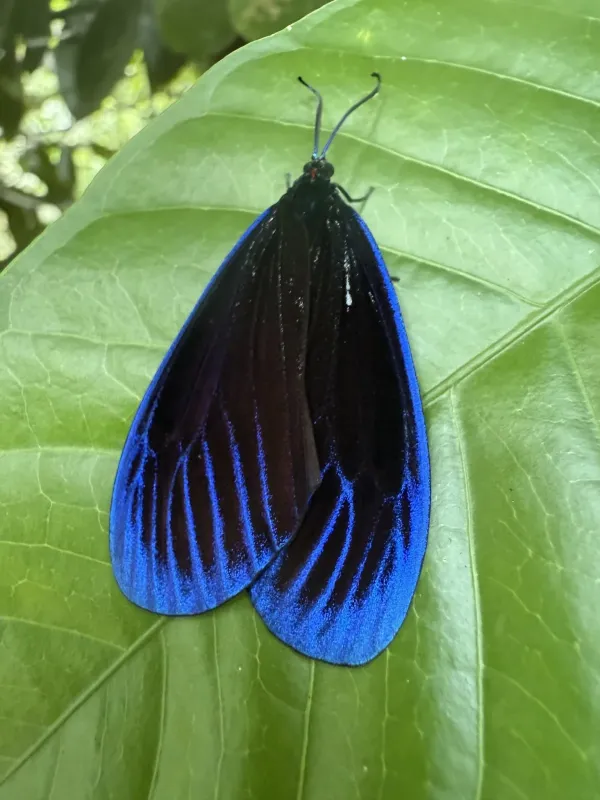
Description
How to identify
Pompelon is a genus of moths belonging to the family Zygaenidae, order Lepidoptera. Adult specimens are known for their striking and often metallic appearance, which frequently serves as an aposematic signal to warn predators of their toxicity or unpleasant taste.
Morphologically, these moths possess robust bodies and distinctive antennae. The larvae (caterpillars) of this genus often exhibit specialized structural features, such as tubercles or protective hairs, which function as defense mechanisms in their natural habitat.
The life cycle follows a complete metamorphosis: egg, larva, pupa, and imago. Throughout their larval stages, they consume significant amounts of plant biomass to facilitate their transition through various instars before reaching the pupation phase.
Systematically, Pompelon is placed within the subfamily Chalcosiinae. These insects are primarily distributed across tropical and subtropical regions of Asia, where they have evolved to utilize specific host plants for both nutrition and defense.
The biology of this genus is closely linked to its host plant specificity. The accumulation of alkaloids from the consumed leaves provides the larvae with chemical protection, making them a subject of interest in chemical ecology studies.
What it damages
The primary damage is caused by the larval stage, which feeds on the foliage of various host plants. Their feeding behavior often leads to skeletonization or irregular consumption of leaf margins, significantly reducing the surface area of the leaves.
Crops and plants that fall within their specialized host range are most susceptible to attack. In cases of population outbreaks, the larvae can cause severe defoliation, leading to stunted plant growth and overall loss of vigor.
Damage to the leaf tissue impairs the plant's photosynthetic capacity. As a result, the plant suffers from reduced nutrient synthesis, which compromises its ability to withstand environmental stress and secondary pathogen infections.
In agricultural settings, Pompelon infestation can occur in patches, often requiring swift monitoring and management to prevent the spread of the population across the field or garden area.
Beyond direct tissue consumption, the presence of larval excrement on the plant surface reduces the marketability of the produce and creates a substrate for opportunistic fungi or bacterial colonies, further damaging the host plant.
When it appears
The activity of these insects is strongly influenced by ambient temperature and humidity. Adult emergence and egg-laying typically coincide with the warmer months, which align with the active growing phase of their host plants.
The larval phase peaks during the height of the vegetation season, as the abundance of fresh foliage provides optimal nutrition for rapid growth. Depending on the local climate, the species may undergo multiple generations per year.
Overwintering usually occurs in the pupal or larval stage, tucked away in protected environments such as leaf litter, bark crevices, or shallow soil. Emergence occurs once favorable temperatures return in the spring.
Monitoring for the presence of this pest should begin early in the season. Regularly inspecting the undersides of leaves for egg batches is the most effective way to catch an infestation before significant larval damage occurs.
Seasonal fluctuations in population density can be linked to annual climate variations. Particularly warm and stable seasons often favor the proliferation of Pompelon, potentially leading to increased pest pressure.
Signs of infestation
Key indicators of a Pompelon infestation include characteristic feeding patterns on leaf blades, such as jagged margins or irregular holes. Such damage is usually visible upon close inspection of the plant foliage.
The detection of egg masses on the undersides of leaves serves as an early warning sign. These batches are often clustered, making them relatively easy to identify and remove before the larvae hatch.
The presence of larval waste (frass) on the leaves or the soil surface directly beneath the host plant is a clear indicator that feeding is currently in progress. It is a signal that active measures should be taken.
In cases of heavy infestation, larvae may be seen congregating on the stems or at the branch nodes. Some stages may show diurnal activity, while others are more active during the evening or on cloudy days.
General plant decline, including yellowing leaves and premature shedding, can be an indirect sign of a chronic pest problem. If no other diseases are evident, the roots or foliage should be checked for signs of Pompelon presence.
Control measures
Management of this pest relies on an integrated pest management (IPM) approach that combines cultural, biological, and chemical methods. Maintaining a clean garden and removing debris reduces the overwintering sites for pupae.
Biological control using microbial agents like Bacillus thuringiensis is highly effective against early-instar larvae and offers a safe alternative that protects beneficial insect populations and the environment.
Manual removal of caterpillars is a practical control strategy for smaller areas. This is most successful when performed in the early morning when larvae are less mobile and typically found resting on the foliage.
Chemical intervention with systemic insecticides should be reserved for severe outbreaks where other methods have failed. All applications must follow local guidelines and safety protocols to minimize negative impacts.
Encouraging natural predators, such as predatory bugs, parasitic wasps, and insectivorous birds, is an essential part of long-term population suppression for Pompelon, creating a balanced and resilient ecosystem.
Taxonomy
- Latin name
- Pompelon
- Order
- Lepidoptera (butterflies)
- Family
- Zygaenidae
- EPPO code
- POMPSP
Discussion
No discussions yet — be the first.