
Nepalese shield bug
Poecilocoris nepalensis
Description
How to identify
The Nepalese shield bug (Poecilocoris nepalensis) belongs to the Scutelleridae family, commonly known as jewel bugs or shield-backed bugs.
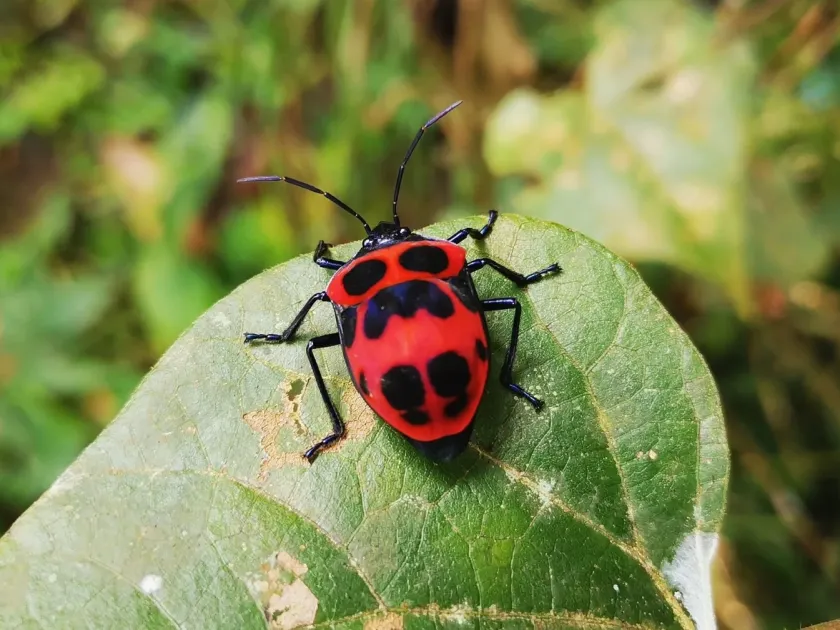
They are characterized by an enlarged scutellum that covers the entire abdomen and wings, giving them a distinct, shield-like appearance.
These insects often display striking metallic colors, including combinations of red, orange, and black, which serve as a warning to potential predators.
As true bugs (order Hemiptera), they possess a specialized piercing-sucking mouthpart known as a rostrum, which is essential for feeding.
The life cycle involves incomplete metamorphosis, where nymphs resemble smaller, wingless versions of the adults and grow through several instars.
What it damages
This species is a known polyphagous pest that feeds on a variety of woody plants, shrubs, and occasionally agricultural crops.
By using their rostrum to penetrate plant tissues, they extract essential sap, which directly depletes the plant's energy reserves.
Feeding damage is particularly harmful to young shoots, buds, and developing fruits, often resulting in stunted growth or fruit deformation.
Injured areas on fruits can become entry points for secondary pathogens, leading to rot and further reduction in harvest quality.
Heavy infestations can lead to significant physiological stress in host plants, causing leaf yellowing and potentially premature fruit drop.
When it appears
The seasonal activity of the Nepalese shield bug is highly dependent on local climate conditions and plant phenology.
Adults overwinter in protected environments such as leaf litter, crevices in tree bark, or sheltered soil layers.
In spring, rising temperatures trigger the emergence of adults, who begin seeking out host plants to feed and mate.
Egg-laying typically occurs during the early summer months, coinciding with the period of peak plant growth and high nutrient availability.
Depending on the latitude, the insect may complete one or more generations per year, with activity levels peaking mid-summer.
Signs of infestation
The presence of these bugs is often first noticed by spotting the brightly colored adults resting on the underside of leaves.
Visible signs of feeding include chlorotic spots or necrotic lesions on leaves and stems where the insect has inserted its proboscis.
Deformed or wilting foliage is another strong indicator that a colony is actively feeding on the plant's vascular tissues.
Egg masses found on the underside of foliage are a clear signal of an established breeding population requiring attention.
A distinct, often pungent odor emitted by the bug's defensive glands when disturbed can also alert growers to their presence.
Control measures
Sanitation is a critical control measure, focusing on the removal of debris and fallen leaves where the insects undergo diapause.
Manual removal of adults can be effective in gardens or small-scale orchards, particularly early in the morning when the bugs are sluggish.
When chemical intervention is necessary, targeted application of appropriate insecticides can reduce population numbers while protecting pollinators.
Biological control methods, such as encouraging natural predators or using entomopathogenic fungi, are becoming increasingly viable options.
Maintaining healthy plant vigor through proper fertilization and irrigation helps plants recover from the damage caused by sap-sucking insects.
Taxonomy
- Latin name
- Poecilocoris nepalensis
- Order
- Hemiptera (bugs, aphids, leafhoppers)
- Family
- Scutelleridae
- EPPO code
- POECNE
Discussion
No discussions yet — be the first.