
Painted shield bug
Poecilocoris dives
Description
How to identify
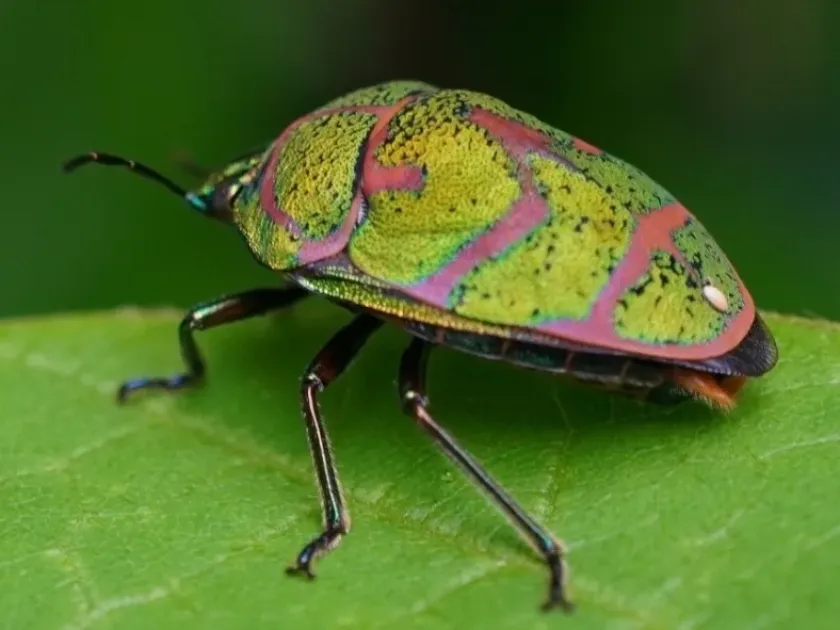
The Painted shield bug (Poecilocoris dives) belongs to the Scutelleridae family, commonly known as jewel bugs or shield-backed bugs. They are easily recognized by their striking appearance.
Adult insects have a characteristic oval, convex shape, measuring approximately 10 to 15 millimeters. The scutellum is highly developed, covering almost the entire abdomen.
The coloration is vibrant, featuring bright red or yellow backgrounds with complex, symmetrical black patterns. This acts as a warning signal to potential predators.
They possess a piercing-sucking mouthpart designed specifically to extract sap from plant tissues, which is a defining feature of the Hemiptera order.
Nymphs go through five developmental stages (instars) before reaching maturity, gradually changing their color patterns and size during this growth period.
What it damages
This species is considered a significant pest of legume crops. Both adults and nymphs feed by piercing the plant tissues and extracting nutrient-rich fluids.
They target stems, leaves, and particularly developing pods of crops like soybeans, peas, and various beans. This weakens the entire plant structure.
Feeding on seeds causes them to shrivel and lose their viability. This leads to substantial yield losses in both quantity and seed quality.
The injection of salivary enzymes during the feeding process can trigger necrosis, leading to dark spots and distorted development of the pods.
Heavy infestations can lead to premature pod drop, severely impacting the final harvest and making the crop less profitable for growers.
When it appears
Painted shield bugs overwinter in the adult stage. They seek refuge in leaf litter, dense vegetation, or debris near fields to survive the winter cold.
In the spring, as temperatures rise, adults emerge and move onto wild host plants to feed and gain strength before moving to cultivated fields.
The peak period of damage occurs during the flowering and pod-filling stages, as these periods provide the highest nutritional value for the insects.
Multiple generations can occur throughout the summer season, which creates a continuous threat to crops until the late stages of plant development.
As autumn approaches and temperatures drop, the bugs gradually disperse to find suitable hibernation sites, completing their seasonal cycle.
Signs of infestation
An early sign of infestation is the presence of brightly colored adults and nymphs clustered on the undersides of leaves or along the stems.
Small, pinprick-like holes on the surface of pods are the primary physical indicators. Over time, these holes develop into dark, sunken lesions.
Stunted growth, yellowing foliage, and deformed pods are common clinical signs of high population density within a crop field.
The characteristic pungent odor released by the bugs when disturbed is another common way to detect their presence during field inspections.
Observing the presence of insect waste on the plant surface is another reliable sign that the bug colony has been feeding on the plant for some time.
Control measures
Cultural control measures, such as removing weeds and cleaning up field margins, are highly effective in reducing initial pest populations.
Deep plowing in the autumn helps destroy overwintering sites, significantly reducing the number of adults that survive until the following spring.
Monitoring fields during the sensitive blooming stage is essential to decide if and when to apply chemical control agents such as pyrethroids.
Chemical applications should be strictly timed to avoid harming beneficial insects like pollinators that are active during the flowering phase.
Adhering to integrated pest management (IPM) practices, including the use of biological control agents, helps maintain a balance within the ecosystem.
Taxonomy
- Latin name
- Poecilocoris dives
- Order
- Hemiptera (bugs, aphids, leafhoppers)
- Family
- Scutelleridae
- EPPO code
- POECDI
Discussion
No discussions yet — be the first.